
General News
Touching Story of Man Who Was Abducted At Age Seven And Rented Out To Beggars Daily in Kano

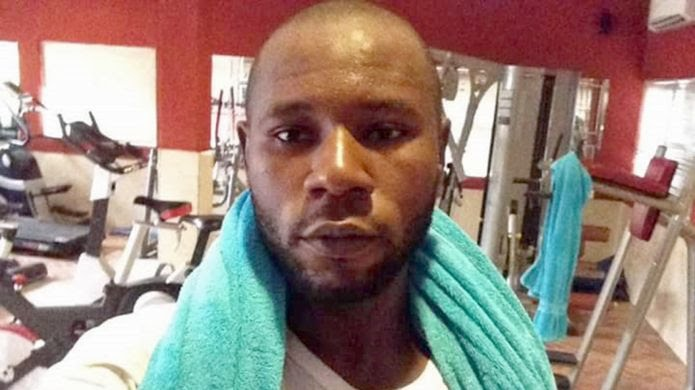
Samuel Abdulraheem has no recollection of the day he was abducted, aged seven, from his family home in the northern Nigerian city of Kano.
Although he came from a large family – his father had 17 children by four wives – Samuel was on his own with a nanny that day.
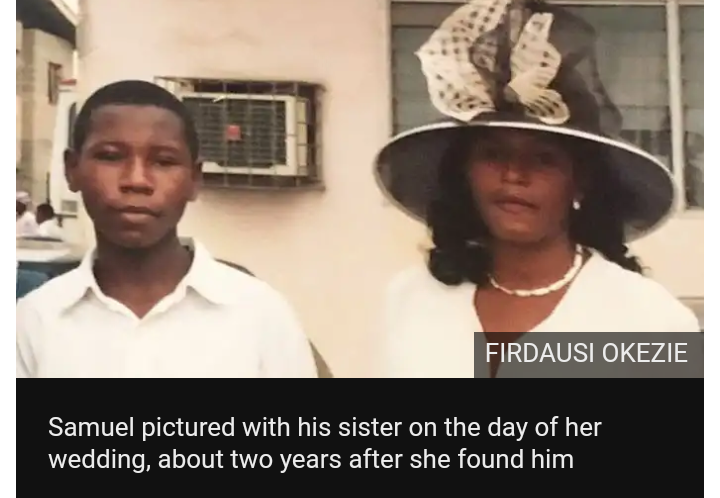
His family were told he had gone outside to ride his bicycle but they would not see him again for another six years.
The search
“There is nothing we didn’t do to try to find him,” his older sister Firdausi Okezie recalls.
Then aged 21, she was not made aware of his disappearance at first.
Her brother had always enjoyed rushing to answer the phone and speak with her when she called home from university.
But when other members of the household began answering it when she rang, she suspected something was wrong.
After her classes one afternoon, Firdausi travelled home unexpectedly and her father, an architect and hotelier, was forced to reveal the heart-breaking truth: Her favourite sibling had been missing for more than a month.
“At first, my father had the nanny arrested, but after investigations, they let her go,” Firdausi says.
They also tried to hide the news from Samuel’s mother, who was divorced from his father, for as long as possible. Every time she called from her new home in a different city, they would conjure different excuses.
Eventually, an uncle was assigned the unenviable task of telling her.
In addition to extensive police investigations, the family placed adverts in newspapers and sent out search parties to comb the streets. They checked ditches in case he had been the victim of a hit and run, and even consulted Muslim spiritual priests, known as malams.
In time, her father asked the family to accept that their brother was dead – they had done the best they could.
The scream
Firdausi refused to give up. She dedicated her university thesis to her missing brother and a year after graduating, she moved south to Lagos in search of work.
She converted to Christianity and started attending Winners Chapel – one of Nigeria’s mega churches based in Ogun state just outside the city.
Every December, the church holds a five-day gathering of its members from all over the world.
During the event, known as Shiloh, interested members of the congregation are allocated free stands to display their goods and services within the church premises.
Still without a job in December 2000, Firdausi applied for a stand to sell some tie-dye fabrics her mother had made.
While waiting for a carpenter to help set up the display, she sat on a chair and placed her head in her lap for some rest.
That was when she heard a beggar appealing, in the name of Allah, for spare change. Firdausi looked up.
This beggar had his hand firmly planted on the left shoulder of a boy who was dressed in a tattered brown tunic and undersized trousers.
Firdausi screamed – the haggard boy guiding the beggar was her lost brother.

The kidnap
Samuel, now aged 30, cannot recall exactly how he was stolen from his family: “All I remember is the train journey.”
He was taken to a one-armed woman who lived on the outskirts of Lagos in an area mostly occupied by disabled beggars.
The woman hired him out to blind beggars for 500 naira (approximately $5 or £2.50 at the time) per day.
The sight of blind men and women being led around by boys and girls is common on many streets in Nigeria – especially in dense traffic where they usually tap on car windows, or around churches and mosques.
Only Samuel lived with the woman, sleeping on a mat in her shack.
Over the years, he says about five others boys turned up to live with other women in the same yard, each hired out to blind beggars.
Samuel suspects that something must have been done or given to him during that time because he does not recall ever thinking of his family during that period, or wondering what had become of them.
“I am not sure I had emotions then,” he says. “Just a zombie that knew he had to wake up and lead a beggar out. Make money, eat food and sleep, and the same routine the next day.
Life of a slave
Different beggars hired him for a period of anything from a week to a month.
At the end of each day, Samuel and the beggar slept alongside others in various public spaces.
If a beggar enjoyed working with him, they hired him again for another period.
“I was like a slave,” he says. “I couldn’t say I wanted to go and do anything. I had to be around always.”
As he was always on the move, Samuel made few friends, only occasionally playing with the children of other beggars he bumped into in the evenings.
Sometimes people gave them food while they were out begging. At other times they hung around restaurants and ate the leftovers or scavenged in dustbins.
“I was always hungry. During the daytime when you work, you hardly sit down to eat,” he recalls.
“I didn’t feel the beggars were bad. They wake up, beg, the way people wake up and go to work.”
Day after day, Samuel walked from one end of Lagos to the other with a beggar’s right hand gripping his shoulder.
Sometimes, they trekked to neighbouring states or across the border to Benin. If the beggars received news of potential benefactors gathered somewhere, they told Samuel and he took them there by bus.
“There were times when you get so tired and you start bypassing people, but blind people are very sensitive – their hearing – so they pick up sound. Sometimes they would twist your shoulder and say: ‘There is someone there. Why are you moving away?’
“They try to make as much money as they can.”

The ‘miracle’
In December 2000, a beggar he was guiding heard news of the programme at Winners Chapel where they ran into his sister.
At first, Firdausi was too shocked to reach out and touch her brother – who can still recall her scream.
“I fell down on the floor,” she says.
Samuel looked gaunt, his right shoulder was significantly tilted and he appeared dumb, not speaking a word. The sight caused Firdausi to burst into tears.
“It took a while but I knew that she was someone I knew – that this person was someone related to me,” Samuel says.
Soon a crowd gathered and drawn by the commotion, church officials also arrived. They managed to make sense of Firdausi’s barely coherent joy and decreed that it was a “miracle” worth sharing with the entire congregation.
They ferried Samuel to a corner and gave him a quick wash. They found him fresh clothes to wear and rushed them both to the stage of the 50,000-seat auditorium where Firdausi was given a microphone.
In tears, she narrated how she had just found her brother who had been missing for six years.
Firdausi recalls how the entire congregation leapt out of their chairs in shouts of praise and thanksgiving.
The founder of the church, David Oyedepo, then held Samuel and prayed for him.
That night they slept on the church premises in a car, as it was a long way to get back to where Firdausi lived.
She remembers waking up throughout the night and touching her brother to make sure he was real.
The recovery
Today Firdausi says that she regrets being so engrossed in finding her brother that she did not try to rescue the others from where he was kept.
Shortly before his rescue, a new young child had arrived in the yard, Samuel says.
At first, the boy wept non-stop and refused to eat. Suddenly, he became silent, leading Samuel to suspect that something had been done or given to the boy to quieten him.
“In a developed country, you would just go and tell the police. But, here, the police would ask you to give them money for fuel and all that, and I didn’t even have a job,” Firdausi says.
Besides, reintegrating her 13-year-old brother into normal life was proving more difficult than she had imagined. He had not returned to live with his father and she was taking care of him.
Boils and rashes had broken out all over his body, giving off a foul stench.
His right shoulder remained bent for more than a year, requiring X-rays and physiotherapy before it finally stopped showing signs of the pressure from years of being gripped by beggars.
Their mother did not recognise the youngest of her seven children – who was now rough and haggard.
She had to raise his arm and search for a birthmark before she finally believed that the person in front of her was actually her son.
The student
After six years of no formal education, Samuel was barely literate.
Firdausi was left frustrated with the search for a school – with many saying he was too old to join at primary level.
Just when she had almost lost hope, Firdausi met a school proprietor who had seen them on the stage at the church.
The woman agreed to admit him, while Firdausi made arrangements for additional private classes.
In three months, Samuel zoomed from primary one to primary four. Within a year, he had passed the entrance exams to secondary school.
Samuel spent only three years in secondary school when, aged 17, he felt confident enough to sit for university entrance exams.
He passed with flying colours, attaining the best result in his entire school, and gained admission to study chemical engineering at the Ahmadu Bello University in Zaria.
But Samuel’s academic prowess would eventually lead to the sudden end to his studies.
Other students often sought his assistance with assignments and he was expelled during his fourth year after being caught writing another student’s answers during exams.
‘No grudges’
Samuel now works as a supervisor on construction sites.
“Someday when I am comfortable financially, I hope to continue my education,” he says, adding that computer science might be an option as he is good with gadgets.
Samuel holds no ill feelings about what he went through while in captivity. He believes that all those years shaped him and taught him to try to always be nice to people.
“Nothing that people do actually gets to me. I just see it as a way of life. I don’t hold grudges,” he says.
Memories of the constant hunger have affected the way he relates to beggars and their guides today. He never gives them money.
“I’d rather buy them food. Because, back then, it was better giving me food than money because the money went to the beggar and none came to me.”
Samuel hopes that, by sharing his story, people will pay more attention to beggars and the children who often guide them.
“When they see a beggar with someone, they should have a second thought that, possibly, this child could need help,” he says. “Don’t just see and give money and walk away.”




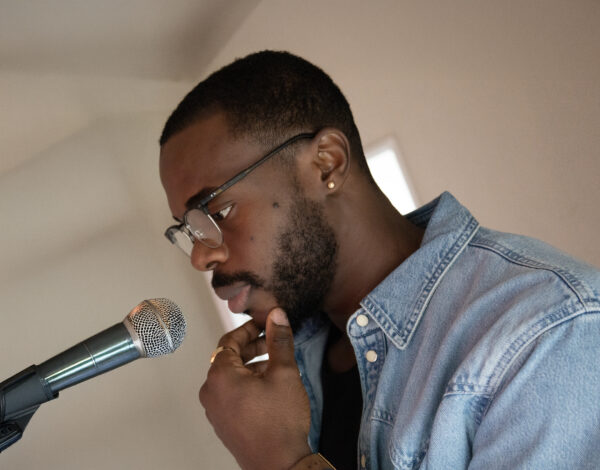
At 31, Lagos-born Espago is redefining what it means to be a late bloomer in the Nigerian music
space. After spending years as a chef, designer, and farmer, Espago turned to music just a year
ago on a journey sparked by deep loss, life experience, and self-discovery.
What makes him different? It’s not just his sound, it’s his story. Espago brings a calm but
confident energy that mirrors his Lagos upbringing: a blend of vibrant Fuji rhythms and soulful
Afrobeat traditions like King Sunny Ade, shaped by global legends like Michael Jackson and
Celine Dion. His voice? Professionally trained. His brand? Stylish, grounded, and intentional.
Espago didn’t wait for the industry to find him; he found his own way in, teaching himself,
searching out producers, and building his identity from scratch. With no major label backing and
no big-name features, he has still built a brand marked by boldness, emotion, and Lagos street
authenticity.
He’s not just making music; he’s building a lifestyle brand. His creative roots are in food,
fashion, and music fused into something richer than just a “sound.” It’s a full experience. While
he hasn’t performed live yet, he’s putting in the work behind the scenes, mentoring new artists,
recording regularly to sharpen his voice and brand for bigger stages ahead.
In a scene dominated by speed, Espago’s journey is about intentional growth, honest
expression, and emotional connection.
As the new class of Afro‑HipHop begins to take shape, Espago stands out not just for what he’s
making, but for who he is becoming.

Rising artist Derriq isn’t just making music for entertainment; he’s building a legacy rooted in culture, resilience, and pride. The Lagos-based Afro-soul and Afrobeats singer has his eyes set on something bigger than streaming numbers: putting his hometown of Benin City on the global creative map is his dream.
A native of Edo State, Derriq’s musical journey began as a child organizing school parties just for the chance to perform. Since then, he’s gone from studio assistant to full-fledged artist, releasing impactful tracks like “Position,” “Vibration,” and “Confidence.” His sound, described as smooth, calm, and party-ready, reflects the duality of his personality: laid-back yet determined, quiet but powerful.
Derriq is more than just a promising name on Nigeria’s growing music roster; he’s a symbol of the next generation of artists who blend regional identity with global appeal using his distinctive voice, a strong sense of direction, and his signature slang “Yehboo! Yezaiii!” making waves among fans, Derriq is proving that cultural authenticity still cuts through the noise.
His next single, “Omo n’ Ogie,” is a tribute to his heritage and a signal that he’s just getting started. Keep your eyes on Derriq, he’s not just singing for the moment, he’s singing for a movement.
Follow @DerriqMusic on all social platforms
For interviews and press: derriqmusic@gmail.com

Good morning! Here is today’s summary from Nigerian Newspapers:
1. President Bola Tinubu will address the nation in a broadcast today, Sunday, August 4, 2024. Mr Ajuri Ngelale, Special Adviser to the President on Media and Publicity, announced this in a statement, on Saturday, saying the broadcast would hold at 7am.
2. The Commissioner of Police in Borno State, Yusuf Lawal, on Saturday confirmed the killing of four persons along Baga Road in Maiduguri, Borno State during the nationwide #EndBadGoverment protest. He said Boko Haram elements infiltrated the protesters and killed four persons on Thursday with explosives at a filling station.
3. Many persons have been feared killed while others sustained injuries as hoodlums clashed with security operatives in Kano. It was gathered that Rijiyar Lemo, Kurna to Bachirawa areas in Fagge Local Government, Kofar Nassarawa in Kano municipal and Unguwa Uku area of Tarauni Local Government are the worst hit areas.
4. The leadership of the organised labour, on Saturday, warned the Nigeria Police Force and other security forces to stop what it described as a “massacre” of protesters carrying out nationwide demonstrations against hunger in the land.
5. Leading Human Rights group, Amnesty International Nigeria, has said over 50 protesters were arrested in Abuja on the third day of the demonstration against hardship in the land.
6. Former Vice-President Atiku Abubakar has urged the police and other security agencies to stop shooting and killing protesters demanding good governance in Nigeria. Atiku in a statement on Saturday, questioned the professionalism of the security agencies in the handling of the ongoing demonstrations.
7. Some of the organisers and supporters of the ongoing protest have set up pages to raise over N4bn through GoFundMe, a popular online crowdfunding platform. A check on Saturday showed that a total of N4.1bn had been benchmarked to be donated through accounts created by three GoFundMe users.
8. Tragedy struck again in Imo State on Saturday evening when some gunmen reportedly shot dead the President-General of Umucheke Okwe autonomous community in Onuimo Local Government Area of Imo State, Hyginus Ohazurike. Six village heads from the autonomous community were also allegedly killed by the gunmen.
9. The Federal Capital Territory Commissioner of Police, Bennett Igweh has said his men were not responsible for the death of a teenager in the Kubwa area of the FCT. In a viral video, a man claimed that police, while dispersing protesters, shot dead a teenager in the Kubwa area.
10. The Minister of Budget and Economic Planning, Atiku Bagudu has said President Bola Tinubu is keeping an eye on the ongoing #EndBadGovernance demonstrations across the country.
-
 Audio10 years ago
Page – Day Break Everywhere Burst
-
 Audio5 years ago
Shadykarz – Forever
-
 Audio10 years ago
Juniorboy ft. 9ice – IRAPADA
-
 Entertainment Gists5 years ago
Ex-Beauty Queen, Sandra Benede Shares Sexy Photo
-
 Audio5 years ago
Simi – Happy Birthday ft. Adekunle Gold, DeJa
-
 Audio5 years ago
Ruger – Bounce
-
 Mixtapes4 years ago
Mixtape: DJ DimpleNipple – The Best Of Amapiano Thrills
-
 Editorials3 years ago
Sa’eedah Imam On Creating Her Imprint In The Nigerian Music Industry As An Emerging Creative Writer