
Warning: Graphic content

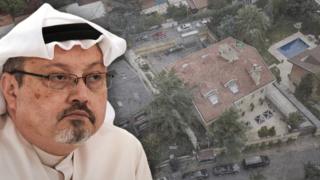
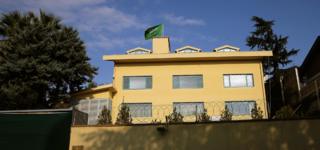
I walked along a tree-lined street in a quiet area of Istanbul and approached a cream-coloured villa, decked with CCTV cameras.
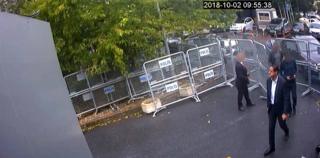
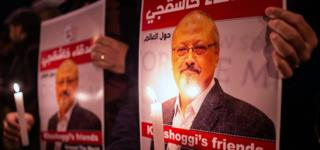
A year ago, an exiled Saudi journalist took the same journey. Jamal Khashoggi was caught on CCTV. It would be the last image of him.
He entered the Saudi consulate and was murdered by an assassination squad.

But the consulate was bugged by Turkish intelligence – the planning and the execution were all recorded. The tapes have only been heard by very few people. Two of those people have now spoken exclusively to the BBC’s Panorama programme.
British barrister Baroness Helena Kennedy listened to Jamal Khashoggi’s dying moments.
“The horror of listening to somebody’s voice, the fear in someone’s voice, and that you’re listening to something live. It makes a shiver go through your body.”

Kennedy made detailed notes of the conversations she heard between members of the Saudi hit squad.
“You can hear them laughing. It’s a chilling business. They’re waiting there knowing that this man is going to come in and he’s going to be murdered and cut up.”
Kennedy was invited to join a team headed by Agnès Callamard, the UN’s special rapporteur for extrajudicial killing.
Callamard, a human rights expert, told me of her determination to use her own mandate to probe the killing, when the UN proved reluctant to mount an international criminal investigation.

It took her a week to persuade Turkish intelligence to let her and Kennedy, along with their Arabic translator, listen to the tapes.
“The intention clearly on the part of Turkey to give me access, was to help me prove planning and premeditation,” she says.
They were able to listen to 45 minutes, extracted from recordings made on two crucial days.


Jamal Khashoggi had been in Istanbul – a city where opponents of regimes across the Middle East have long sought refuge – for a few weeks before he was killed.
The 59-year-old divorced father of four had recently become engaged to Hatice Cengiz, a Turkish academic researcher.
They were hoping to build their life together in this cosmopolitan city, but to remarry, Khashoggi needed his divorce papers.
On 28 September, he and Cengiz visited the Turkish municipal office but were told they needed to get the papers from the Saudi consulate.
“This was the last resort. He had to go and get those documents from the consulate for us to get officially married because he couldn’t go back to his country,” Cengiz tells me when I meet her in a cafe.

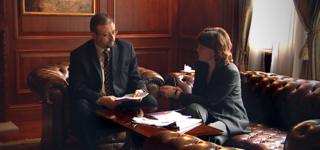
Khashoggi hadn’t always been an outcast, exiled from his own country. I met him 15 years ago at the Saudi embassy in London’s Mayfair. He was then at the heart of the Saudi establishment – a smooth-talking aide to the ambassador.
We discussed a recent terror attack by al-Qaeda. Khashoggi had known its Saudi leader, Osama bin Laden, for decades. Initially Khashoggi had some sympathy for al-Qaeda’s aim to overthrow autocratic Middle Eastern regimes. But later, he spoke out against the group’s atrocities as his views became more liberal and he championed democracy.
In 2007, he returned home to edit the pro-government newspaper al-Watan. But he was fired three years later for what he described as “pushing the boundaries of debate within Saudi society”.
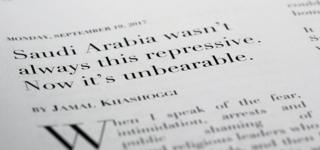
By 2011, inspired by the events of the Arab Spring, Khashoggi was speaking out against what he saw as the repressive and autocratic Saudi regime. By 2017 he had been banned from writing and went into self-imposed exile in America. His wife was forced to divorce him.
Khashoggi became a contributor for the Washington Post, for whom he wrote 20 hard-hitting columns in the year before he died.
“When he was an editor in the Kingdom he would cross red lines,” says his friend David Ignatius, the Post’s senior foreign affairs columnist and investigative journalist. “What I saw with Jamal was that he kept getting himself in trouble by speaking his mind.”
Much of Khashoggi’s criticism was targeted at the new crown prince, Mohammed bin Salman.
MBS, as he is known, was admired by many in the West. He was seen as a reformer and moderniser with a new vision for his country.
But at home in Saudi Arabia, he was cracking down on dissent and Khashoggi was highlighting it in the pages of the Post.

This was not the image the crown prince wanted to project.
“I think that particularly aggravated the crown prince, and he kept asking his aides to do something about this Jamal problem,” says Ignatius, who regularly visits Saudi and writes about its politics.
In Istanbul, the Saudis were presented with an opportunity to “do something” about Khashoggi.

On the day of his first visit to the consulate, Cengiz had to remain outside.
She remembers Khashoggi coming out of the building with a smile on his face. He told her that officials had been surprised to see him and had offered him tea and coffee.
“He said there was nothing to be afraid of, he missed his country so much and breathing that familiar air had made him feel really good.”
Khashoggi was told to come back in a few days.
But as soon as he was gone, phone calls were being made back to Riyadh in Saudi Arabia – all recorded by Turkish intelligence.
“What was interesting about this phone call is that it referred to Mr Khashoggi as one of the persons that was being sought,” says Callamard.
The first call is believed to have alerted the powerful aide who ran MBS’s so-called communications office – Saud al-Qahtani.
“Someone in the communication office had authorised the mission. It makes sense to see that reference to the communication office as being a reference to Saud al-Qahtani,” she continues.
“He has been named directly in various other campaigns against individuals.”

Al-Qahtani had already been accused of involvement in the detention and torture of dissidents in Saudi, such as female activists who dared to drive before the ban was lifted, and high-profile individuals suspected of disloyalty.
In his writings, Khashoggi had accused al-Qahtani of operating a “blacklist” for the crown prince.
“Qahtani began doing extraordinary services – secret black operations,” says Ignatius, who has investigated the royal aide. “That became part of his portfolio and he managed it with a particular ruthlessness.”
There are recordings of at least four phone calls on 28 September between the consulate and Riyadh. These include conversations between the consul general and the head of security at the ministry of foreign affairs, who told him a top-secret mission – “a national duty” – was planned.
There’s no doubt in my mind this was a seriously, highly organised mission coming from the top,” says Kennedy.
“This was not some flaky, maverick operation on the side.”

On the afternoon of 1 October, three Saudi intelligence officers flew into Istanbul. It’s known that two worked in the office of the crown prince.
Callamard believes they were on a reconnaissance mission.
“They probably assess the consulate building, they determine what can and cannot be done.”
On a quiet and shady terrace in Istanbul, overlooking the Bosphorus, I meet a former Turkish intelligence officer with 27 years’ experience.
Metin Ersöz is an expert on Saudi Arabia and its special operations missions. He says its intelligence services became more aggressive after Mohammed bin Salman became crown prince.

“They started the kidnapping operations and pressuring dissidents,” he says.
“Khashoggi was late in recognising the threat and taking precautions and he would pay a heavy price for it.”
In the early hours of 2 October, a private jet landed at Istanbul airport.
On board were nine Saudis – including a forensic pathologist named Dr Salah al-Tubaigy.

After probing their identities and backgrounds, Callamard believes this was the Saudi hit squad.
“The operation was conducted by state officials, they were acting in their official capacities,” she says.
“Two of them had diplomatic passports.”
Ersöz says that this kind of mission – a special operation – would have needed approval from either the Saudi King or the crown prince.
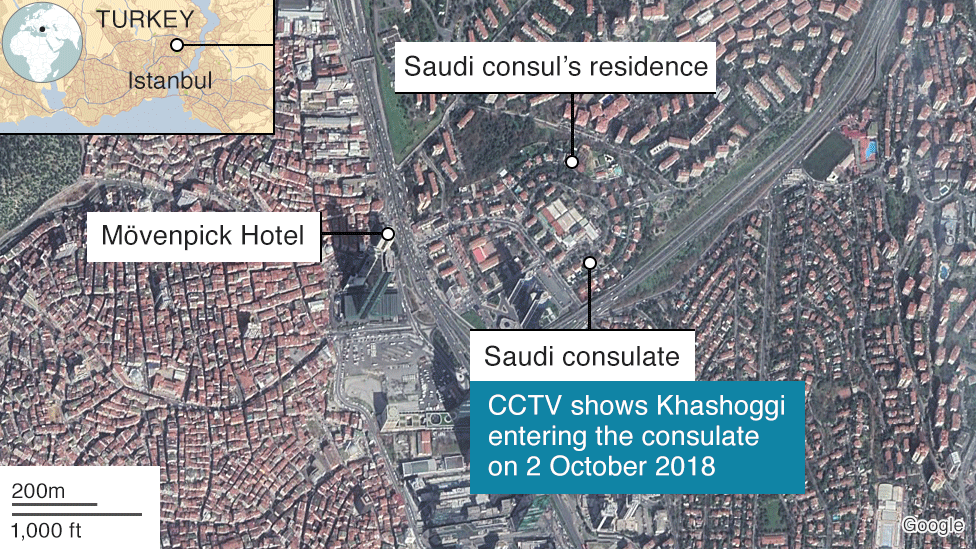
The Saudis checked into the large and impersonal Mövenpick Hotel, located within a few minutes’ walk of the consulate.

Just before 10:00, CCTV shows one of the hit squad entering the Saudi consulate.
From listening to the tapes, Kennedy believes that Maher Abdulaziz Mutreb was the man who ran the operation.
Mutreb was regularly seen travelling with the crown prince, discreetly in the background, close to him as part of his security detail.
“In the calls between the consul general and Mutreb, there’s a reference to the fact that ‘we received the information Khashoggi will be coming on Tuesday’,” says Kennedy.
Later on the morning of 2 October, Khashoggi received a call to come to the consulate for his documents.
As he and Cengiz walked towards the consulate, a macabre and shocking phone conversation was taking place inside between Mutreb and the forensic pathologist, Dr al-Tubaigy.
“He talks about how when he’s doing autopsies. You can hear them laughing,” Kennedy says.
“He says, ‘I often play music when I’m cutting cadavers. And sometimes I have a coffee and a cigar at hand.'”
Then the tapes reveal the doctor knows what he is expected to do, according to Kennedy.
“It’s the first time in my life, I will have to cut (up) pieces on the ground,” she recalls him saying. “Even if you are a butcher you hang the animal up to do so.”
An upstairs office in the consulate had been made ready. The floor was covered in plastic sheeting. Local Turkish staff had all been given the day off.
“They speak about… when is Khashoggi to arrive, and they say, ‘Has the sacrificial animal arrived?’ That’s how they refer to him,” says Kennedy.
She is reading to me from her notebook, horror in her voice.
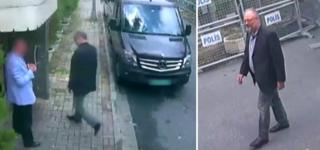
At 13:15, CCTV shows Khashoggi entering the consulate building.
“I remember we walked there hand-in-hand and when we arrived in front of the consulate, Jamal gave me his phones and said, ‘See you later darling, wait for me here,'” says Cengiz.
Khashoggi knew his phones would be taken at the entrance and did not want the Saudis to access his private information.
The tapes reveal that he is met by a reception committee and told that there is an Interpol warrant out for his arrest and he must return to Saudi Arabia.
He is heard refusing to text his son to assure the family he is fine.
The silencing of Jamal Khashoggi then begins.

“There was a point where you can hear Khashoggi moving from being a man who’s a confident person, towards a sense of fear – rising anxiety, rising terror – and then knowing that something fatal is about to happen,” says Kennedy.
She continues: “There’s something absolutely horrifying about the voice changing. The cruelty of it comes across by listening to the tapes.”
Callamard is not sure how aware Khashoggi was of the Saudis’ plans: “I don’t know whether he thinks he could be killed, but he certainly thinks that they could try to abduct him. He is asking, ‘Are you going to give me an injection?’ to which he’s being told ‘Yes’.”
Kennedy says she heard Khashoggi asking twice whether he is being kidnapped and then saying, ‘How could this happen in an embassy?'”
“The sounds that are heard after that point will tend to indicate that he’s suffocated. Probably with a plastic bag over his head,” says Callamard. “His mouth was also closed – violently – maybe with a hand or something else.”
Kennedy believes the forensic pathologist now takes over on the orders of the team leader.
“You hear a voice saying, ‘Let him cut,’ and it sounds like Mutreb.
“Then somebody shouting, ‘It’s over,’ and someone else shouting, ‘Take it off, take it off. Put this on his head. Wrap it.’ I can only assume that they had removed his head.”

For Cengiz, only half an hour had passed since Khashoggi left her outside the consulate.
“During that time, I was dreaming of my future – like how our wedding would be. We were planning a small ceremony,” she says.
About 15:00, CCTV shows consular vehicles leaving and arriving at the consul general’s residence two streets away.
Three men enter with suitcases and plastic bags. Callamard believes they may have contained parts of the body.
A car later drives away. Khashoggi’s body has never been found.
What about the most disturbing detail reported at the time of the murder – the bone saw used to dismember the body?
Kennedy says she did not hear the kind of grating noise she would have associated with that type of surgical instrument on the tape. But she says there was a low-level humming sound. Turkish intelligence officials believe this was the sound of the saw.
At 15.53, CCTV shows two members of the hit squad leaving the consulate.
I retraced their footsteps down the street past the cameras that detailed their route between the consulate and the heart of old Istanbul.
One man is dressed in Khashoggi’s clothes, but wearing different shoes. The other man, his face obscured by a hoodie, is carrying a white plastic bag.
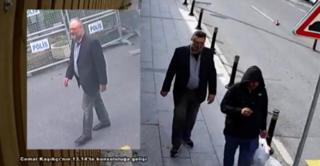
They head towards Istanbul’s famous Blue Mosque. When they re-emerge, the man previously dressed in Khashoggi’s clothes has changed.
They hail a taxi back to their hotel, dumping the plastic bag – thought to contain Khashoggi’s clothes – in a bin nearby, before going down into a subway and back to the Mövenpick Hotel.
“There was a very large degree of planning used to give the impression that nothing harmful had happened to Mr Khashoggi,” says Callamard.
All this time, Cengiz was still waiting outside the consulate.
“I waited and waited and waited there past 15:30. Then, when I realised the consulate had closed, I started running towards it. I asked why Jamal didn’t come out. A guard told me he didn’t know what I was talking about.”
At 16:41, Cengiz was desperate and phoned an old friend of Khashoggi’s. He had given her the number in case he was ever in trouble.
Dr Yasin Aktay is a member of Turkey’s ruling party with contacts at the highest levels.
“I received a call from an unknown number, a really worried voice from a lady I didn’t know,” he says. “She said, ‘My fiance Jamal Khashoggi went into the Saudi consulate and didn’t come out.'”
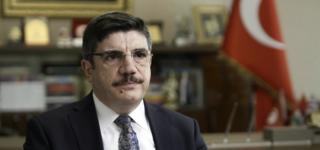
Yasin swiftly called the head of Turkish intelligence and alerted the office of President Tayyip Erdogan.
By 18:30, the members of the hit squad were on a private jet to Riyadh, less than 24 hours after they had arrived.
The next day, the Saudi and Turkish governments issued contradictory statements about what had happened inside the consulate. Saudi Arabia insisted Khashoggi had left the consulate. The Turks said he was still inside.
Turkish intelligence was already poring over the consulate recordings – including the calls made four days before Khashoggi disappeared.
So did they know at that time that his life was in danger and, if so, why did they not warn him?
“I don’t think they knew. There is no evidence that they were listening live to what was happening,” says Callamard.
“This kind of intelligence is done on a regular basis, and it’s only because there is a trigger that they may return to the tapes. It was only because Mr Khashoggi was killed and disappeared that they returned to the tape.”
Ersöz tells me his former intelligence colleagues reviewed the tapes retrospectively and went through between 4,000 and 5,000 hours of material to find the key days and the 45 minutes presented to Callamard and Kennedy.
Four days after Khashoggi was killed, another Saudi team arrived – claiming they had come to find out what had happened.
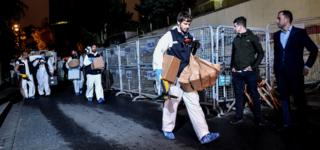
Callamard believes they were really a clean-up team. The consulate is sovereign Saudi territory under international law, and for two weeks the Saudis would not allow Turkish investigators to enter.
“By the time they were able to collect some evidence, there was nothing there, not even DNA evidence of Mr Khashoggi having been there,” says Callamard.
“The only logical conclusion is that the place was thoroughly, forensically cleaned.”
That evening, the Turkish authorities told the media that Khashoggi had been murdered in the Saudi consulate.
“Jamal really didn’t deserve this, He deserved so much better,” says Cengiz. “The way they killed him, it killed all my hope in life.”
The killing in Istanbul, inside an embassy with diplomatic immunity, put the Turkish authorities in a quandary.
For weeks, despite mounting pressure from the Turks, the Saudis refused to admit the murder, saying first there had been “a fist fight” in the consulate and then claiming it was “a rogue operation”.
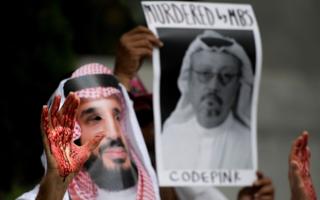
The Turkish authorities’ strategy was to leak some of what they knew to local and international press. They then invited representatives from the CIA and a few handpicked intelligence agencies, including MI6, to listen to the tapes, proving Khashoggi was murdered by Saudi state operatives.
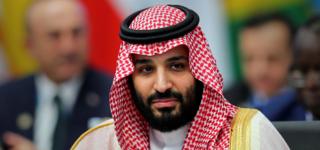
The CIA reportedly came to the conclusion there was “medium to high certainty” that Mohammad bin Salman had ordered the killing. They briefed Congressmen who were left in no doubt about the finding.
In January, the Saudi government finally put 11 people on trial in Riyadh for the murder of Khashoggi, including Mutreb and Dr al-Tubaigy, but not the alleged mastermind – Saud al-Qahtani.
He has not been indicted or even summoned to court to give evidence. I have been told he is being kept in seclusion away from everyone, including his own family, but is still in contact with the crown prince.

Callamard’s report for the UN Human Rights Council has reached a decisive conclusion.
“There is no indication under international law that this crime could be qualified under any other way but as a state killing,” she says.
Kennedy says the revelations of the Khashoggi murder tapes must be acted on.
“Something treacherous and terrible happened in that embassy. The international community has a responsibility to insist on a high-level judicial enquiry,” she says.
Turkey has demanded the extradition of those involved to face trial in Istanbul. But Saudi Arabia has refused.
The Saudi government declined to give an interview to Panorama, but said it condemned the “abhorrent killing” and it was committed to holding the perpetrators accountable.
It said that the crown prince had “absolutely nothing to do” with what it called a “heinous crime”.
One year on, as we leave the cafe, I can see the pain still suffered by the woman left behind when her fiance’s life was cut short so brutally.
In her parting words to me, Hatice Cengiz warns of the true significance of the killing of Jamal Khashoggi.
“It’s not only a tragedy for me – but for all humanity, all the people who think like Jamal and who took a stance like him.”



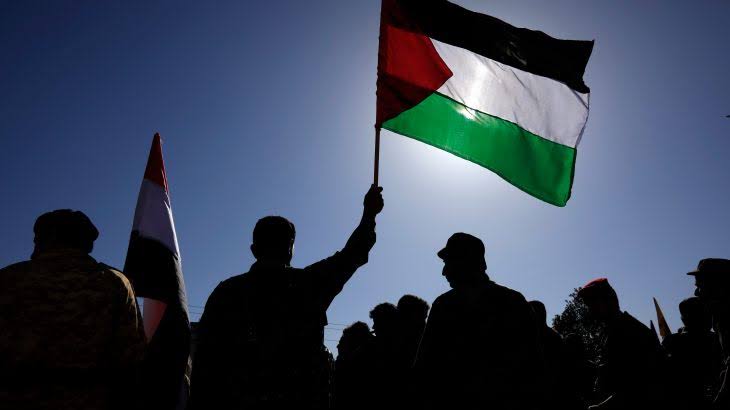


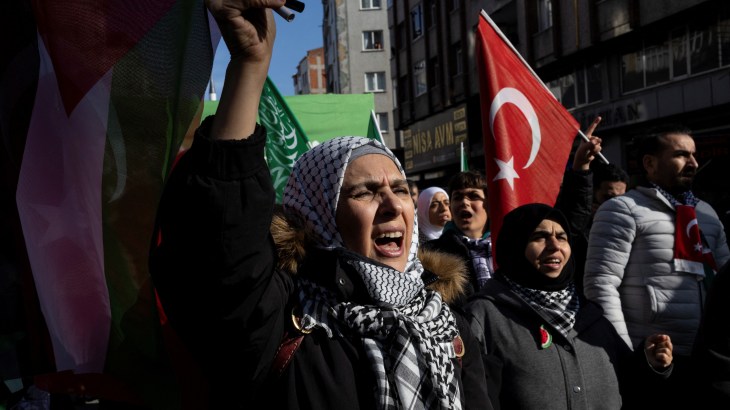
Dozens of Palestinians killed in overnight Israeli strikes in central and south Gaza as Red Sea tensions rise.
Here’s how things stand on Monday, January 15, 2024:
Latest updates and human impact
- Israeli attacks continue unabated overnight killing and wounding dozens of civilians in central and southern Gaza. At least 22 people were killed and a large number injured as a result of Israeli forces targeting al-Thalatheni Street in the central Gaza Strip.
- Yemen’s Houthi rebels fired an antiship cruise missile toward an American destroyer in the Red Sea, which was shot down by a US fighter jet, announced US Central Command (CENTCOM) on X.
- This was the first US-acknowledged Houthi attack since the US strikes on Yemen on Friday.
- Hamas released a 37-second video showing three Israeli captives held in Gaza on Sunday, saying they would reveal the fate of the captives on Monday and urging the Israeli government to stop the offensive.
- The Israeli military says it has shifted to a new phase of the war focused on the southern end of Gaza, where almost 2 million internally displaced Palestinians are running out of safe spaces to shelter.
- The Gaza Ministry of Health has said almost 24,000 people have been killed in the Israeli offensive. More than 60,000 people have been wounded in 100 days of war.
Diplomacy
- Israeli Prime Minister Benjamin Netanyahu said on Sunday that his country will pursue its war against Hamas until victory and will not be stopped by anyone, including the International Court of Justice (ICJ).
- The White House said on Sunday that “it’s the right time” for Israel to scale back its military offensive in the Gaza Strip.
- Egypt’s State Information Service (SIS) said in a statement on Sunday that one of the biggest obstacles to the timely delivery of sufficient aid to Gaza was Israeli inspection of the aid. The statement came after Israel blamed Cairo for the delay in aid delivery to Gaza during its defence at the ICJ.
- US Secretary of State Antony Blinken posted on X on Monday, calling for the release of the remaining captives held in Gaza on the 100th day since they were taken by Hamas. He did not mention the Palestinian casualties.
- Australia’s Foreign Minister Penny Wong, who described herself as a “friend of Israel” to the press, will travel to Jordan, Israel, the occupied Palestinian Territories and the United Arab Emirates this week, her office said on Monday.
West Bank raids and violence
- Israeli forces arrested 25 students staging a sit-in in protest against high tuition fees at An-Najah University in Nablus. Al Jazeera’s Hamdah Salhut reported that the protesting students received a text message from Israeli forces telling them to “surrender now”.
- Israeli forces have reportedly raided the family home of Nael al-Barghouti, the longest-serving Palestinian prisoner, in the village of Kobar, in Ramallah, in the occupied West Bank.
- The Israeli army said on Friday that it killed three Palestinian men who infiltrated a West Bank settlement and fired upon soldiers.
- The Israeli military killed two Palestinians after accusing them of ramming their car through a checkpoint near Hebron.
- Local sources reported that Israeli forces bulldozed two Palestinian-owned houses during a Sunday midnight raid in the city of Qalqilya, Palestinian news agency Wafa reported.
- Armed Israeli settlers broke into the village of Burin, south of Nablus, and attacked Palestinian residents’ houses and properties after midnight on Sunday, Wafa reported.
- “Violent raids and arrests have become part of the fabric of daily life in the occupied West Bank,” Al Jazeera’s Mohammed Jamjoom, reporting from Ramallah in the occupied West Bank, said. At least 347 Palestinians have been killed and thousands have been arrested since October 7.

Flames and smoke billow during Israeli attacks against Gaza on October 9, 2023
Human Rights Watch terms Israeli Defence Minister Yoav Gallant’s call for a ‘complete siege’ on Gaza a ‘war crime’.
The Hamas movement has threatened to kill an Israeli hostage every time Israel bombs a Palestinian home without warning as Israel mobilised some 300,000 reservists and imposed a total blockade of the Gaza Strip, denying the enclave’s millions of residents access to food, water and fuel.
The warning from Hamas came on Monday as the death toll from the armed group’s surprise weekend attack climbed to 900 in Israel and revenge attacks by Israeli forces on the besieged Gaza Strip killed more than 700 people and left some 3,700 others wounded.
Residential apartment blocks, hospitals, schools and a mosque have been among the sites attacked by Israeli fighter jets, artillery and drones, according to media reports and witnesses.
Hamas spokesperson Abu Ubaida issued the threat to kill Israelis from the dozens held captive by the armed group. He said an Israeli hostage would be killed for every Israeli bombing of a civilian house without warning.
Israeli Foreign Minister Eli Cohen said more than 100 people were taken captive by Hamas during the deadly cross-border incursion over the weekend.
As Israeli forces conducted intense retaliatory attacks on Gaza on Monday, Israel’s Defence Minister Yoav Gallant drew international condemnation by announcing a total blockade of the densely populated and besieged enclave, which is home to 2.3 million people.
Gallant said Israel would impose a “complete siege” on Gaza. “No electricity, no food, no water, no gas – it’s all closed.”
United Nations Secretary-General Antonio Guterres said he was “deeply distressed” by the siege announcement and warned that Gaza’s already dire humanitarian situation will now “only deteriorate exponentially”.
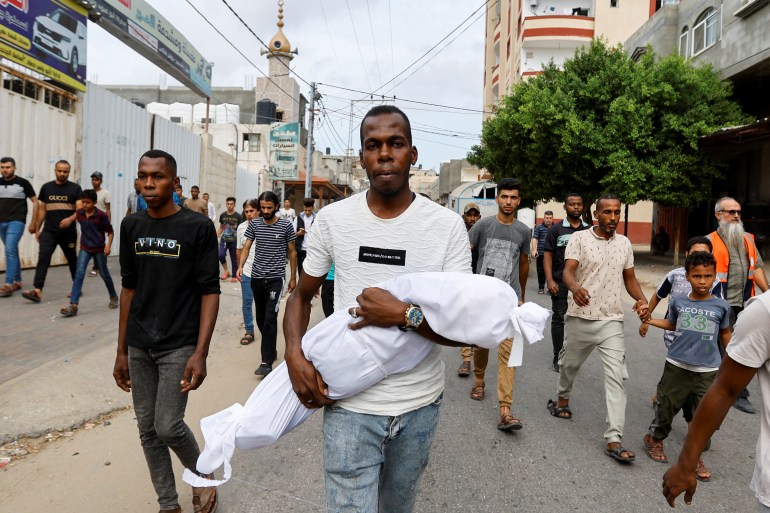
Guterres also said some 137,000 people were taking shelter with the UN Relief and Works Agency for Palestinian Refugees (UNRWA) at schools across Gaza.
UNRWA said on Tuesday that almost 190,000 people have been displaced in Gaza amid the Israeli attacks and the figure is expected to grow further as the violence intensifies.
Nearly half a million people have also not received food rations this week in Gaza as UN food distribution centres have been forced to remain closed amid the Israeli onslaught, UNRWA said.
Human Rights Watch said Israel’s total blockade on the necessities of life for everyday people in Gaza was a war crime.
“Defense Minister Gallant’s statements are abhorrent,” Omar Shakir, Israel and Palestine director at Human Rights Watch, said in a statement.
“Depriving the population in an occupied territory of food and electricity is collective punishment, which is a war crime, as is using starvation as a weapon of war. The International Criminal Court should take note of this call to commit a war crime,” he said.
Abhorrent. This is a call to commit a war crime by @yoavgallant. The @IntlCrimCourt should take note.
Quote by @OmarSShakir ⤵️ https://t.co/kKVo6YtpI1 pic.twitter.com/neHQMwnXVn
— Human Rights Watch (@hrw) October 9, 2023
Shakir also condemned the threat by Hamas to kill hostages, warning that such action was also a war crime.
“All hostages should be safely released to their families,” he said.
Grotesque. These threatened acts would amount to flagrant war crimes by Hamas’ armed wing. The @IntlCrimCourt will be watching.
Quote from @OmarSShakir ⤵️ https://t.co/FuNtvHe0YG pic.twitter.com/6cnHODLWyZ
— Human Rights Watch (@hrw) October 9, 2023
On the diplomatic front, Egyptian President Abdel Fattah el-Sisi and his Turkish counterpart Recep Tayyip Erdogan called on Hamas and Israel to immediately end violence and protect civilians, the Egyptian presidency said.
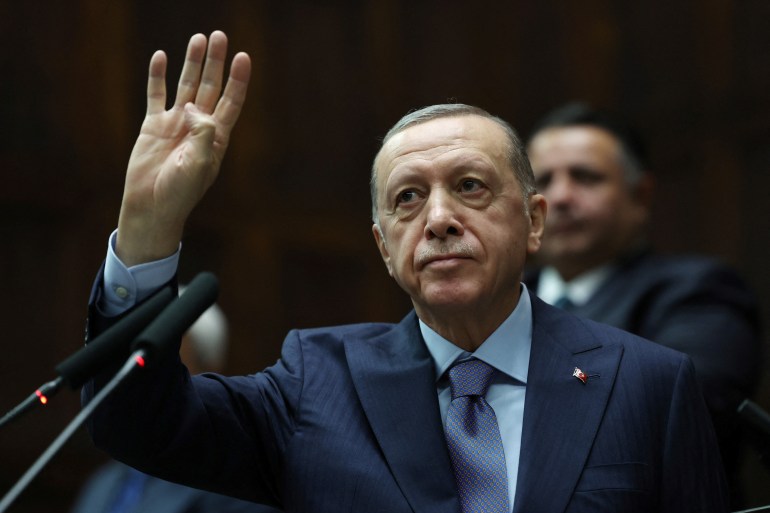
Erdogan urged Israel against “indiscriminately” attacking civilians and delivered measured criticism of Hamas, urging both sides to respect the “ethics” of war.
The United Kingdom, French, German, Italian and US governments issued a joint statement on Monday recognising the “legitimate aspirations” of the Palestinian people and supporting equal measures of justice and freedom for Israelis and Palestinians alike.
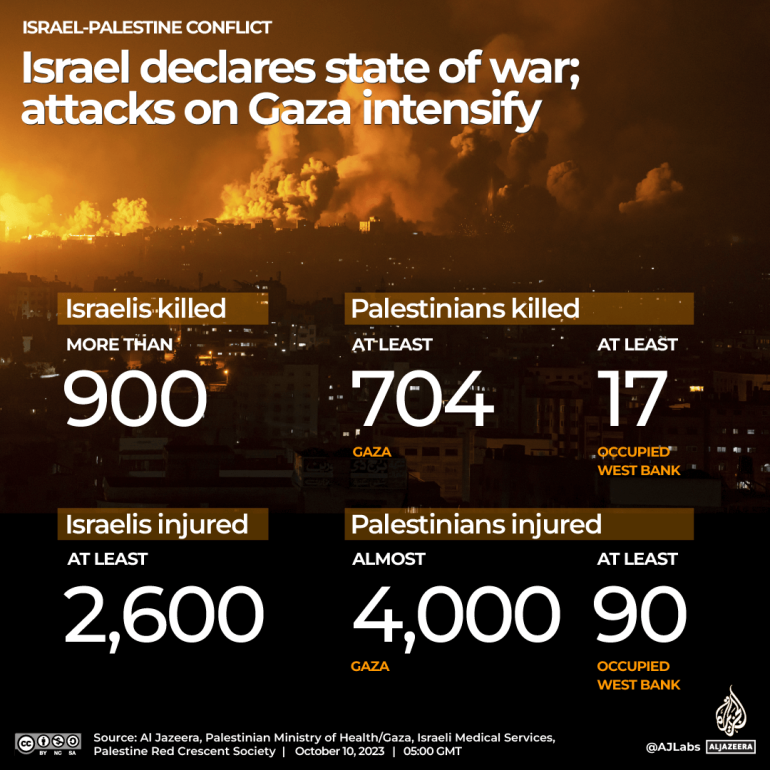
But the prospect that fighting could spread also alarmed the region and the world.
Lebanese armed group Hezbollah fired rockets into northern Israel in response to at least three of its members being killed in Israeli shelling of Lebanon.
Israel said one of its deputy commanders was also killed in an earlier cross-border raid from Lebanon.

US President Joe Biden holds a bilateral meeting with Israeli Prime Minister Benjamin Netanyahu on the sidelines of the 78th United Nations General Assembly in New York City, the US, September 20, 2023
Social media users, including journalists and observers, are calling out what they call a ‘double standard’.
After Saturday’s surprise attack by the Palestinian group Hamas on Israel, Ukrainian President Volodymyr Zelenskyy took to the social media platform X to offer “condolences go out to everyone who lost relatives or close ones in the terrorist attack”.
He also stated, “Israel’s right to self-defence is unquestionable.”
Many world leaders, including US President Joe Biden and UK Prime Minister Rishi Sunak, shared similar sentiments.
The world is seeing appalling images.
Thousands of rockets raining down on Israeli cities. Hamas terrorists killing not only Israeli soldiers, but civilians on the streets and in their homes.
It’s unconscionable. Israel has a right to defend itself – full stop.
— President Biden (@POTUS) October 7, 2023
European Commission President Ursula von der Leyen stated, “Israel has the right to defend itself – today and in the days to come. The European Union stands with Israel.”
Accusations of Western ‘double standards’
Some social media users have criticised these statements, saying they highlight a double standard.
The world is seeing appalling images.
Thousands of rockets raining down on Israeli cities. Hamas terrorists killing not only Israeli soldiers, but civilians on the streets and in their homes.
It’s unconscionable. Israel has a right to defend itself – full stop.
— President Biden (@POTUS) October 7, 2023
Ukraine’s right to defend itself is praised by most international leaders while Russia’s invasion is condemned, but commentators said the same cannot be said about Israel’s occupation of the West Bank and Gaza.
Aaron Bastani, a leftist British journalist, said on X that there’s a “clear double standard in endorsing terrorism against civilian targets in Ukraine … and condemning it by Palestinians”.
Many users said Western diplomats and media support the Ukrainians who defend their land, but label the Palestinians fighting against Israel as “terrorists”.
https://twitter.com/KhaledBeydoun/status/1710787817415082349?ref_src=twsrc%5Etfw%7Ctwcamp%5Etweetembed%7Ctwterm%5E1710787817415082349%7Ctwgr%5E6acf829869e993177f32aa38aa48c02f38cb7f61%7Ctwcon%5Es1_&ref_url=https%3A%2F%2Fwww.aljazeera.com%2Fnews%2F2023%2F10%2F9%2Fwestern-leaders-accused-of-hypocrisy-over-response-to-palestine-ukraine
An illustration of a woman’s face, in which one eye is closed beside a Palestinian flag, and one eye open beside a Ukrainian flag, has been regularly shared as a symbol of the West’s alleged double standards in how the two conflicts are viewed.
https://twitter.com/OnlinePalEng/status/1710994682883273172?ref_src=twsrc%5Etfw%7Ctwcamp%5Etweetembed%7Ctwterm%5E1710994682883273172%7Ctwgr%5E6acf829869e993177f32aa38aa48c02f38cb7f61%7Ctwcon%5Es1_&ref_url=https%3A%2F%2Fwww.aljazeera.com%2Fnews%2F2023%2F10%2F9%2Fwestern-leaders-accused-of-hypocrisy-over-response-to-palestine-ukraine
Clips also emerged on social media from a CNN interview with Mustafa Barghouti, the general secretary of the Palestinian National Initiative, in which he posed the rhetorical question, “Why does the United States support Ukraine in fighting occupation – while here they support the occupier, who continues to occupy us?”
The hypocrisy and double standards of western governments and media platforms dealing with situations in Ukraine-Russia and Palestine-Israel blow the mind. Absolute disgrace.
— Said Yacoubi (@AlyacoubiSaid) October 8, 2023
It is not the first time Western nations have been accused of double standards in their stance on the Ukraine war.
Earlier in the year, Amnesty International published a report highlighting the West’s “double standards” on global human rights.
Agnes Callamard, Amnesty’s secretary-general, told Al Jazeera at the time that the occupation of Palestinian territory was a “particularly important one”.
“Without making any comparison between Russia’s aggression and Israel … it is clear the Palestinian people are under a regime of oppression – a regime of occupation and a regime of apartheid,” Callamard told Al Jazeera.
Over the last three days, X users recirculated earlier statements calling out what they called Western hypocrisy, sharing video by the Irish lawmaker Richard Boyd Barrett from March 2022 in which he berated the Irish government’s double standards regarding Ukraine and Palestine:
“You’re happy to use the most strong and robust language to describe the crimes against humanity of [Russian President] Vladimir Putin, but you will not use the same strength of language when it comes to describing Israel’s treatment of the Palestinians.”
Barrett on Sunday again called out what he described as “shocking double standards of Western leaders supporting Ukraine resistance but condemning Palestinian[s].”
Meanwhile, others warned against comparing conflicts.
https://twitter.com/denfordauthor/status/1710993737738768607?ref_src=twsrc%5Etfw%7Ctwcamp%5Etweetembed%7Ctwterm%5E1710993737738768607%7Ctwgr%5E6acf829869e993177f32aa38aa48c02f38cb7f61%7Ctwcon%5Es1_&ref_url=https%3A%2F%2Fwww.aljazeera.com%2Fnews%2F2023%2F10%2F9%2Fwestern-leaders-accused-of-hypocrisy-over-response-to-palestine-ukraine
And some cautioned that Hamas and the Palestinians should not be seen as one and the same.
Just to clarify:
Palestine did not mount an attack on Israel. An Iranian proxy militia did. Palestinians are by and large huddled in their homes praying that an Israeli airstrike won't kill them or theirs. Hamas is the culprit here. This isn't a decentralized grassroots thing.
— Romeo Kokriatski (@VagrantJourno) October 9, 2023
Ukrainian footballer Oleksandr Zinchenko, who plays for Arsenal, posted on Instagram, stating he “stands with Israel”.
Zinchenko has been a vocal supporter of his home country in its ongoing defence against Russia, and he participated in a Game4Ukraine charity match in London earlier this year to raise money for Ukraine.
After online backlash, with some questioning an alleged double standard in his support of Israel, the footballer removed the post and switched his social media account to private.
Several people claimed that Zinchenko’s football club, in not responding to his comments, was guilty of hypocrisy after they had distanced themselves from former player Mesut Ozil’s comments in 2019 over alleged human rights abuses against Uighur Muslims in China.
-
 Audio10 years ago
Page – Day Break Everywhere Burst
-
 Audio5 years ago
Shadykarz – Forever
-
 Audio10 years ago
Juniorboy ft. 9ice – IRAPADA
-
 Entertainment Gists6 years ago
Ex-Beauty Queen, Sandra Benede Shares Sexy Photo
-
 Audio5 years ago
Simi – Happy Birthday ft. Adekunle Gold, DeJa
-
 Audio5 years ago
Ruger – Bounce
-
 Mixtapes4 years ago
Mixtape: DJ DimpleNipple – The Best Of Amapiano Thrills
-
 Editorials3 years ago
Sa’eedah Imam On Creating Her Imprint In The Nigerian Music Industry As An Emerging Creative Writer