

President Muhammadu Buhari has called for the abolition of slavery in all modern forms in a opinion article he published in The Washington Post to mark the International Day for the Remembrance of the Slave Trade and its Abolition.
See the article below…
Four centuries ago, the first 20 documented African slaves arrived on the shores of Virginia. In the years that followed, millions more were shipped in dehumanizing conditions across the ocean and enslaved. Slavery had, of course, existed before. But this indicated the beginning of a mechanized trade that saw human beings reduced to property on an unprecedented scale.
Despite the fact that descendants of African slaves have made valuable contributions across society, they are still dealing with the effects of this poisonous legacy. They still have to navigate its everyday manifestations, such as discrimination, racism or lack of access to resources and opportunities.
This must not be overlooked or forgotten. Yet, as we reflect on this day, International Day for the Remembrance of the Slave Trade and Its Abolition, it is clear slavery did not only thrive then. It still thrives today. Across the world it is estimated there are as many as 40 million men, women and children living in forced servitude. They are the industrial victims of a business many believe was abolished hundreds of years ago. They are the modern enslaved.
Their exploitation appears in many guises, though usually unrecognized as slavery. Many victims are unseen, hidden beneath opaque supply chains. Others are hidden in plain sight, entrapped by circumstances that rob them of autonomy. In any case, their labor, often dangerous, is no product of choice, and its conditions are self-perpetuating. In Africa, its modern forms include debt bondage, the enslavement of war captives, commercial sexual exploitation and forced domestic servitude.
Holding people held against their will, controlling their movements and forcing them to work for the sole profit of others — wherever they are — is slavery today and always. The abolitionists of the 19th century succeeded more than any before: By working to extinguish the transatlantic slave trade that had claimed 15 million victims, they laid the groundwork to ensure it did not manufacture millions more. But their work is not done. We must take up their examples as we forge a path forward to eliminate modern-day slavery in all its forms.
Slavery, once again, has become entwined in the global economy — and it is largely unseen. For instance, most of us might know in principle that the mining of cobalt crucial to our smartphones might have used forced labor. But what do we know of those that experience it? Just as personal testimony and resulting public pressure led to the passing of the Act for the Abolition of the Slave Trade in Britain in 1807, these stories must be told and used to inform policy.
Once heard, they can elevate visceral reactions, driving the public pressure needed to ensure the application of anti-slavery laws. One distinction from then and now is important: the costs. From records, adjusted for today’s prices, the cost of a human-being-as-property was valued on average at $40,000. Today, it is just $90, sometimes even lower. We must remember that slavery is not simply a campaign of hatred; it is the pursuit of profit. One way to extinguish it in its current forms, therefore, is to make it economically unfeasible.
This means making sure that any anti-slavery laws have bite, come with strong penalties and are enforced. It is also vital to have a robust tip-off and reporting system. Where this once meant detecting ships, today the signs are less conspicuous. The public must be shown how to see what is hidden in plain sight, particularly signs of suspicious behavior. This might seem broad. But vagueness should not give rise to reluctance to report anything that could be smuggling or forced servitude.
If something doesn’t look right, report it, for you could be securing another human’s freedom. In Nigeria, our anti-trafficking agency has rolled out the “Not for Sale” campaign to protect against the deceptions of human smugglers, helping those who might be vulnerable to false promises see through the ruse and say no. These prevention programs are crucial. The appearance of slavery today might have changed.
The institution has not. There are no radical solutions to conjure, only political will. But on this, we can learn from the past, the shadows in which modern slavery proliferates today. It is not enough to mark this 400th anniversary. We must use it as a platform to eliminate slavery in all its present-day forms. We should reflect in memory to find a better future, one that should ensure freedom for all.





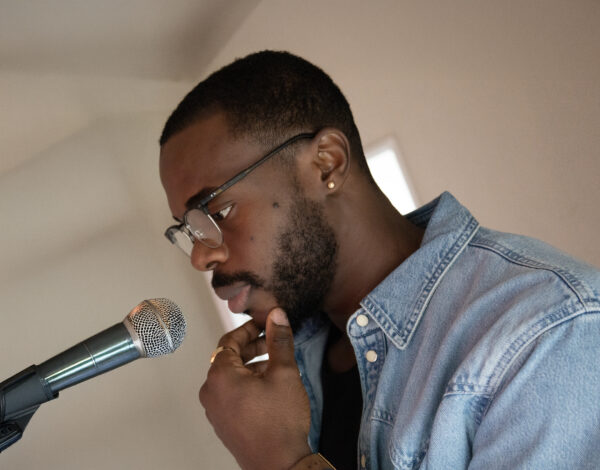
At 31, Lagos-born Espago is redefining what it means to be a late bloomer in the Nigerian music
space. After spending years as a chef, designer, and farmer, Espago turned to music just a year
ago on a journey sparked by deep loss, life experience, and self-discovery.
What makes him different? It’s not just his sound, it’s his story. Espago brings a calm but
confident energy that mirrors his Lagos upbringing: a blend of vibrant Fuji rhythms and soulful
Afrobeat traditions like King Sunny Ade, shaped by global legends like Michael Jackson and
Celine Dion. His voice? Professionally trained. His brand? Stylish, grounded, and intentional.
Espago didn’t wait for the industry to find him; he found his own way in, teaching himself,
searching out producers, and building his identity from scratch. With no major label backing and
no big-name features, he has still built a brand marked by boldness, emotion, and Lagos street
authenticity.
He’s not just making music; he’s building a lifestyle brand. His creative roots are in food,
fashion, and music fused into something richer than just a “sound.” It’s a full experience. While
he hasn’t performed live yet, he’s putting in the work behind the scenes, mentoring new artists,
recording regularly to sharpen his voice and brand for bigger stages ahead.
In a scene dominated by speed, Espago’s journey is about intentional growth, honest
expression, and emotional connection.
As the new class of Afro‑HipHop begins to take shape, Espago stands out not just for what he’s
making, but for who he is becoming.

Rising artist Derriq isn’t just making music for entertainment; he’s building a legacy rooted in culture, resilience, and pride. The Lagos-based Afro-soul and Afrobeats singer has his eyes set on something bigger than streaming numbers: putting his hometown of Benin City on the global creative map is his dream.
A native of Edo State, Derriq’s musical journey began as a child organizing school parties just for the chance to perform. Since then, he’s gone from studio assistant to full-fledged artist, releasing impactful tracks like “Position,” “Vibration,” and “Confidence.” His sound, described as smooth, calm, and party-ready, reflects the duality of his personality: laid-back yet determined, quiet but powerful.
Derriq is more than just a promising name on Nigeria’s growing music roster; he’s a symbol of the next generation of artists who blend regional identity with global appeal using his distinctive voice, a strong sense of direction, and his signature slang “Yehboo! Yezaiii!” making waves among fans, Derriq is proving that cultural authenticity still cuts through the noise.
His next single, “Omo n’ Ogie,” is a tribute to his heritage and a signal that he’s just getting started. Keep your eyes on Derriq, he’s not just singing for the moment, he’s singing for a movement.
Follow @DerriqMusic on all social platforms
For interviews and press: derriqmusic@gmail.com

Good morning! Here is today’s summary from Nigerian Newspapers:
1. President Bola Tinubu will address the nation in a broadcast today, Sunday, August 4, 2024. Mr Ajuri Ngelale, Special Adviser to the President on Media and Publicity, announced this in a statement, on Saturday, saying the broadcast would hold at 7am.
2. The Commissioner of Police in Borno State, Yusuf Lawal, on Saturday confirmed the killing of four persons along Baga Road in Maiduguri, Borno State during the nationwide #EndBadGoverment protest. He said Boko Haram elements infiltrated the protesters and killed four persons on Thursday with explosives at a filling station.
3. Many persons have been feared killed while others sustained injuries as hoodlums clashed with security operatives in Kano. It was gathered that Rijiyar Lemo, Kurna to Bachirawa areas in Fagge Local Government, Kofar Nassarawa in Kano municipal and Unguwa Uku area of Tarauni Local Government are the worst hit areas.
4. The leadership of the organised labour, on Saturday, warned the Nigeria Police Force and other security forces to stop what it described as a “massacre” of protesters carrying out nationwide demonstrations against hunger in the land.
5. Leading Human Rights group, Amnesty International Nigeria, has said over 50 protesters were arrested in Abuja on the third day of the demonstration against hardship in the land.
6. Former Vice-President Atiku Abubakar has urged the police and other security agencies to stop shooting and killing protesters demanding good governance in Nigeria. Atiku in a statement on Saturday, questioned the professionalism of the security agencies in the handling of the ongoing demonstrations.
7. Some of the organisers and supporters of the ongoing protest have set up pages to raise over N4bn through GoFundMe, a popular online crowdfunding platform. A check on Saturday showed that a total of N4.1bn had been benchmarked to be donated through accounts created by three GoFundMe users.
8. Tragedy struck again in Imo State on Saturday evening when some gunmen reportedly shot dead the President-General of Umucheke Okwe autonomous community in Onuimo Local Government Area of Imo State, Hyginus Ohazurike. Six village heads from the autonomous community were also allegedly killed by the gunmen.
9. The Federal Capital Territory Commissioner of Police, Bennett Igweh has said his men were not responsible for the death of a teenager in the Kubwa area of the FCT. In a viral video, a man claimed that police, while dispersing protesters, shot dead a teenager in the Kubwa area.
10. The Minister of Budget and Economic Planning, Atiku Bagudu has said President Bola Tinubu is keeping an eye on the ongoing #EndBadGovernance demonstrations across the country.
-
 Audio10 years ago
Page – Day Break Everywhere Burst
-
 Audio5 years ago
Shadykarz – Forever
-
 Audio10 years ago
Juniorboy ft. 9ice – IRAPADA
-
 Entertainment Gists6 years ago
Ex-Beauty Queen, Sandra Benede Shares Sexy Photo
-
 Audio5 years ago
Simi – Happy Birthday ft. Adekunle Gold, DeJa
-
 Audio5 years ago
Ruger – Bounce
-
 Mixtapes4 years ago
Mixtape: DJ DimpleNipple – The Best Of Amapiano Thrills
-
 Editorials3 years ago
Sa’eedah Imam On Creating Her Imprint In The Nigerian Music Industry As An Emerging Creative Writer