

Chidi Odinkalu, former Chairman of the National Human Rights Commission NHRC, has said that the Senior Pastor of the Commonwealth of Zion Assembly COZA, Chidi Odinkalu, might have won in the rape case filed against him by Busola Dakolo at the Abuja High Court but his name is in ruins and he might never be able to clear the rape allegation leveled against him by Mrs Dakolo.
Chidi Odinkalu shared his opinion in a new artilce he wrote titled ”Busola Dakolo: In Praise of Soft Vengeance”. Read the full article below
At the end of June 2019, #MeToo became #ChurchToo in Nigeria.
Busola Dakolo, a mother of three who grew up a gifted child was the unlikely heroine in this script. She first laid bare her claims in an interview with Chude Jideonwo, lawyer and co-founder of the digital platform, YNaija. These claims later became the basis for her civil claim filed at the Abuja High Court on September 6, detailing harrowing allegations of rape perpetrated against her by Pastor Biodun Fatoyinbo, best known as the senior pastor of the Commonwealth of Zion Assembly (COZA). The acts took place on 23 and 26 September 2002.
To be clear, this was not the first time allegations of sexual predation had been made against this pastor. Mrs. Dakolo’s allegations, however, felt different. They were detailed; as a married mother, she had very little to gain from making these allegations public and an awful blowback was both predictable and to be expected from partisans and propagandists of the alleged perpetrator.
The first incident of sexual assault allegedly took place when she was 17 in her parents’ house in Ilorin, Kwara State. Neither parent was at home and the pastor knew this. She had never experienced sexual intimacy before then. She looked up to the pastor as her “Spiritual Father”. The facts would suggest that the alleged perpetrator probably groomed her for this moment. After the sexual act, he reportedly gave her a bottle of “Krest”, a lemonade-flavoured soda and forced her to drink it. There was a second incident which reportedly took place in or on a car. As a young Christian girl from a polygamous home, Busola Amupitan, as she was when these sexual assaults reportedly took place, initially was unable to confide in anyone about these crimes.
Expectedly, these allegations set off a firestorm across Nigeria and beyond. The alleged perpetrator initially issued a statement offering a general denial of the allegations and threatening both civil and criminal proceedings. For the first time, Pastor Fatoyinbo found himself issuing a public response to such allegations. In the past, he had not dignified similar allegations with an acknowledgement. Pastor Fatoyinbo’s threat of criminal proceedings sounded like bluster. He did not have a plausible path to criminal proceedings against her.
In the end, Mrs. Dakolo sued before the civil courts. A mere nine weeks after her case was filed, Justice A.O. Musa, sitting on the outskirts of Abuja in Bwari, delivered a ruling on the outskirts of the jurisprudential season, holding on November 14 that it was statute-barred. Under the applicable laws, he ruled, such cases must be filed not later than 75 months (six years and three months) after the act complained of. Having dismissed Mrs. Dakolo’s action, the judge then added: “…what we are now left with in this suit is sentiment. This suit is soaked in emotions and ferried into this court by the claimant riding on the thick clouds of bourgeoning sentiments”, claiming that it will “occasion grave miscarriage of justice” to ask the pastor to answer to these claims after 16 years.
This ruling raises many questions about the state of both law and procedure concerning sexual assaults in Nigeria, especially, one reported so many years after it happened. As the world marks the International day for the Elimination of Violence Against Women, it is important to return to these.
Criminal proceedings, if one were to take place, become a trial, not of the alleged perpetrator, but an ordeal for the victim, in which her intimate life is subjected to humiliating micro-examination for the purpose of granting the perpetrator a free pass.
In principle, there is no limitation on criminal prosecution for rape or sexual violence. The fact that the allegations in this case happened long ago does not preclude an investigation or, if evidence of rape is in fact unearthed, of prosecution. Achieving such an outcome, however, would be dependent on overcoming some constraints of law, evidence and practice.
Let’s begin with the broad regime of laws affecting rape and sexual violence in Nigeria. At present, Nigeria has a multiplicity of sources of laws on rape and sexual violence. There are at least five. In the Federal Capital Territory, the Violence Against Persons (Prohibition) Act (VAPPA) of 2015 has a robust definition of rape as a crime that can be committed by both men and women and involves penetration of any bodily orifice. Nine states – Anambra, Benue, Ebonyi, Edo, Ekiti, Enugu, Kaduna, Osun, and Oyo – seven in the south and only two in the north – have adopted the VAPPA. In nine other states of Southern Nigeria, the Criminal Code applies. Separately, Lagos State enacted a Criminal Law in 2011, which defined rape in terms that both anticipated and resemble the VAPPA. 12 States of Northern Nigeria that have adopted Sharia also recognise a Huddud crime of rape. Additionally, the Penal Code remains applicable in 17 States of the north in relation to the crime of rape.
Both the Criminal and Penal Codes are Victorian pieces of legislation, the gist of whose prescriptions on sexual violence were defined in the last quarter of the 19th century during the reign of Queen Victoria. By the way, she died in 1901. In the terms alleged, the crimes against Mrs. Dakolo took place in Kwara State, where the Penal Code is applicable.
Section 282 of the Penal Code defines the crime of rape as comprising four essential elements:
(a) penetration of female genitals with the male phallus;
(b) the act of penetration achieved without the consent of the woman or the consent – if one is alleged – was obtained by fraud, force, threat, intimidation, deceit or impersonation;
(c) the woman is not the wife of the perpetrator; and
(d) the perpetrator intended to achieve penetration of the woman without her consent or acted recklessly without regard to whether or not she consented.The two most important of these four elements are the physical act of penetration and the communicative act of lack of consent. Every investigation of rape invariably turns on these, making rape a trial of the body of the woman or victim.
Rape typically occurs outside public view. Overcome invariably by personal feelings of guilt and filth, victims are often too ashamed in the immediate aftermath of the crime to confide in anyone. As a result, rape kits are often not performed until after loss of biological evidence. By the time a rape kit is performed, essential biological evidence would have been lost, making the likelihood of effective investigation or successful prosecution rather low or non-existent. Criminal proceedings, if one were to take place, become a trial, not of the alleged perpetrator, but an ordeal for the victim, in which her intimate life is subjected to humiliating micro-examination for the purpose of granting the perpetrator a free pass. Unsurprisingly, many victims, unwilling to subject themselves to such ordeals, would rather nurse their violations and not report rape.
This is the context for assessing the ruling dismissing Mrs. Dakolo’s civil case. The victim was too young at the time of the alleged incident. The judge, having held the case was statute–barred, went on to venture gratuitous put downs that did not do him a lot of credit. He rendered judgment with neither compassion nor humaneness and was too enthusiastic to lay into the victim. The award of punitive costs against her counsel (in the sum of one million naira) appeared rather uncalled for at best.
…the definition of rape in both the Criminal and Penal Codes is clearly very outdated. It makes the crime near impossible to prove. To achieve this, VAPP Act needs to be taken to all the States and made the standard all over Nigeria. This will make it possible to harmonise the laws of sexual offences across the country…
Whatever the difficulties of proof, cases like Mrs. Dakolo’s remind us of the need to scale up rape law reform in Nigeria. Some basic steps can help.
First, the definition of rape in both the Criminal and Penal Codes is clearly very outdated. It makes the crime near impossible to prove. To achieve this, VAPP Act needs to be taken to all the States and made the standard all over Nigeria. This will make it possible to harmonise the laws of sexual offences across the country, eliminating the confusion that presently exists. The Conference of Attorneys-General in concert with the inspector-general of Police can commit to legislating to make this possible.
Second, at present, the law allows evidence of the sexual or intimate histories of victims from the proceedings but mostly precludes such evidence on the part of alleged perpetrators. This incidence of the laws of evidence in rape proceedings in most jurisdictions in Nigeria can be reversed by amending the relevant laws in all the states other than Lagos where this has already been achieved.
Third, in civil cases alleging the rape of minors – as in persons under the age of 18 – or culpability of persons in authority over the victim (as in a pastor), it should be possible to allow for a doctrine of continuing violation triggering the commencement of computation for limitation purposes from either the attainment of majority or the end of the power relationship between the victim and the perpetrator (whichever is later). If this requires updating legal doctrine or amending the statute of limitation, then it should be done.
Fourth, predictably, propagandists for the alleged perpetrator have gone to town with unfounded claims of his exoneration. That, sadly, is far from what has happened. It is impossible, however, for victims in cases such as this not to feel let down by the system. We must invest in weaning judges through training of a prevailing Victorian mind-set about remedying rape.
Pastor Fatoyinbo may have achieved a technical legal victory but it has left his name in ruins. He may never be able to clear himself of allegations that he is a rapist. That is a terrible burden for a “Man of God” to live with, a testament to the soft vengeance of Busola Dakolo’s incredible courage.






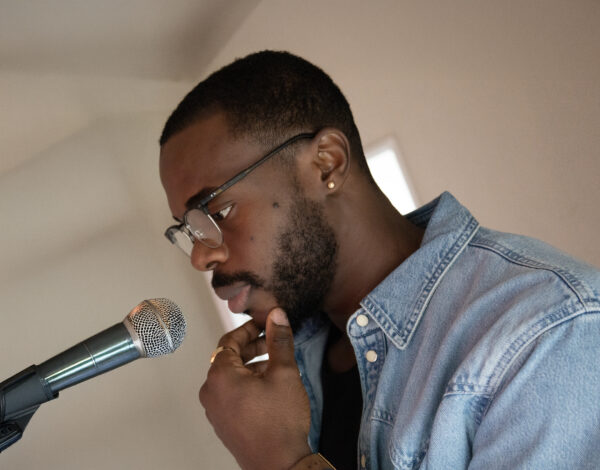
At 31, Lagos-born Espago is redefining what it means to be a late bloomer in the Nigerian music
space. After spending years as a chef, designer, and farmer, Espago turned to music just a year
ago on a journey sparked by deep loss, life experience, and self-discovery.
What makes him different? It’s not just his sound, it’s his story. Espago brings a calm but
confident energy that mirrors his Lagos upbringing: a blend of vibrant Fuji rhythms and soulful
Afrobeat traditions like King Sunny Ade, shaped by global legends like Michael Jackson and
Celine Dion. His voice? Professionally trained. His brand? Stylish, grounded, and intentional.
Espago didn’t wait for the industry to find him; he found his own way in, teaching himself,
searching out producers, and building his identity from scratch. With no major label backing and
no big-name features, he has still built a brand marked by boldness, emotion, and Lagos street
authenticity.
He’s not just making music; he’s building a lifestyle brand. His creative roots are in food,
fashion, and music fused into something richer than just a “sound.” It’s a full experience. While
he hasn’t performed live yet, he’s putting in the work behind the scenes, mentoring new artists,
recording regularly to sharpen his voice and brand for bigger stages ahead.
In a scene dominated by speed, Espago’s journey is about intentional growth, honest
expression, and emotional connection.
As the new class of Afro‑HipHop begins to take shape, Espago stands out not just for what he’s
making, but for who he is becoming.

Rising artist Derriq isn’t just making music for entertainment; he’s building a legacy rooted in culture, resilience, and pride. The Lagos-based Afro-soul and Afrobeats singer has his eyes set on something bigger than streaming numbers: putting his hometown of Benin City on the global creative map is his dream.
A native of Edo State, Derriq’s musical journey began as a child organizing school parties just for the chance to perform. Since then, he’s gone from studio assistant to full-fledged artist, releasing impactful tracks like “Position,” “Vibration,” and “Confidence.” His sound, described as smooth, calm, and party-ready, reflects the duality of his personality: laid-back yet determined, quiet but powerful.
Derriq is more than just a promising name on Nigeria’s growing music roster; he’s a symbol of the next generation of artists who blend regional identity with global appeal using his distinctive voice, a strong sense of direction, and his signature slang “Yehboo! Yezaiii!” making waves among fans, Derriq is proving that cultural authenticity still cuts through the noise.
His next single, “Omo n’ Ogie,” is a tribute to his heritage and a signal that he’s just getting started. Keep your eyes on Derriq, he’s not just singing for the moment, he’s singing for a movement.
Follow @DerriqMusic on all social platforms
For interviews and press: derriqmusic@gmail.com

Good morning! Here is today’s summary from Nigerian Newspapers:
1. President Bola Tinubu will address the nation in a broadcast today, Sunday, August 4, 2024. Mr Ajuri Ngelale, Special Adviser to the President on Media and Publicity, announced this in a statement, on Saturday, saying the broadcast would hold at 7am.
2. The Commissioner of Police in Borno State, Yusuf Lawal, on Saturday confirmed the killing of four persons along Baga Road in Maiduguri, Borno State during the nationwide #EndBadGoverment protest. He said Boko Haram elements infiltrated the protesters and killed four persons on Thursday with explosives at a filling station.
3. Many persons have been feared killed while others sustained injuries as hoodlums clashed with security operatives in Kano. It was gathered that Rijiyar Lemo, Kurna to Bachirawa areas in Fagge Local Government, Kofar Nassarawa in Kano municipal and Unguwa Uku area of Tarauni Local Government are the worst hit areas.
4. The leadership of the organised labour, on Saturday, warned the Nigeria Police Force and other security forces to stop what it described as a “massacre” of protesters carrying out nationwide demonstrations against hunger in the land.
5. Leading Human Rights group, Amnesty International Nigeria, has said over 50 protesters were arrested in Abuja on the third day of the demonstration against hardship in the land.
6. Former Vice-President Atiku Abubakar has urged the police and other security agencies to stop shooting and killing protesters demanding good governance in Nigeria. Atiku in a statement on Saturday, questioned the professionalism of the security agencies in the handling of the ongoing demonstrations.
7. Some of the organisers and supporters of the ongoing protest have set up pages to raise over N4bn through GoFundMe, a popular online crowdfunding platform. A check on Saturday showed that a total of N4.1bn had been benchmarked to be donated through accounts created by three GoFundMe users.
8. Tragedy struck again in Imo State on Saturday evening when some gunmen reportedly shot dead the President-General of Umucheke Okwe autonomous community in Onuimo Local Government Area of Imo State, Hyginus Ohazurike. Six village heads from the autonomous community were also allegedly killed by the gunmen.
9. The Federal Capital Territory Commissioner of Police, Bennett Igweh has said his men were not responsible for the death of a teenager in the Kubwa area of the FCT. In a viral video, a man claimed that police, while dispersing protesters, shot dead a teenager in the Kubwa area.
10. The Minister of Budget and Economic Planning, Atiku Bagudu has said President Bola Tinubu is keeping an eye on the ongoing #EndBadGovernance demonstrations across the country.
-
 Audio10 years ago
Page – Day Break Everywhere Burst
-
 Audio5 years ago
Shadykarz – Forever
-
 Audio10 years ago
Juniorboy ft. 9ice – IRAPADA
-
 Entertainment Gists6 years ago
Ex-Beauty Queen, Sandra Benede Shares Sexy Photo
-
 Audio5 years ago
Simi – Happy Birthday ft. Adekunle Gold, DeJa
-
 Audio5 years ago
Ruger – Bounce
-
 Mixtapes4 years ago
Mixtape: DJ DimpleNipple – The Best Of Amapiano Thrills
-
 Editorials3 years ago
Sa’eedah Imam On Creating Her Imprint In The Nigerian Music Industry As An Emerging Creative Writer