

The Duke of Edinburgh, arguably the world’s most famous husband, has died at the age of 99.
He spent seven decades in the shadow of his wife, the UK’s Queen Elizabeth II – but his force of personality meant he would never be simply a professional spouse.
So who was the man beside the monarch, and how did he come to marry the Queen?
A husband but never a king
First things first: The Duke, also known as Prince Philip, was never in line for the throne – which his eldest son stands to inherit – and never held the title of king.
That’s because in the UK, a woman who marries the monarch can use the ceremonial title of queen – but men who marry the monarch can’t use the title king, which can only be used by male sovereigns.
The Queen and Prince Philip had four children together: Prince Charles, 72, Princess Anne, 70, Prince Andrew, 61, and 57-year-old Prince Edward.
As they tell it, Philip often exerted his will when they were young.
Royal biographer Ingrid Seward quotes Prince Andrew as saying of his childhood: “Compassion comes from the Queen. And the duty and discipline comes from him.”
But Andrew also remembered how his father made time to invent bedtime tales, or listen to his children read Rudyard Kipling’s Just So Stories.


Prince Philip lived long enough to see his eight grandchildren grow up, and to welcome 10 great-grandchildren.
Where did he start out in life?
Curiously, Philip’s journey to Buckingham Palace began back in 1922, in a crib made from an orange box.
He was born on 10 June 1921 on the Greek island of Corfu, the youngest child and only son of Prince Andrew of Greece and Princess Alice of Battenberg.
That heritage made him a prince of Greece and Denmark, but the following year the family was banished from Greece after a coup.
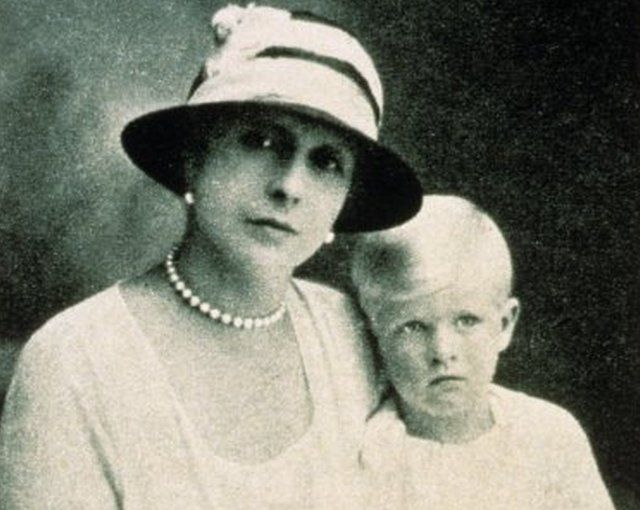
A British warship carried them to safety in Italy, with baby Philip dozing in a makeshift fruit crate cot.
What was his upbringing like?
Philip’s childhood was fragmented, and darkened by a series of losses.
In 1930, when he was eight years old, his mother was committed to a secure psychiatric centre after suffering a nervous breakdown.
Philip saw little of either parent in the years that followed. His father retreated to the French Riviera with a mistress, and his mother’s relatives in the UK helped raise him. He would later adopt their surname, Mountbatten – an anglicised form of the family name Battenberg.
A Scottish boarding school, Gordonstoun, passed for home during his teens. Its founder and headmaster was Jewish educational pioneer Kurt Hahn, who had been forced out of Germany for condemning the Nazis.
The school gave Philip structure, and nurtured his self-reliance. Its somewhat Spartan regime saw pupils rise early for a freezing shower and cross-country running, which Hahn believed would combat the “poisonous passions” of adolescence.


In 1937, one of Philip’s four sisters, Cecilie, died in an air crash along with her German husband, mother-in-law, and two young sons. She was heavily pregnant at the time.
Cecilie had recently joined the Nazi party, which had near-totalitarian control of Germany. Grieving Philip, aged 16, walked through the streets of Darmstadt behind his sister’s coffin, past crowds giving “Heil Hitler” salutes.
“It’s simply what happened,” Prince Philip later said of that time. “The family broke up. My mother was ill, my sisters were married, my father was in the south of France. I just had to get on with it. You do. One does.”
How did Philip court the Queen?
When King George VI paid an official visit in July 1939, Philip was charged with entertaining his young daughters, Princesses Elizabeth and Margaret.
Their governess, Marion Crawford (employed as a guardian for the princesses), recalled later that Philip had “showed off a great deal”. He made quite an impression on the 13-year-old Elizabeth, as would soon become clear.

Prince Philip served with distinction in World War Two, seeing military action for the first time in the Indian Ocean. By October 1942, he was 21 years old – and one of the Royal Navy’s youngest first lieutenants.
The teenaged princess and the officer kept in touch by letter. Over Christmas 1943, after Philip had been to stay with the Royal Family, a photograph of him in naval uniform appeared on her dressing room table. It was a decisive gesture from a reserved but determined young woman.
Some aides were sceptical. A famous sneer (since attributed to more than one official) claimed the prince was “rough, ill-mannered, uneducated and would probably not be faithful”.
But naysayers could do nothing to deter the future Queen.
According to biographer Philip Eade, Philip’s letters from 1946 reveal an ardent young man with a new sense of purpose.
He wrote to his soon-to-be mother-in-law: “I am sure I do not deserve all the good things that have happened to me. To have been spared in the war and seen victory, to have been given the chance to rest and to re-adjust myself, to have fallen in love completely and unreservedly, makes all one’s personal and even the world’s troubles seem small and petty.”

King George gave Philip permission to marry his daughter. But first there were some tweaks to make.
The erstwhile Prince of Greece and Denmark became a naturalised British subject, formally joined the Church of England and abandoned his foreign titles.
On his wedding day, 20 November 1947, he was made Duke of Edinburgh, a name he was widely known by for the rest of his life. He was 26, and his new wife 21.
The royal couple would have just over four years (and two children) together before duty came knocking.
The fateful news reached them at a game lodge in Kenya, during their 1952 tour of the Commonwealth. King George VI, Elizabeth’s father, was dead at 56.
Commander Michael Parker, the Duke of Edinburgh’s friend and private secretary, described the moment he realised his wife was now Queen.
“He looked as if you’d dropped half the world on him. I have never felt so sorry for anyone in all my life. He just breathed heavily, in and out, as though he were in shock. He saw immediately that the idyll of their life together had come to an end.”
Philip’s naval ambitions were curbed. The new Queen Elizabeth would need her husband by her side.
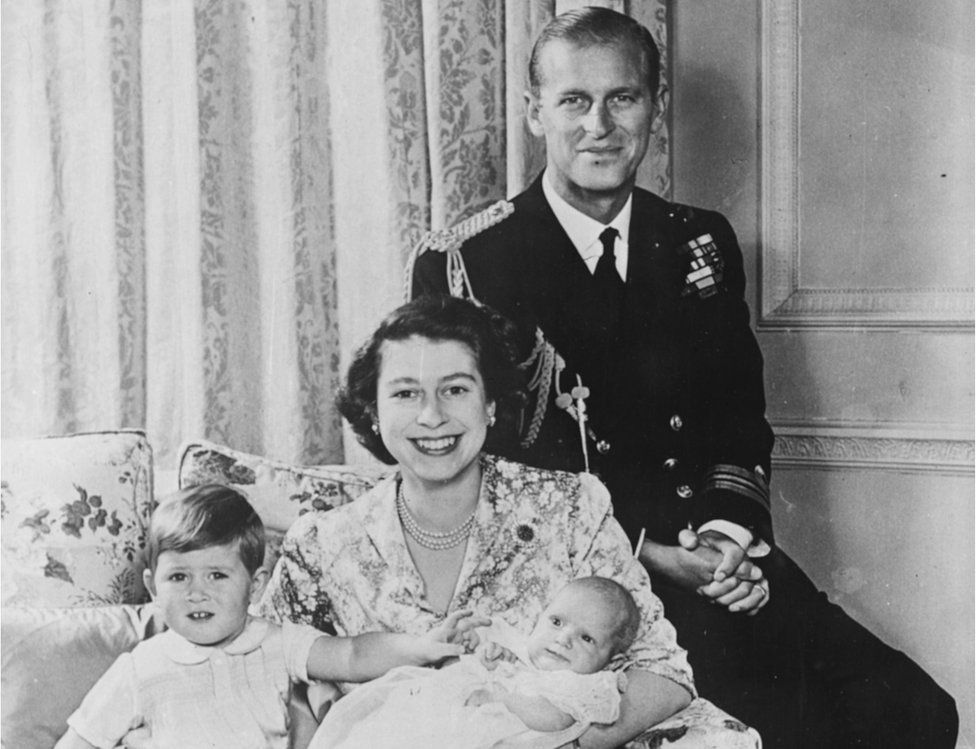
The Duke of Edinburgh was named as the Queen’s consort. His primary function was to support his wife.
A long-running row broke out in the early 1950s when Philip wanted the Royal Family to take his surname, Mountbatten.
“I am the only man in the country not allowed to give his name to his children!” he fumed when the Queen was persuaded to keep Windsor. “I’m nothing but a bloody amoeba!”
Philip struggled to find purpose in the limited role set out for him. But as a natural pragmatist, he was determined to blow fresh air through the stuffier corridors of Buckingham Palace.
How did Philip change the monarchy?
The Duke never forgot his family’s forced exodus from Greece, and believed monarchies must adapt to survive.
He set up informal lunches where the Queen could meet people from a broader range of backgrounds. The footmen – palace servants with a traditional uniform – stopped powdering their hair. And when he learned the palace was running a second kitchen exclusively to feed the royals, he had one shut down.

Some changes were more personal, and reflected his childlike love of gadgets. Before the Coronation, when Philip and the future Queen moved into Clarence House in 1949, he happily installed an array of labour-saving devices, including one in his wardrobe that would eject a suit at the push of a button.
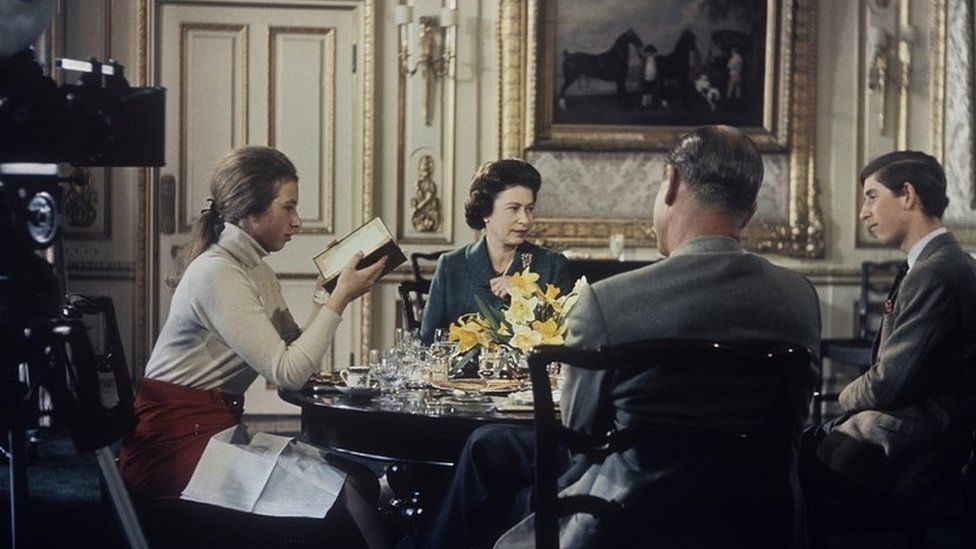
The Duke also championed a 90-minute fly-on-the-wall BBC documentary entitled Royal Family, which aired in 1969 and was considered landmark television.
It featured the Queen feeding carrots to her Trooping the Colour horse, watching TV and discussing salad at a Balmoral barbecue while Princess Anne cooked sausages.
At Buckingham Palace, Philip had intercoms put in so that servants no longer had to ferry written messages to his wife. He carried his own luggage, and cooked his own breakfast in his rooms with an electric frying pan – until the Queen objected to the smell.
How did he spend his time?
As the longest-serving consort in British history, the prince took on some 22,191 solo engagements. When he retired from royal duties in 2017, he was said to be patron, president or a member of more than 780 organisations.
Accompanying the globetrotting Queen on Commonwealth tours and state visits, he visited 143 countries in an official capacity, making use of his fluent French and German.
The countries included Vanuatu, a South Pacific island nation, where he is revered by one rainforest community as the reincarnation of an ancient warrior.

But one of his most enduring legacies is the Duke of Edinburgh’s Award, founded in 1956 at the urging of his former headmaster, Kurt Hahn.
Participants aged 14-25 can gain awards by doing volunteer work, learning physical activities and skills, and undertaking an expedition like a mountain trek or a sailing trip. In 2016, almost 1.3 million young people were taking part in the scheme in more than 130 countries and territories worldwide.
“If you can get young people to succeed in any area of activity,” its founder told the BBC, “that sensation of success will spread over into a lot of others.”
In his spare time, Philip was a talented sportsman. He learned to sail at Gordonstoun, and became a regular competitor in the regatta at Cowes, on the Isle of Wight, where sailing races are held each summer.

Prince Philip (10 June 1921 – April 2021)
He loved equine sports, including carriage driving, and was among the UK’s top four polo players in the mid-1960s.
He was also a committed environmental campaigner and wildlife advocate, becoming president of the World Wildlife Fund (UK) in 1961 – though he faced criticism when a picture emerged of him on a tiger shoot with the Queen in India the same year.

In his own words, and the Queen’s…
Asked to sum up his contribution to British life, Prince Philip responded with typical frankness: “I’ve just done what I think is my best. Some people think it’s all right. Some don’t. What can you do? I can’t change my way of doing things. It’s part of my style. It’s just too bad, they’ll have to lump it.”
The prince drew repeated controversy by making outspoken or racially insensitive comments, including in 1986 when he told a group of British students in China: “If you stay here much longer you’ll all be slitty-eyed.”
Critics deemed him gaffe-prone and out of touch. His defenders saw the prince as a product of his times who was trying to share a joke.
Insiders said laughter was the glue that kept the forthright Prince Philip and the Queen together. He himself suggested it was her tolerance.
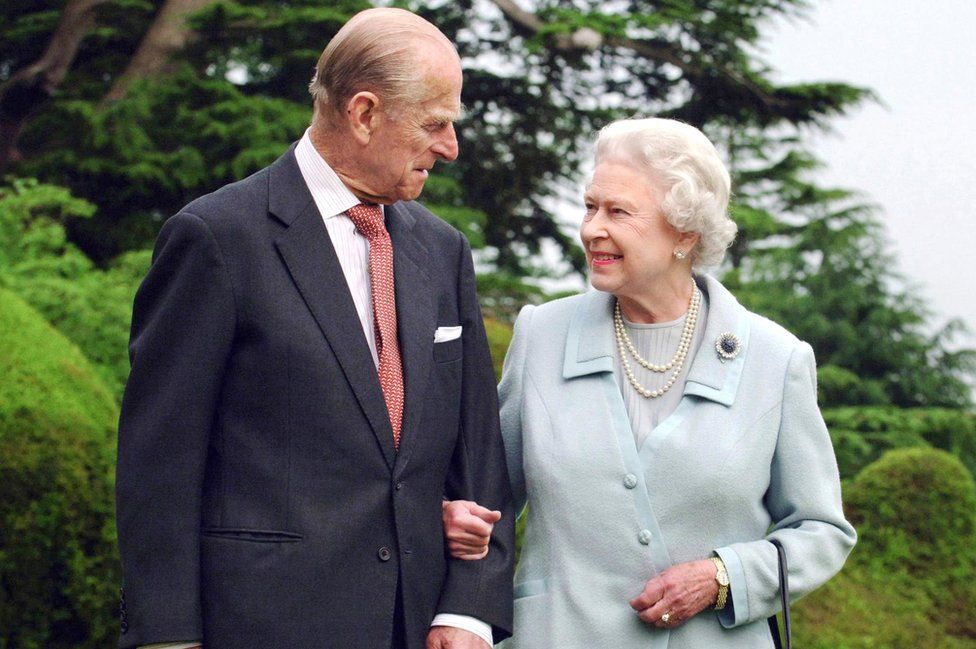
The Queen’s once-favoured speech-opener, “my husband and I…”, was mocked in the 1960s and afterwards by satirists who called it archaic and stilted. She retired the phrasing, but the sentiment remained.
Her Majesty, now simply “I”, summed up Prince Philip in a heartfelt speech for their Golden Wedding anniversary.
“All too often, I fear, Prince Philip has had to listen to me speaking. Frequently we have discussed my intended speech beforehand and, as you will imagine, his views have been expressed in a forthright manner.
“He is someone who doesn’t take easily to compliments but he has, quite simply, been my strength and stay all these years, and I, and his whole family, and this and many other countries, owe him a debt greater than he would ever claim, or we shall ever know.”
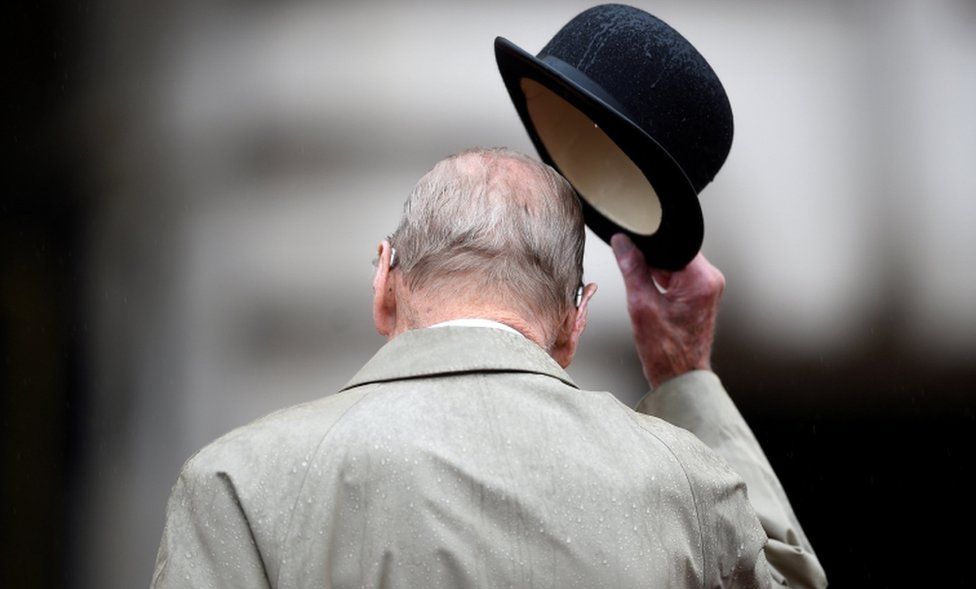
All photographs subject to copyright




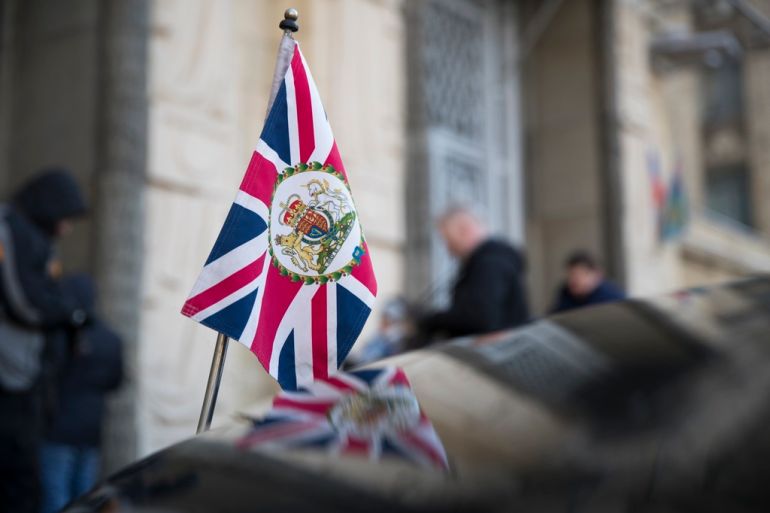

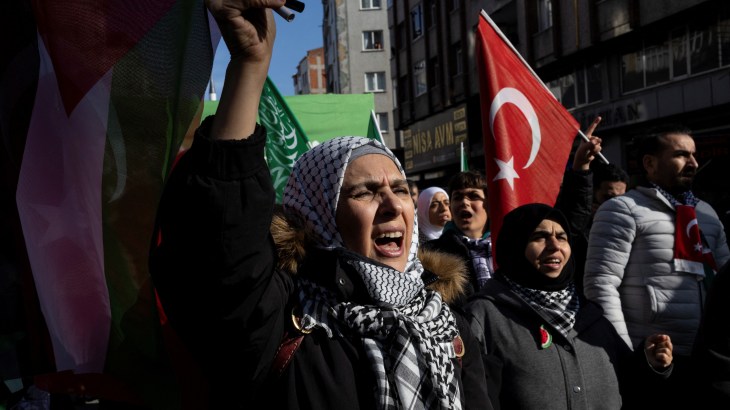
Dozens of Palestinians killed in overnight Israeli strikes in central and south Gaza as Red Sea tensions rise.
Here’s how things stand on Monday, January 15, 2024:
Latest updates and human impact
- Israeli attacks continue unabated overnight killing and wounding dozens of civilians in central and southern Gaza. At least 22 people were killed and a large number injured as a result of Israeli forces targeting al-Thalatheni Street in the central Gaza Strip.
- Yemen’s Houthi rebels fired an antiship cruise missile toward an American destroyer in the Red Sea, which was shot down by a US fighter jet, announced US Central Command (CENTCOM) on X.
- This was the first US-acknowledged Houthi attack since the US strikes on Yemen on Friday.
- Hamas released a 37-second video showing three Israeli captives held in Gaza on Sunday, saying they would reveal the fate of the captives on Monday and urging the Israeli government to stop the offensive.
- The Israeli military says it has shifted to a new phase of the war focused on the southern end of Gaza, where almost 2 million internally displaced Palestinians are running out of safe spaces to shelter.
- The Gaza Ministry of Health has said almost 24,000 people have been killed in the Israeli offensive. More than 60,000 people have been wounded in 100 days of war.
Diplomacy
- Israeli Prime Minister Benjamin Netanyahu said on Sunday that his country will pursue its war against Hamas until victory and will not be stopped by anyone, including the International Court of Justice (ICJ).
- The White House said on Sunday that “it’s the right time” for Israel to scale back its military offensive in the Gaza Strip.
- Egypt’s State Information Service (SIS) said in a statement on Sunday that one of the biggest obstacles to the timely delivery of sufficient aid to Gaza was Israeli inspection of the aid. The statement came after Israel blamed Cairo for the delay in aid delivery to Gaza during its defence at the ICJ.
- US Secretary of State Antony Blinken posted on X on Monday, calling for the release of the remaining captives held in Gaza on the 100th day since they were taken by Hamas. He did not mention the Palestinian casualties.
- Australia’s Foreign Minister Penny Wong, who described herself as a “friend of Israel” to the press, will travel to Jordan, Israel, the occupied Palestinian Territories and the United Arab Emirates this week, her office said on Monday.
West Bank raids and violence
- Israeli forces arrested 25 students staging a sit-in in protest against high tuition fees at An-Najah University in Nablus. Al Jazeera’s Hamdah Salhut reported that the protesting students received a text message from Israeli forces telling them to “surrender now”.
- Israeli forces have reportedly raided the family home of Nael al-Barghouti, the longest-serving Palestinian prisoner, in the village of Kobar, in Ramallah, in the occupied West Bank.
- The Israeli army said on Friday that it killed three Palestinian men who infiltrated a West Bank settlement and fired upon soldiers.
- The Israeli military killed two Palestinians after accusing them of ramming their car through a checkpoint near Hebron.
- Local sources reported that Israeli forces bulldozed two Palestinian-owned houses during a Sunday midnight raid in the city of Qalqilya, Palestinian news agency Wafa reported.
- Armed Israeli settlers broke into the village of Burin, south of Nablus, and attacked Palestinian residents’ houses and properties after midnight on Sunday, Wafa reported.
- “Violent raids and arrests have become part of the fabric of daily life in the occupied West Bank,” Al Jazeera’s Mohammed Jamjoom, reporting from Ramallah in the occupied West Bank, said. At least 347 Palestinians have been killed and thousands have been arrested since October 7.

Flames and smoke billow during Israeli attacks against Gaza on October 9, 2023
Human Rights Watch terms Israeli Defence Minister Yoav Gallant’s call for a ‘complete siege’ on Gaza a ‘war crime’.
The Hamas movement has threatened to kill an Israeli hostage every time Israel bombs a Palestinian home without warning as Israel mobilised some 300,000 reservists and imposed a total blockade of the Gaza Strip, denying the enclave’s millions of residents access to food, water and fuel.
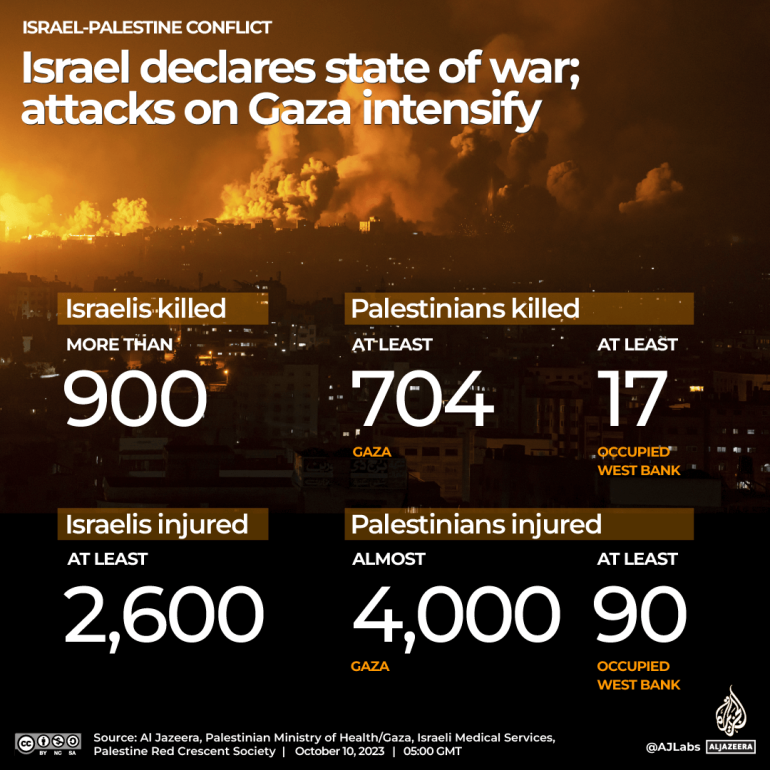
The warning from Hamas came on Monday as the death toll from the armed group’s surprise weekend attack climbed to 900 in Israel and revenge attacks by Israeli forces on the besieged Gaza Strip killed more than 700 people and left some 3,700 others wounded.
Residential apartment blocks, hospitals, schools and a mosque have been among the sites attacked by Israeli fighter jets, artillery and drones, according to media reports and witnesses.
Hamas spokesperson Abu Ubaida issued the threat to kill Israelis from the dozens held captive by the armed group. He said an Israeli hostage would be killed for every Israeli bombing of a civilian house without warning.
Israeli Foreign Minister Eli Cohen said more than 100 people were taken captive by Hamas during the deadly cross-border incursion over the weekend.
As Israeli forces conducted intense retaliatory attacks on Gaza on Monday, Israel’s Defence Minister Yoav Gallant drew international condemnation by announcing a total blockade of the densely populated and besieged enclave, which is home to 2.3 million people.
Gallant said Israel would impose a “complete siege” on Gaza. “No electricity, no food, no water, no gas – it’s all closed.”
United Nations Secretary-General Antonio Guterres said he was “deeply distressed” by the siege announcement and warned that Gaza’s already dire humanitarian situation will now “only deteriorate exponentially”.
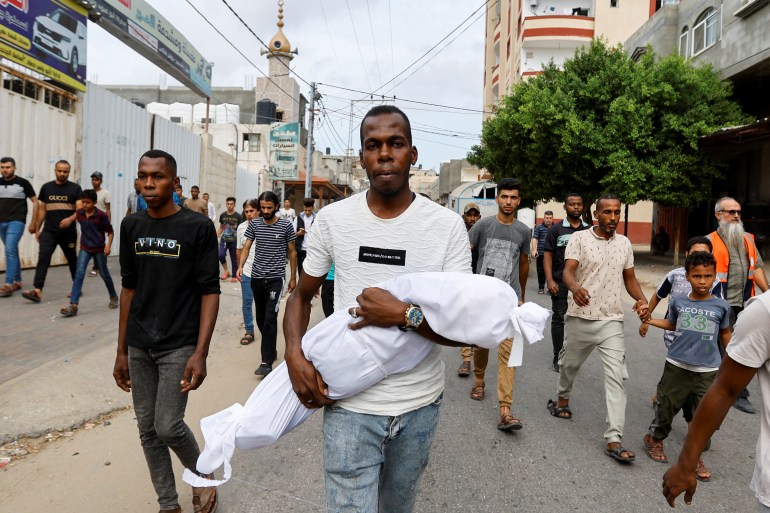
Guterres also said some 137,000 people were taking shelter with the UN Relief and Works Agency for Palestinian Refugees (UNRWA) at schools across Gaza.
UNRWA said on Tuesday that almost 190,000 people have been displaced in Gaza amid the Israeli attacks and the figure is expected to grow further as the violence intensifies.
Nearly half a million people have also not received food rations this week in Gaza as UN food distribution centres have been forced to remain closed amid the Israeli onslaught, UNRWA said.
Human Rights Watch said Israel’s total blockade on the necessities of life for everyday people in Gaza was a war crime.
“Defense Minister Gallant’s statements are abhorrent,” Omar Shakir, Israel and Palestine director at Human Rights Watch, said in a statement.
“Depriving the population in an occupied territory of food and electricity is collective punishment, which is a war crime, as is using starvation as a weapon of war. The International Criminal Court should take note of this call to commit a war crime,” he said.
Abhorrent. This is a call to commit a war crime by @yoavgallant. The @IntlCrimCourt should take note.
Quote by @OmarSShakir ⤵️ https://t.co/kKVo6YtpI1 pic.twitter.com/neHQMwnXVn
— Human Rights Watch (@hrw) October 9, 2023
Shakir also condemned the threat by Hamas to kill hostages, warning that such action was also a war crime.
“All hostages should be safely released to their families,” he said.
Grotesque. These threatened acts would amount to flagrant war crimes by Hamas’ armed wing. The @IntlCrimCourt will be watching.
Quote from @OmarSShakir ⤵️ https://t.co/FuNtvHe0YG pic.twitter.com/6cnHODLWyZ
— Human Rights Watch (@hrw) October 9, 2023
On the diplomatic front, Egyptian President Abdel Fattah el-Sisi and his Turkish counterpart Recep Tayyip Erdogan called on Hamas and Israel to immediately end violence and protect civilians, the Egyptian presidency said.
Erdogan urged Israel against “indiscriminately” attacking civilians and delivered measured criticism of Hamas, urging both sides to respect the “ethics” of war.
The United Kingdom, French, German, Italian and US governments issued a joint statement on Monday recognising the “legitimate aspirations” of the Palestinian people and supporting equal measures of justice and freedom for Israelis and Palestinians alike.
But the prospect that fighting could spread also alarmed the region and the world.
Lebanese armed group Hezbollah fired rockets into northern Israel in response to at least three of its members being killed in Israeli shelling of Lebanon.
Israel said one of its deputy commanders was also killed in an earlier cross-border raid from Lebanon.

US President Joe Biden holds a bilateral meeting with Israeli Prime Minister Benjamin Netanyahu on the sidelines of the 78th United Nations General Assembly in New York City, the US, September 20, 2023
Social media users, including journalists and observers, are calling out what they call a ‘double standard’.
After Saturday’s surprise attack by the Palestinian group Hamas on Israel, Ukrainian President Volodymyr Zelenskyy took to the social media platform X to offer “condolences go out to everyone who lost relatives or close ones in the terrorist attack”.
He also stated, “Israel’s right to self-defence is unquestionable.”
Many world leaders, including US President Joe Biden and UK Prime Minister Rishi Sunak, shared similar sentiments.
The world is seeing appalling images.
Thousands of rockets raining down on Israeli cities. Hamas terrorists killing not only Israeli soldiers, but civilians on the streets and in their homes.
It’s unconscionable. Israel has a right to defend itself – full stop.
— President Biden (@POTUS) October 7, 2023
European Commission President Ursula von der Leyen stated, “Israel has the right to defend itself – today and in the days to come. The European Union stands with Israel.”
Accusations of Western ‘double standards’
Some social media users have criticised these statements, saying they highlight a double standard.
The world is seeing appalling images.
Thousands of rockets raining down on Israeli cities. Hamas terrorists killing not only Israeli soldiers, but civilians on the streets and in their homes.
It’s unconscionable. Israel has a right to defend itself – full stop.
— President Biden (@POTUS) October 7, 2023
Ukraine’s right to defend itself is praised by most international leaders while Russia’s invasion is condemned, but commentators said the same cannot be said about Israel’s occupation of the West Bank and Gaza.
Aaron Bastani, a leftist British journalist, said on X that there’s a “clear double standard in endorsing terrorism against civilian targets in Ukraine … and condemning it by Palestinians”.
Many users said Western diplomats and media support the Ukrainians who defend their land, but label the Palestinians fighting against Israel as “terrorists”.
https://twitter.com/KhaledBeydoun/status/1710787817415082349?ref_src=twsrc%5Etfw%7Ctwcamp%5Etweetembed%7Ctwterm%5E1710787817415082349%7Ctwgr%5E6acf829869e993177f32aa38aa48c02f38cb7f61%7Ctwcon%5Es1_&ref_url=https%3A%2F%2Fwww.aljazeera.com%2Fnews%2F2023%2F10%2F9%2Fwestern-leaders-accused-of-hypocrisy-over-response-to-palestine-ukraine
An illustration of a woman’s face, in which one eye is closed beside a Palestinian flag, and one eye open beside a Ukrainian flag, has been regularly shared as a symbol of the West’s alleged double standards in how the two conflicts are viewed.
https://twitter.com/OnlinePalEng/status/1710994682883273172?ref_src=twsrc%5Etfw%7Ctwcamp%5Etweetembed%7Ctwterm%5E1710994682883273172%7Ctwgr%5E6acf829869e993177f32aa38aa48c02f38cb7f61%7Ctwcon%5Es1_&ref_url=https%3A%2F%2Fwww.aljazeera.com%2Fnews%2F2023%2F10%2F9%2Fwestern-leaders-accused-of-hypocrisy-over-response-to-palestine-ukraine
Clips also emerged on social media from a CNN interview with Mustafa Barghouti, the general secretary of the Palestinian National Initiative, in which he posed the rhetorical question, “Why does the United States support Ukraine in fighting occupation – while here they support the occupier, who continues to occupy us?”
The hypocrisy and double standards of western governments and media platforms dealing with situations in Ukraine-Russia and Palestine-Israel blow the mind. Absolute disgrace.
— Said Yacoubi (@AlyacoubiSaid) October 8, 2023
It is not the first time Western nations have been accused of double standards in their stance on the Ukraine war.
Earlier in the year, Amnesty International published a report highlighting the West’s “double standards” on global human rights.
Agnes Callamard, Amnesty’s secretary-general, told Al Jazeera at the time that the occupation of Palestinian territory was a “particularly important one”.
“Without making any comparison between Russia’s aggression and Israel … it is clear the Palestinian people are under a regime of oppression – a regime of occupation and a regime of apartheid,” Callamard told Al Jazeera.
Over the last three days, X users recirculated earlier statements calling out what they called Western hypocrisy, sharing video by the Irish lawmaker Richard Boyd Barrett from March 2022 in which he berated the Irish government’s double standards regarding Ukraine and Palestine:
“You’re happy to use the most strong and robust language to describe the crimes against humanity of [Russian President] Vladimir Putin, but you will not use the same strength of language when it comes to describing Israel’s treatment of the Palestinians.”
Barrett on Sunday again called out what he described as “shocking double standards of Western leaders supporting Ukraine resistance but condemning Palestinian[s].”
Meanwhile, others warned against comparing conflicts.
https://twitter.com/denfordauthor/status/1710993737738768607?ref_src=twsrc%5Etfw%7Ctwcamp%5Etweetembed%7Ctwterm%5E1710993737738768607%7Ctwgr%5E6acf829869e993177f32aa38aa48c02f38cb7f61%7Ctwcon%5Es1_&ref_url=https%3A%2F%2Fwww.aljazeera.com%2Fnews%2F2023%2F10%2F9%2Fwestern-leaders-accused-of-hypocrisy-over-response-to-palestine-ukraine
And some cautioned that Hamas and the Palestinians should not be seen as one and the same.
Just to clarify:
Palestine did not mount an attack on Israel. An Iranian proxy militia did. Palestinians are by and large huddled in their homes praying that an Israeli airstrike won't kill them or theirs. Hamas is the culprit here. This isn't a decentralized grassroots thing.
— Romeo Kokriatski (@VagrantJourno) October 9, 2023
Ukrainian footballer Oleksandr Zinchenko, who plays for Arsenal, posted on Instagram, stating he “stands with Israel”.
Zinchenko has been a vocal supporter of his home country in its ongoing defence against Russia, and he participated in a Game4Ukraine charity match in London earlier this year to raise money for Ukraine.
After online backlash, with some questioning an alleged double standard in his support of Israel, the footballer removed the post and switched his social media account to private.
Several people claimed that Zinchenko’s football club, in not responding to his comments, was guilty of hypocrisy after they had distanced themselves from former player Mesut Ozil’s comments in 2019 over alleged human rights abuses against Uighur Muslims in China.
-
 Audio10 years ago
Page – Day Break Everywhere Burst
-
 Audio5 years ago
Shadykarz – Forever
-
 Audio10 years ago
Juniorboy ft. 9ice – IRAPADA
-
 Entertainment Gists6 years ago
Ex-Beauty Queen, Sandra Benede Shares Sexy Photo
-
 Audio5 years ago
Simi – Happy Birthday ft. Adekunle Gold, DeJa
-
 Audio5 years ago
Ruger – Bounce
-
 Mixtapes4 years ago
Mixtape: DJ DimpleNipple – The Best Of Amapiano Thrills
-
 Editorials3 years ago
Sa’eedah Imam On Creating Her Imprint In The Nigerian Music Industry As An Emerging Creative Writer