
News
One Year After #EndSARS Protests, Has Nigerian Police Changed?


Young Nigerians say they are still victims of police brutality and their demands for systemic reforms have not been met.
Lagos, Nigeria – Tunde Abass says he was in a plaza building at Onipanu, a major bus stop in Lagos, in March when he saw police officers harass a family in their car near a police station.
The private vehicle’s windows were tinted, something that required a police permit. The driver produced the necessary documents but the officers insisted the family step out of the car to be questioned. Abass, a 34-year-old project manager, then took out his phone to record the incident on Facebook Live.
“I was just observing from a distance because it was not my business. But what triggered my interference was when the policemen tried to deflate the tyres and force the key out of the ignition. In the process, the baby in the car almost slipped from the woman’s hand into a nearby drainage,” Abass told Al Jazeera.
When the divisional police officer, the head of a police station in Nigeria, caught the sight of Abass recording, he ordered his arrest.
That was on March 20, nearly six months after thousands of young Nigerians first took to the streets to protest against police brutality and demand the closure of the Special Anti-Robbery Squad (SARS), a unit notorious for alleged abuses, illegal detention, profiling, extortion and even extrajudicial killings.
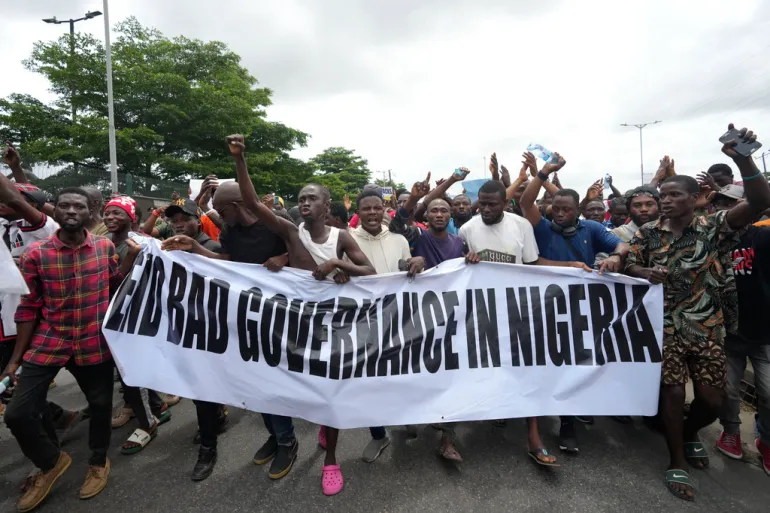
Mobilised through social media, the #EndSARS protests shook Nigerian cities for days in October 2020. The government was forced to scrap the unit on October 11 but demonstrators remained in the streets, demanding wider reforms, until the protests came to an abrupt end after 10 people were shot and killed on October 20 at Lekki tollgate in Lagos.
Amnesty International said soldiers opened fire to disperse the crowd at the major protest site. The Nigerian army confirmed that soldiers were deployed to the scene but said they had not opened live fire on protesters.
The incident sparked global outrage and an investigation amid persistent calls for reforms. But a year later, young Nigerians say they are still victims of police brutality and their demands for systemic changes have not been met.
“Yes, there has not been any reform. Police brutality exists till today,” Fisayo Soyombo, founder of the Foundation for Investigative Journalism (FIJ), told Al Jazeera.
Soyombo said his platform has reported “scores” of cases of police brutality over the past year.
“Police extortion of citizens at gunpoint remains at an all-time high and when these cases are reported by FIJ, for instance, the police often refund the victims but they hardly punish the errant officers,’” Soyombo said.
At Onipanu, Abbas said he decided to broadcast the incident because he “wanted the world to know that this is the kind of injustice” that led to the #EndSARS protests.
“Anything could happen to that man and the police will deny it,” Abass said.
During his four-day detention, Abass alleges he was beaten by police officers and a cellmate, was not given food for long stretches of time and was denied access to family and friends. He said he was eventually released following the intervention of the state command’s public relations office after his case gathered significant online attention and interest from human rights activists.
The police did not respond to Al Jazeera’s repeated requests for comment.
During last year’s protests, Nigerian authorities repeatedly described the youth-led movement as being anti-government and intending to overthrow the administration of President Muhammadu Buhari. In a televised interview in June, Buhari said the protests were “to remove me from office”.
“Nigeria lost an opportunity to listen to the young people, an opportunity to actually do something that reflects the commitment to systemic change,” Omolara Oriye, a human right lawyer, said. “It is quite unfortunate the government perceived the protests as a threat, rather than a wake-up call.”
‘System of offence without punishment’
*David, a 19-year old student at the University of Ilorin, said he had just returned from classes to his student accommodation on August 26 when he heard a loud banging on his door.
Officers from Area F Police Station located at Tanke, home to the majority of university students in Ilorin, were at his door, trying to force their way in. Students say such raids are routine, often ending with random arrests on the pretext of fraud.
“I asked them what happened and they said they wanted to search my room. I did not want them to enter because I have heard a lot that if you allow them to enter your room, they will plant incriminating substances. They … ransacked the room, even upturned the dust bin, looking for someone,” David told Al Jazeera, recounting his experience.
Unsatisfied, the officers then decided to take him and another student in, according to David.
“The officer pointed a gun at me like a criminal and forced [me] to meet their boss. On getting to him, they started slapping me and dragged me into a mini-bus. They brought me with another of my hostel mates, accusing me that I was being rude to police officers,” David said.
At the station, David said he was hit with two charges – aiding and abetting a criminal suspect and obstruction of justice – and was told to pay 200,000 naira ($486.6) for bail.
According to the Section 27 of the Nigerian Police Act, administrative bail is free but many Nigerians say police extort them by demanding large and arbitrary bails.
David said he bargained for several hours to get the bail down from 200,000 naira to the 1,000 naira ($2.4) the officers finally accepted.
“This system of offence without punishment is what emboldens corrupt policemen to continue viewing civilians in naira and kobo. And I don’t see that reform happening soon. The government doesn’t really care,” Soyombo said.
“Meanwhile, the beneficiaries of graft in the police are right there at the top. There’s no chance they’ll want to dismantle the status quo,” he added.
Al Jazeera reached out to the Ministry of Justice but did not receive a reply by the time of publication. Buhari has previously described the disbanding of SARS as the first step in the government’s “commitment to extensive police reforms” and pledged to punish errant officers.
The National Executive Council also directed state governments to set up panels to probe decades-long abuses of SARS officers, in one of the few concessions made by the government to protesters.
Proceedings, however, have often been slow and fruitless, with some panels being suspended and others discontinued altogether.
“The lack of change [in police conduct] since the EndSARS protests just alludes to the level of impunity that exists,” Oriye said. ”
“Justice is elusive – but in Nigeria, justice is non-existent.”
*Name changed to protect person’s identity





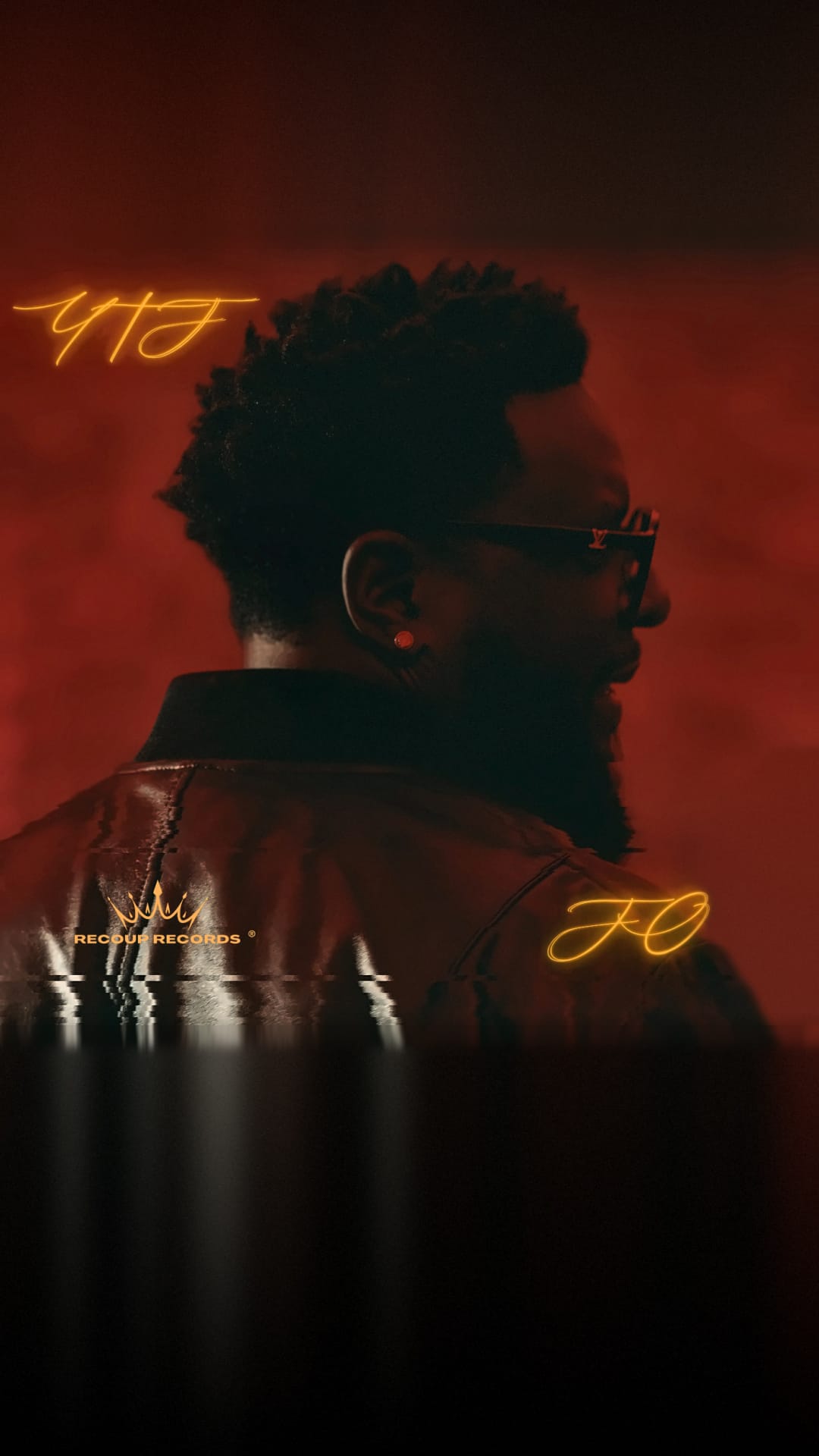

Josh2Funny’s Album Has Fans Talking — But Should He Stick To Music Or Skits? 😂🎶
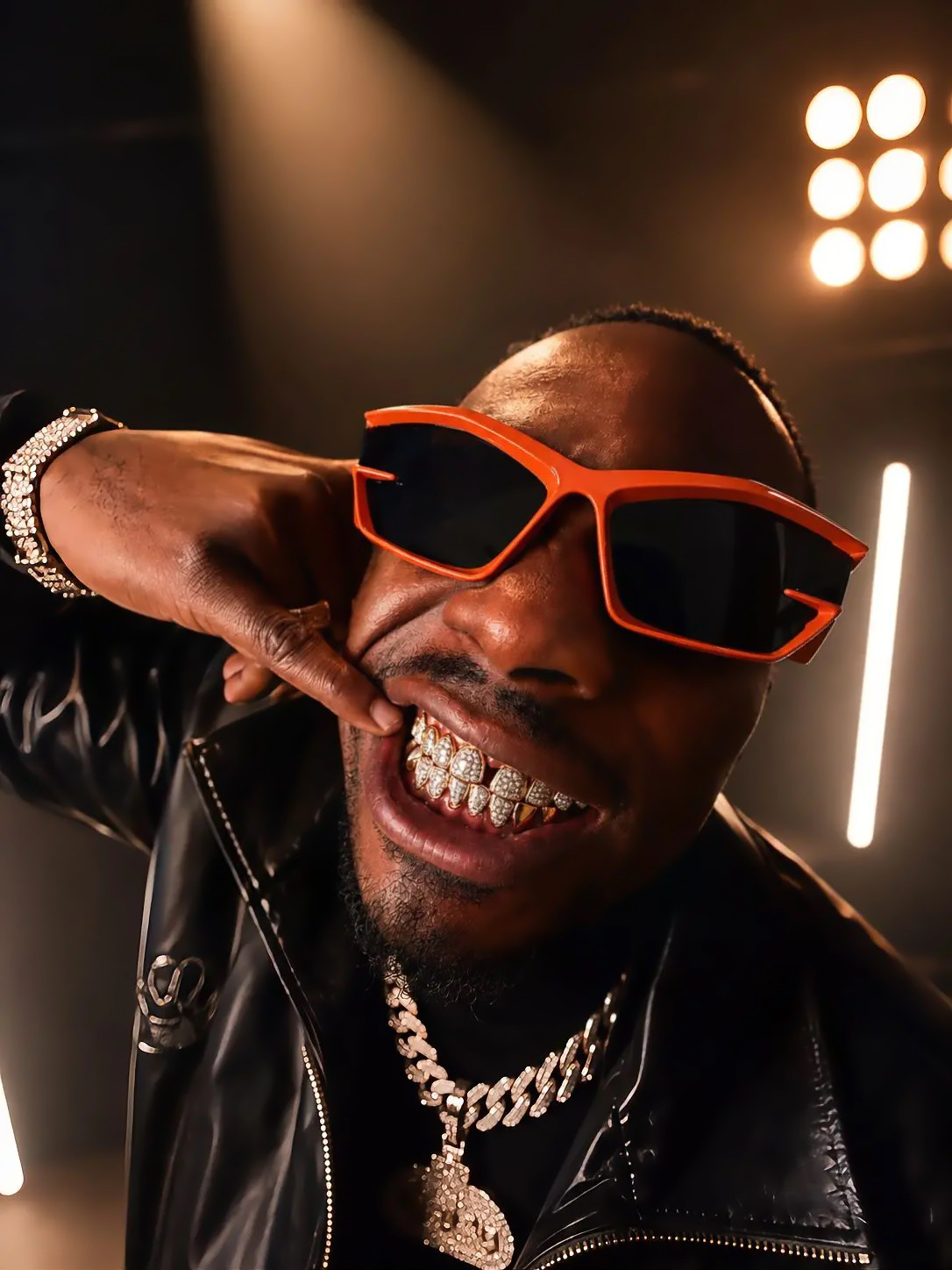
Nigerian comedian and content creator Josh2Funny has taken his comedy game into music, and Nigerians are definitely having something to say about it.
The comedian released his 15-track album, “On Behalf of Josh,” on July 10, 2026, but instead of fading away after release, the project has continued to generate conversations on X.
And the big question now is:
Should Josh2Funny continue with music or go back to skits? 😂
Fans have been divided. While some listeners openly criticized the album and told him to return to comedy, others found songs they genuinely enjoyed.
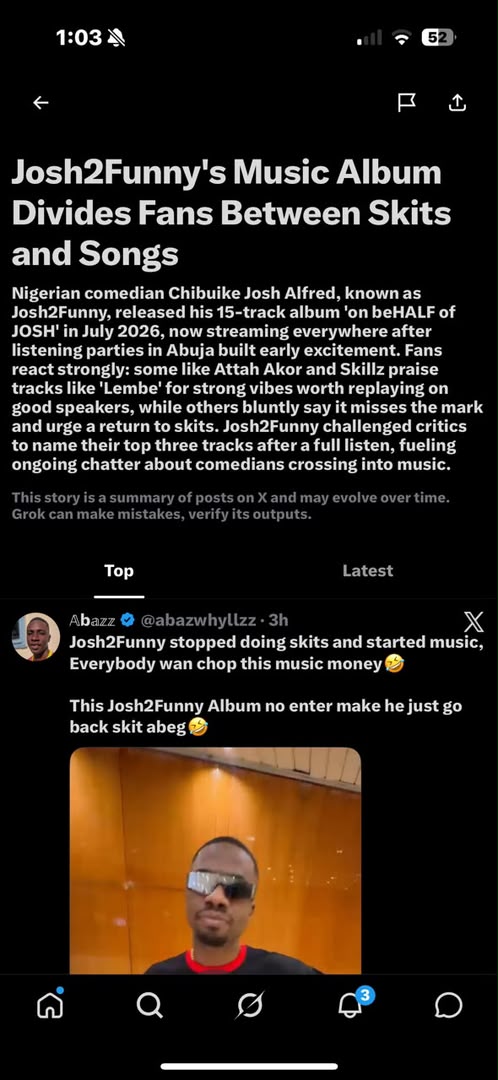
One X user joked:
“Josh2Funny stopped doing skits and started music, Everybody wan chop this music money 😂”
Another simply said:
“This Josh2Funny Album no enter make he just go back skit abeg 😂”
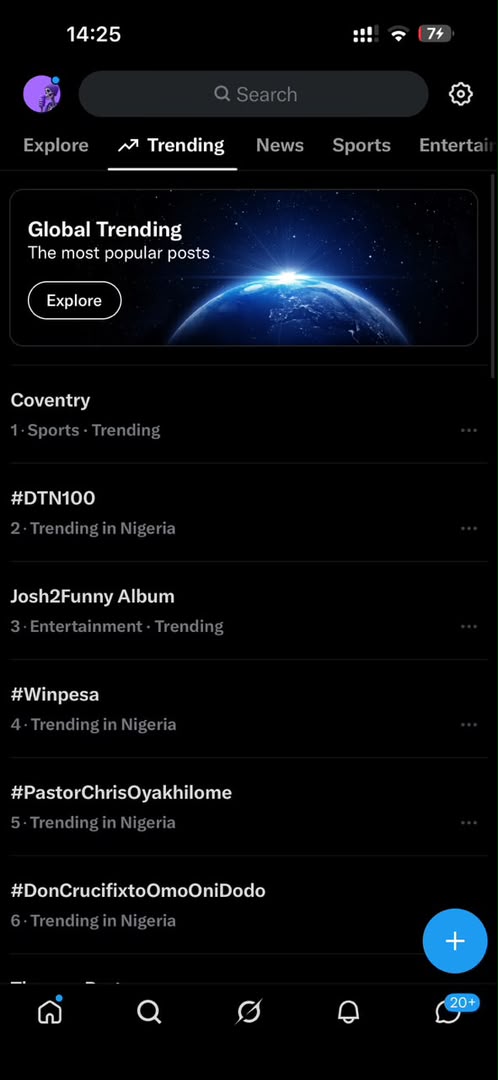
But then came “Lembe.” 🔥
The track caught fire on X and eventually became a trending topic in Nigeria. The #LembeChallenge also gained momentum as creators began jumping on the song.
Josh2Funny later announced ₦1 million for winners of the challenge, giving the song another major push.
And it didn’t stop there.
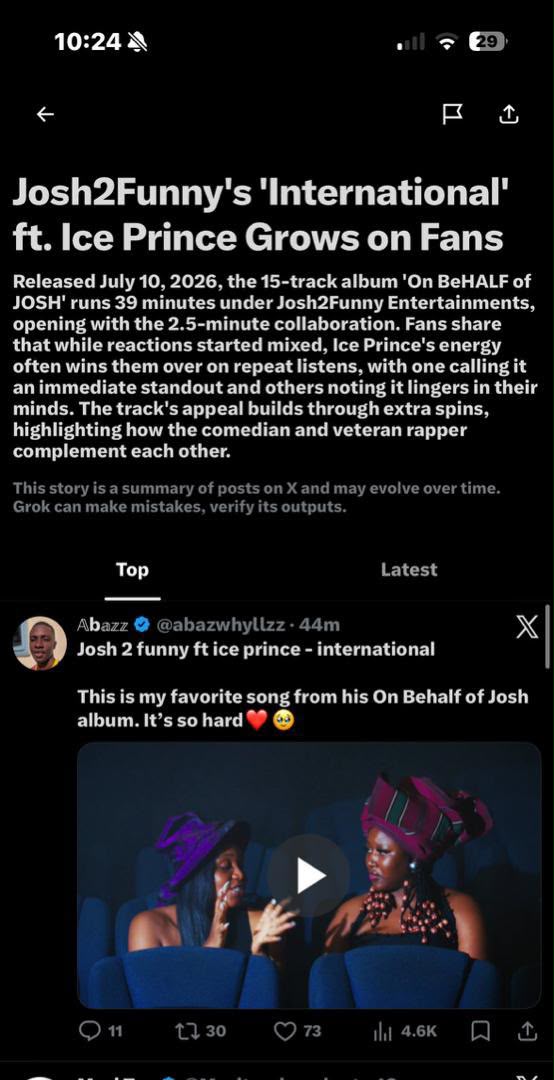
‘INTERNATIONAL’ FT. ICE PRINCE ALSO TRENDED
On another day, “International” featuring Ice Prince generated its own buzz on X.
One fan even called it their favourite song from the album, while praising the collaboration. The post itself pulled thousands of views, showing that people weren’t only talking about Lembe.
From album criticism to trending songs and challenges, “On Behalf of Josh” has kept Josh2Funny’s name in the conversation.
Whether you love the album or think he should return to skits, one thing is clear:
Josh2Funny has succeeded in getting Nigerians talking. 😂🔥
So, let’s settle this once and for all:
Should Josh2Funny continue with MUSIC 🎶 or return to SKITS 😂?
Music or Skits? Drop your answer! 👇


East Ham, East London — 8 August 2026: The vibrant Igbo community in the UK came together for an unforgettable evening of entertainment, culture and social connection at Igbotic Game Night, one of the biggest social gatherings celebrating the Igbo community in the United Kingdom.
Among the night’s standout moments was an electrifying performance by Afrobeats artist Obeena, who took the stage and immediately captured the attention of the crowd.
Obeena delivered performances of two of his hit songs, “Wara Wara” and “Banging,” bringing his energetic sound and distinctive stage presence to the event. From the opening moments of his set, fans responded with excitement, singing along, dancing and enthusiastically supporting the artist.

His performance of “Wara Wara” created an instant connection with the audience, while “Banging” took the energy to another level. Obeena’s ability to engage the crowd transformed his set into one of the most memorable entertainment moments of the evening.
Held in East Ham, East London, on 8 August 2026, Igbotic Game Night provided a unique platform for members of the Igbo community to celebrate their heritage while enjoying music, games and social interaction. Events such as this continue to play an important role in bringing together Nigerians and the wider African diaspora in the UK.
For Obeena, the performance was another opportunity to showcase his growing artistry and connect directly with fans. His energetic delivery, stage confidence and ability to command the audience demonstrated why his live performances continue to attract attention.
By the end of his set, Obeena had left the crowd amazed and added another memorable chapter to his journey as an Afrobeats artist. His appearance at Igbotic Game Night was not simply a performance—it was a celebration of Nigerian music, culture and community.
With performances like this, Obeena continues to demonstrate his ambition to take his sound beyond the studio and onto major stages, connecting with audiences through music, energy and an unmistakable African identity.
Igbotic Game Night brought the Igbo community together. Obeena gave them a performance to remember.
-
 Audio10 years ago
Page – Day Break Everywhere Burst
-
 Audio5 years ago
Shadykarz – Forever
-
 Audio10 years ago
Juniorboy ft. 9ice – IRAPADA
-
 Entertainment Gists6 years ago
Ex-Beauty Queen, Sandra Benede Shares Sexy Photo
-
 Audio5 years ago
Simi – Happy Birthday ft. Adekunle Gold, DeJa
-
 Audio5 years ago
Ruger – Bounce
-
 Mixtapes4 years ago
Mixtape: DJ DimpleNipple – The Best Of Amapiano Thrills
-
 Editorials3 years ago
Sa’eedah Imam On Creating Her Imprint In The Nigerian Music Industry As An Emerging Creative Writer