
News
Jenin Raid is Over, Palestinians Are Left To Cope With The Trauma


Palestinians leave their homes to secure necessities during an Israeli military operation in Jenin in the Israeli-occupied West Bank on July 3, 2023
Palestinians sift through the wreckage of their destroyed homes and of their damaged psyches.
Jenin, occupied West Bank – Every morning, Fatima Salahat, a mother of four, would wake up at 7, get out of bed and tiptoe into the kitchen of her home in the Jenin refugee camp in the occupied West Bank.
With her husband, Zeid, still lost in slumber, she would start her day with the music of Lebanese icon Fairuz – often the same song, on repeat.
“The Way of Our Love, that was her favourite,” said Zeid, a 56-year-old paramedic. “But now I can’t feel anything for that song. We’ve lost those happy moments.”
Now, Fatima lies in a hospital bed. She can barely talk or walk after suffering a panic attack doctors said was linked to the stress caused by Israel’s most devastating military offensive on the camp in about 20 years.
More than 1,000 Israeli soldiers stormed the overcrowded camp last week as rockets and drone missiles struck private homes and public infrastructure. Nobody could guess where the next barrage would come from.
On the second day of the attack, Fatima, 54, began showing symptoms. She was quick to anger, nervous and in a constant state of hyperalert tension until she reached a breaking point and was brought to Jenin’s public hospital.
Her condition is far from isolated. In the aftermath of the offensive, in which Israeli forces killed 12 Palestinians, residents found themselves not only sifting through the wreckage of their destroyed homes but also grappling with the heavy emotional toll inflicted by each Israeli attack.
A layered, collective trauma
“In the West, they call it post-traumatic stress disorder, or PTSD. I question the application of the term here because in Palestine we have never been in the ‘post’,” said Samah Jabr, the head of the mental health unit for the Palestinian Authority.
The latest raid, experts said, added another layer to the collective trauma experienced by Palestinians living under occupation, exacerbating wounds that have not had a chance to heal over generations.
Israel said the raid was to “clean up” a “haven for terrorists”, but UN experts said the assault constituted collective punishment of Palestinians and may amount to a war crime.
Adult residents of the camp told Al Jazeera of being haunted by the same nightmares that followed Israeli military offensives of decades past.
Teenagers, who have just been through the most aggressive attack of their young lives, now ask to be escorted to the bathroom and refuse to sleep alone.
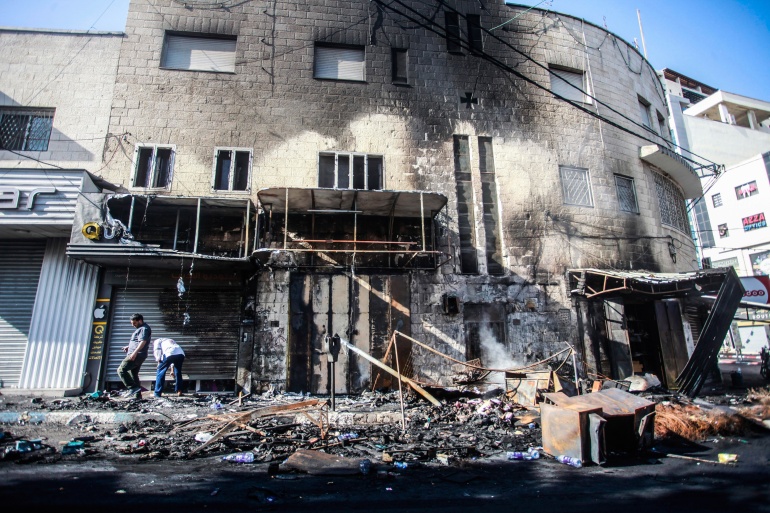
“The trauma is enduring, it’s chronic, it’s historical and it’s intergenerational,” Jabr said. She noted that the fierce assault also affected the psyche of Palestinians beyond Jenin because images showing thousands of people evacuating the camp in the middle of the night with just the clothes on their backs are reminding many of the Nakba.
The Nakba, which in Arabic means the “catastrophe”, refers to when 750,000 Palestinians were ethnically cleansed from their towns and villages to make way for the establishment of Israel in 1948.
The camp in Jenin was established in 1953 for refugees from more than 50 villages and cities in the northern parts of Palestine, mainly Haifa and Nazareth. Since then, it has been the target of continuous Israeli military raids.
During the 2002 Intifada, Israeli forces wiped out entire sections of the camp and killed 52 Palestinians over 10 days of fighting, which also killed 23 Israeli soldiers.
More than a quarter of the camp’s population was forced to flee what had become a battlefield, or “Jeningrad”, as the late Palestinian leader Yasser Arafat described it in reference to the Nazi siege of the Russian city Stalingrad during World War II.
‘The same fear returned in a second’
“This was my third Nakba,” camp resident Afaf Bitawi said of last week’s Israeli offensive.
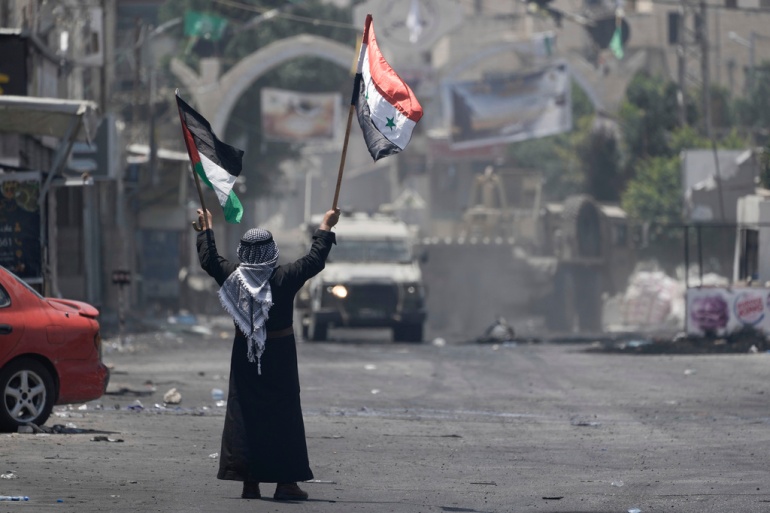
Although not yet born, the 66-year-old experienced the events of 1948 through the painful stories recounted by her parents. She has also witnessed firsthand the enduring impact of the occupation, remembering every detail of the 2002 attack, which left her house in ruins.
“The exact same question – should I leave the house and risk being shot by a sniper, or should I leave my home and fear that a bulldozer will demolish my house?” Bitawi said, describing how she felt during the recent raid. “That same fear, that same question, and trauma returned in a second.”
Experts said this ongoing cycle of trauma becomes further entrenched with each subsequent military operation. And while today there might be more awareness and willingness to access mental health support, the needs are enormous.
More than half the people in the occupied West Bank over 18 suffer from depression, according to data from the Palestinian Central Bureau of Statistics. In the besieged Gaza Strip, the figure is 70 percent.
The living conditions in the Jenin camp do not help. More than 11,200 people live crammed in an area smaller than half a square kilometre (0.2sq miles) without a single green space and one of the highest unemployment rates of all the refugee camps in the occupied West Bank.
A few NGOs provide some relief by offering psychological support to families or by organising recreational activities, especially for children. The first mental health and wellbeing startup, Hakini, was even launched last year.
But, too often, a friend or a relative is killed – or armoured vehicles and armed men roam the streets of the camp – making any sustained stress relief unattainable and causing new trauma.
Manassa Yacoub, 13, has barely eaten since the death of her friend Sedil Naghniyeh. The 15-year-old was shot during an Israeli raid in late June.
“Since then, she never sleeps alone. She is always silent. She is even afraid of using the swing in our back yard. She only looks at it from far away,” said her father, Sami Yacoub, 43, a mobile shop owner.
Ensuring ongoing trauma
There are other obstacles to dealing with mental health issues.
Living under a decades-old occupation has created added pressure for Palestinians to become involved in the resistance struggle – a reality, Palestinians said, that was forced upon them by Israel.
“The Israelis make sure that each generation has its own direct trauma – it’s a manufactured trauma,” said Nasser Mattat, a psychologist with the UN agency for Palestinian refugees who led the mental health response for children in 2002.
Many of the fighters in the Jenin camp today are the same children who were traumatised two decades ago, he said.
“The trauma faced today is going to lead to further violence because it will not be addressed,” Mattat said.




The renewed agreement reinforces the longstanding partnership between the artist and the label. It positions Chadreek for the next phase of his career with enhanced support across music production, distribution, marketing, and international expansion.
Known for his smooth vocal delivery and consistent output, Chadreek has steadily cultivated a dedicated following through standout records including Ori Mi (featuring Seyi Vibez), Better Dayz, Awure, and his earlier project No Bad Vibe. The renewed deal is expected to accelerate his momentum as he prepares new music and broadens his presence across Africa and global markets.
A source close to the camp confirmed that both parties are fully aligned on a clear vision for the artist’s next chapter, with a strong emphasis on high-quality releases and strategic growth.
This renewal marks another significant milestone in Chadreek’s journey as he continues to establish his place within the Afrobeats landscape.
About Chadreek
Chadreek is a Nigerian singer and songwriter signed to SauceBoi Music. He is recognised for his distinctive voice and a growing catalogue of Afrobeats records that blend melody, emotion, and street energy.
About SauceBoi Music
SauceBoi Music is a UK-based record label committed to developing and promoting talent across the Afrobeats and broader African music scenes.


Josh2Funny’s Album Has Fans Talking — But Should He Stick To Music Or Skits? 😂🎶

Nigerian comedian and content creator Josh2Funny has taken his comedy game into music, and Nigerians are definitely having something to say about it.
The comedian released his 15-track album, “On Behalf of Josh,” on July 10, 2026, but instead of fading away after release, the project has continued to generate conversations on X.
And the big question now is:
Should Josh2Funny continue with music or go back to skits? 😂
Fans have been divided. While some listeners openly criticized the album and told him to return to comedy, others found songs they genuinely enjoyed.

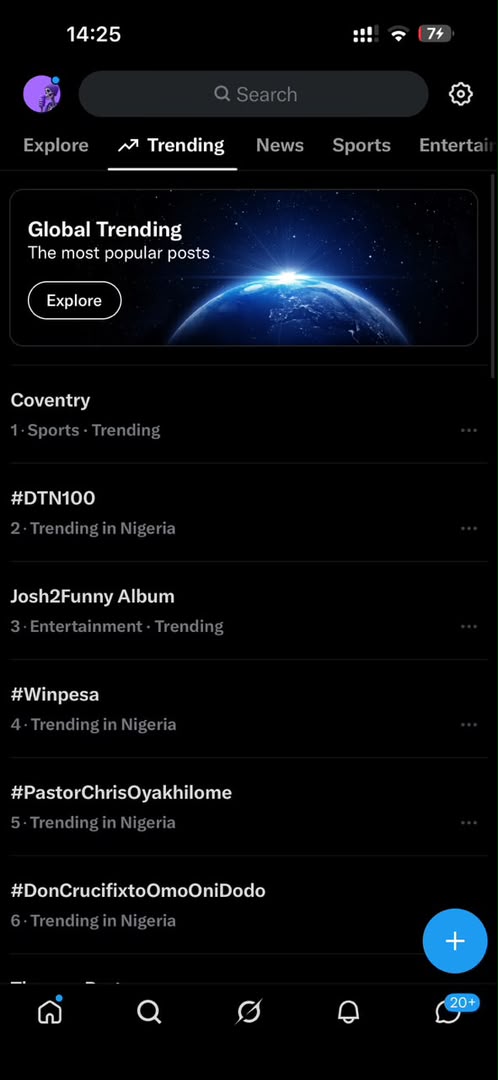
One X user joked:
“Josh2Funny stopped doing skits and started music, Everybody wan chop this music money 😂”
Another simply said:
“This Josh2Funny Album no enter make he just go back skit abeg 😂”
But then came “Lembe.” 🔥
The track caught fire on X and eventually became a trending topic in Nigeria. The #LembeChallenge also gained momentum as creators began jumping on the song.
Josh2Funny later announced ₦1 million for winners of the challenge, giving the song another major push.
And it didn’t stop there.
‘INTERNATIONAL’ FT. ICE PRINCE ALSO TRENDED
On another day, “International” featuring Ice Prince generated its own buzz on X.
One fan even called it their favourite song from the album, while praising the collaboration. The post itself pulled thousands of views, showing that people weren’t only talking about Lembe.
From album criticism to trending songs and challenges, “On Behalf of Josh” has kept Josh2Funny’s name in the conversation.
Whether you love the album or think he should return to skits, one thing is clear:
Josh2Funny has succeeded in getting Nigerians talking. 😂🔥

So, let’s settle this once and for all:
Should Josh2Funny continue with MUSIC 🎶 or return to SKITS 😂?
Music or Skits? Drop your answer! 👇
-
 Audio10 years ago
Page – Day Break Everywhere Burst
-
 Audio5 years ago
Shadykarz – Forever
-
 Audio10 years ago
Juniorboy ft. 9ice – IRAPADA
-
 Entertainment Gists6 years ago
Ex-Beauty Queen, Sandra Benede Shares Sexy Photo
-
 Audio5 years ago
Simi – Happy Birthday ft. Adekunle Gold, DeJa
-
 Audio5 years ago
Ruger – Bounce
-
 Mixtapes4 years ago
Mixtape: DJ DimpleNipple – The Best Of Amapiano Thrills
-
 Editorials3 years ago
Sa’eedah Imam On Creating Her Imprint In The Nigerian Music Industry As An Emerging Creative Writer