

Goalkeepers picking up backpasses (sort of), uncontested drop balls and more handball decisions – football’s laws have changed again.
A dozen changes from the International Football Association Board (Ifab) came in over the summer – you may have seen some of them if you were following the Women’s World Cup, Africa Cup of Nations or Copa America.
But they are bound to cause plenty of talking points in the opening weeks of the season as every tournament worldwide, including the Premier League, adopts them for the coming season.
Some are quite trivial but several could make a big difference to the game.
Drop balls

Drop balls can no longer be contested, but the change is more positive than it sounds.
If play is stopped, the ball will be dropped to a player on the team that last touched the ball – and where they touched it. All other players must be 4.5 yards (4 metres) away.
What that means is if a team’s attack is stopped, they will get the ball back in that position – instead of the opponents booting the ball down the field.
However, any play stopped in a penalty area will be returned to the goalkeeper, even if the attacking team had the ball.
Another big change now sees a drop ball awarded if the ball hits the referee and goes to the other team as a result, or if the referee accidentally scores a goal, as happened in the Dutch fourth division a week before the law change.
Handballs

The law remains that deliberate handball is an offence. But accidental handball will also be a free-kick or penalty if…
- the ball goes into the goal off an attacker
- a player gets the ball using his or her arm or hand and then scores, or creates a goalscoring opportunity (such as Ellen White’s disallowed goal against Sweden in the Women’s World Cup third-place play-off)
- the player’s arm or hand is above their shoulder (unless the player has controlled the ball onto his own arm or hand)
- a player’s hand or arm has made their body “unnaturally bigger”
A handball will not be a free-kick if…
- the ball is knocked on to a hand by the player in question or a nearby player
- the arm or hand is close to their body and “has not made their body unnaturally bigger”
- a player is falling and the ball touches their hand or arm when it is between their body and the ground to support the body – but not extended to make the body bigger
However “unnaturally bigger” is open for some debate. The Netherlands were given a penalty against Japan for handball at the Women’s World Cup but Premier League referees’ chief Mike Riley said “we consider that to be a natural position of the hand”.
He added: “The way we’ve actually implemented handball for the past two or three seasons is the way we are going to continue to do it in the future.”
Another change to the handball rule relates to the goalkeeper.
If the goalkeeper attempts to clear (“release into play”) a throw-in or backpass and their clearance fails, then they can handle the ball.
Ifab says this is because “when the goalkeeper clearly kicks or tries to kick the ball into play, this shows no intention to handle the ball”.
Goal-kicks

Another change involving goalkeepers is to goal-kicks, which can now be played to a team-mate inside the penalty area.
The law now says the ball is considered in play once the kick is taken. Until now a goal-kick had to be retaken if it did not leave the box.
Plenty of teams took advantage of this during the Women’s World Cup.
It could make a big difference to teams like Liverpool and Manchester City, whose defenders can now drop into the box to receive a goal-kick.
Opponents must still remain outside the penalty area until the kick is taken.
Free-kicks

When a defending team has three or more players in a wall, the attacking team can no longer place a player in or next to it.
If an attacker is standing within one yard (1m) of the wall when the kick is taken, they will be penalised with an indirect free-kick.
However, Spain found a bit of a loophole in the Women’s World Cup, as they placed a wall of their own in front of South Africa’s before moving at the last moment.
Another change means – similar to the goal-kick change above – if a defending team takes a free-kick in their own area, the ball is considered in play immediately and does not have to leave the box before another player touches it. Again, opponents must remain outside the box.

Quick free-kicks
If the referee is about to show a yellow or red card but the non-offending team takes a quick free-kick and creates a scoring chance, the official can come back and show the card when the ball goes out of play.
Before now, the card would have to be shown before the free-kick could be taken.
However, if the referee had distracted the offending team by starting to show the card, the quick free-kick is not allowed.
Also if the offence was going to be a red card for denying an obvious goalscoring opportunity, but the opposition take a quick free-kick, then the player will only be booked because the other team are considered to have restarted their attack.
Penalties
The laws have changed concerning what goalkeepers can do for penalties.
The penalty kick cannot be taken while the goalkeeper is touching the woodwork or nets – or if the net or posts are still moving after being touched.
The goalkeeper must have one of his/her feet partly on the goalline (or above it if jumping) when the kick is taken. He or she cannot stand behind or in front of the line.
There were several instances of retakes being ordered for that offence in the Women’s World Cup, most notably one that cost Scotland a place in the knockout stages.
The law will come into the Premier League this season, but the decision will be left for the on-field officials and VAR will not be used to look out for it.
The other change to penalties means an attacker can take a penalty if he needed treatment (as long as the treatment is quick).
Before now, a player would have to go off the field until after the kick was taken if he needed medical help.
Substitutions

A player who is being substituted must leave the pitch by the nearest point on the touchline or byeline – unless the referee says they can leave quickly at the halfway line – or elsewhere for safety or injury reasons.
This change is to stop players time-wasting. Any player who “infringes the spirit of this law” will be booked for unsporting behaviour.
However most substitutions in the Women’s World Cup saw players come off at the same point their replacement was coming on.
Cards for coaches
A team official guilty of misconduct can be shown a yellow card or red card. If the offender cannot be identified, the senior coach in the technical area at the time will receive the card.
That new system was trialled in the EFL during the 2018-19 season and is now being introduced worldwide.
The other changes
A player can now be booked for celebrating – for removing his shirt or celebrating with the fans – even if the goal is disallowed.
The team that wins the pre-match coin toss can now choose whether to take the kick-off or which goal to attack – previously they could only choose which goal to attack.
There is now a difference between cooling breaks (90 seconds to three minutes) and drinks breaks (maximum of one minute) in certain competitions played in high humidity and temperatures.
Multi-coloured or patterned undershirts are allowed if they are the same as the sleeve of the main shirt.










For today’s students and Gen Zs, a smartphone is more than just a communication device—it’s a study partner, entertainment hub, camera and productivity tool. From attending virtual classes and researching assignments to creating content and staying connected with friends, students need a phone that can keep up with their fast-paced lifestyle.
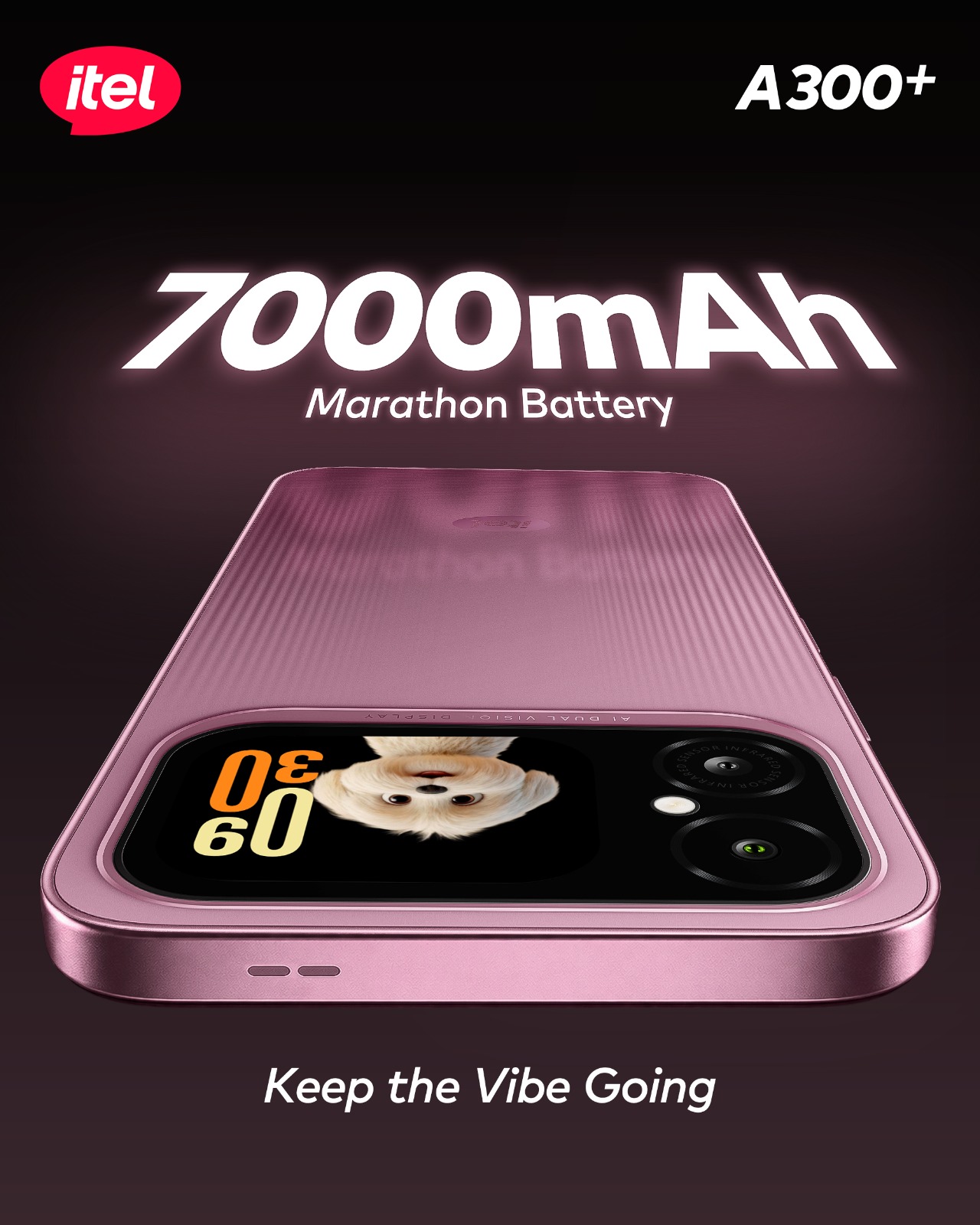
The itel A300+ is designed to do exactly that. Combining a 2.01-inch Smart Secondary Screen, a 7000mAh Ultra-Large Battery, and IP65 dust and water resistance, it delivers practical features that make everyday student life easier.
Power through every lecture and moment
Whether you’re moving between lecture halls, spending hours in the library or commuting across town, battery life matters. The 7000mAh battery keeps you connected throughout the day!
Smart convenience at a glance
The itel A300+’s standout feature is its 2.01-inch Smart Secondary Screen. It lets you quickly view notifications, control your music, personalise watch faces and even preview selfies using the rear camera—all without constantly unlocking your phone.
It’s a smarter, faster way to stay connected while keeping distractions to a minimum.
Built for everyday Life
Life can be unpredictable. From rushing between classes to unexpected rain showers, students need a phone that can handle everyday challenges. With IP65 dust and water resistance, the itel A300+ is built to offer added confidence wherever the day takes you.
When it’s time to relax, the hole-punch display and dual speakers provide an immersive experience for streaming, gaming and enjoying your favourite content.
Get the itel A300+ Now
Whether you’re preparing for a new semester or simply looking for a smartphone that can keep up with your daily routine, the itel A300+ offers the right balance of innovation, performance and convenience.
Visit your nearest itel Home Store today, Click HERE or check out a retail store near you and experience the itel A300+. Plus, enjoy FREE 1GB on your MTN line and 50% bonus data on every recharge for the next six months when you purchase the device.



Fitness meets cultural expression as GOOD SWEAT prepares to bring its CULTURE RUN experience to Lagos on Saturday, October 31, 2026.
Designed around the connection between physical wellness and cultural identity, CULTURE RUN offers participants an opportunity to embrace an active lifestyle while celebrating the richness of African culture. The event brings together fitness enthusiasts, culture lovers, and individuals looking for a refreshing way to connect through movement and shared experiences.
The run is scheduled to begin at 4:30 PM, setting the stage for an evening that extends beyond fitness. At 6:00 PM, participants can look forward to the CULTURE PARTY, the event’s post-run celebration.
Adding to the experience is a distinctive dress code that encourages attendees to wear their regular running kits with a touch of cultural wear. This creative blend of athletic apparel and traditional-inspired fashion gives participants an opportunity to express their individuality while celebrating their cultural roots.
The event will take place at Bistrot Samantha’s, located at 7/12 Rumen’s Road, Ikoyi, Lagos.
With its combination of fitness, fashion, culture, and social interaction, CULTURE RUN aims to create an experience that extends beyond the running track, bringing people together through a shared appreciation for wellness and cultural expression.
As Lagos continues to embrace lifestyle experiences that combine fitness with social engagement, CULTURE RUN offers an opportunity for participants to stay active, celebrate their heritage, and connect with like-minded individuals in a vibrant setting.
EVENT DETAILS
Event: CULTURE RUN
Presented by: GOOD SWEAT
Date: Saturday, October 31, 2026
Run Time: 4:30 PM
Post-Run Party: 6:00 PM
Dress Code: Running kit with a touch of cultural wear
Venue: Bistrot Samantha’s
Address: 7/12 Rumen’s Road, Ikoyi, Lagos, Nigeria

-
 Audio10 years ago
Page – Day Break Everywhere Burst
-
 Audio5 years ago
Shadykarz – Forever
-
 Audio10 years ago
Juniorboy ft. 9ice – IRAPADA
-
 Entertainment Gists6 years ago
Ex-Beauty Queen, Sandra Benede Shares Sexy Photo
-
 Audio5 years ago
Simi – Happy Birthday ft. Adekunle Gold, DeJa
-
 Audio5 years ago
Ruger – Bounce
-
 Mixtapes4 years ago
Mixtape: DJ DimpleNipple – The Best Of Amapiano Thrills
-
 Editorials3 years ago
Sa’eedah Imam On Creating Her Imprint In The Nigerian Music Industry As An Emerging Creative Writer