
Until that particular day in the first legislative session (1999 – 2003), federal lawmakers always stroll to their respective chambers in flowing Babaringa with broad smiles and banters. Despite the banana peels that swept off some members into irrelevance in the two chambers, the tumult of that era could not take away the shine and their happy moods.
A particular day was different. The atmosphere in the Federal House of Representatives was tensed and the mood of the members, stone-cold. Mobile telephone or GSM has just debuted and it assisted in networking outside the chambers to prepare for what was to happen at the plenary.
The lawmakers had been disturbed from the news filtering out from African Petroleum (Now Ardova) where some of them had invested a huge amount of money. Nigerians, the Federal Government and especially, the Bureau of Public Enterprises (BPE) had all just been scammed, and Sadiq Petroleum, the core investor that bought the federal government’s 30 percent hares in AP that was privatised in 2000 was not happy that debt as huge as N22.5 billion was not detected by the privatisation agency while preparing African Petroleum (AP) for sale.
Owing to the huge debt of AP, Sadiq Petroleum and other shareholders have on their hands a carcass. That was the first of the due diligence of the BPE that failed. The second was the one that heralded the sale of the Aluminum Smelter Company, (ALSCON) Ikot Abasi in Akwa Ibom State that ended in controversy and protracted litigation.
It was the same period that Cadbury Nigeria Plc also overstated its account and gave the shareholders a false sense of ownership.
The plenary at the House of Representatives on that day was different, the lawmakers were angry and they entrusted their House Committee on Commerce to detect how false financial reporting of Cadbury, AP, and that of the Lever Brothers; now Unilever (in the era of late Rufus Giwa) went undetected. Scrutiny of the various investment laws in the land as well as the relevant Federal Government agencies that were supposed to protect such laws began. The first to have a taste of the anger of the legislators was the Securities and Exchange Commission (SEC) which is the regulator for the capital market. The second was the Nigerian Stock Exchange (NSE) on which the three companies were listed.
After a heap of investigations, a tiny and obscure agency under the supervision of the Federal Ministry of Commerce (now Ministry of Industry, Trade, and Investment) as it was then called was found wanting and discovered to have been under-performing. Owing to the loopholes in the enabling law, that supposedly establish the agency, the cowboys that were behind the three entities could not be stopped from toying with people’s investments and lives.
That was the first time, the public knew of the quasi-parastatal of the Federal Government called the Nigerian Accounting Standard Board (NASB), the enormous and overwhelming responsibilities and usefulness the agency had (for the investing public) and also the fact that there was no adequate legal backing in its over 20 years of existence. Owing to its porous enabling laws, the tidal waves of the Nigerian investment space have turned it a paperweight which is tossed up and down and, in some cases, boxed.
With the support of and tireless works of Lanre Laoshe, a member of the House Committee on Finance and also, a member, of the House Committee on Commerce, in the first legislative session that ran from 1999 to 2003, the NASB was empowered with enabling legislation, the Nigerian Accounting Standards Board Act, No. 22, 2003 that gave it new and enormous powers to protect investors and make the economy safe for foreign direct investments to flow into Nigeria.
Just as Nigerians thought all is well and investments are safe, then the news came in from the United States of America that Enron has failed, taking away billions of dollars of investors’ money. Also came the news of the collapse of WorldCom, Parmalat, etc. which sunk with billions of dollars of investments. The failure of these companies threw global investors into confusion, fear, and depression which many could not live through.
The first fear that the NASB was behind time came on 4th November 2005, from the then Minister of Commerce, Idris Waziri, who raised an alarm that the NASB’s enabling law was not well-conceived and structured and as such, could not prevent the decline in the nation’s accounting system.
“I understand that the NASB had issued 21 accounting standards compared to over 40 issued by the International Accounting Standards Board (IASB), the world’s accounting standard-setting body. It is my hope that the Board (NASB) will work round the clock to bridge this gap,” Waziri said.
Noting that the nation’s accounting system, if well-structured and upgraded, will immensely pave way for more foreign direct investment and rid the nation of financial vices, Waziri stated that “a major objective of the Obasanjo led government’s reform agenda is the enthronement of transparency and accountability in all areas of our national life as a means of attracting the much-needed investment’.
Again on 22nd November 2006, Ibrahim Dankwambo (the then Accountant General of the Federation and former Governor of Gombe State) at the National Training Workshop on Accounting and Financial Reporting in the Public Sector in Abuja raised another fear.
“NASB is yet to issue any standard for use in the public sector” he noted as he lamented the lack of an established accounting standard for use in the public sector which continued despite all efforts to standardise accounting and financial reporting systems among the three tiers of government.
The complaints by both Waziri and Dankwambo and coupled with the collapse of both Enron and WorldCom set the tone for a fresh and total reform of the NASB. This new effort was again championed by Lanre Laoshe, who had exited the National Assembly in 2003, using his enormous legislative experience and influence to push through the new reforms of the NASB, which then metamorphosed into the current Financial Reporting Council of Nigeria (FRC) with powers strong enough to withstand several antics of many fraudsters in the Nigerian economic landscape.
Paperwork for the repeal of the Nigerian Accounting Standards Board Act No 22, 2003 began late 2009 after the exit of the then Executive Secretary of the NASB, Godson Nnadi, who exited office after 20 years, running the NASB as a quasi parastatal of the Federal Government until the NASB got the Act in 2003. In fact, he had to submit his resignation letter to the then Minister of Commerce and Industry, Jubril Martins Kuye, on 5th May 2010 as there was no justification for the continuation of his stay in that agency which was still obscure despite his methuselah tenure.
Then came the appointment of the fearless Jim Obazee in November 2010 by President Goodluck Jonathan.
That was the era of the global financial crisis during which the World Bank, was marketing reforms under its Economic Reforms and Governance Programme (ERGP) to world leaders including Nigeria. This global effort led to the urgency by the then Nigerian government to repeal the NASB Act 2003 and enact the Financial Reporting Council of Nigeria Act in June 2011. The Federal Government took this agenda seriously as they saw a huge window that will enable Nigeria to attract Foreign Direct Investments (FDIs) into the country which was then unattractive because of poor regulatory and governance framework. It actually paid off as Nigeria then rose to become the number one investment destination in Africa. This is a matter for another day.
The Council went to work and started with a roadmap for the phased adoption of the International Financial Reporting Standards (IFRS) which moved Nigerian firms and its managers to international financial reporting practices. This was an easy road for Jim Obazee because he was the one that chaired the National Committee for the Roadmap to the adoption of IFRS in Nigeria prior to his appointment as the Chief Executive Officer of the defunct NASB in November 2010. This phased transition provided for the introduction of financial reporting standards to allay the fears raised earlier by both Waziri, the former Commerce Minister, and Dankwambo, the former Accountant-General of the Federation.

Otunba-Niyi-Adebayo
Much of the work of the FRC was not in the limelight until the Goodluck Jonathan administration started to revamp the economy, and was working to up the ante for foreign direct investments which was very competitive among nations at the time and which still is though.
To demonstrate his administration’s readiness to make the Nigerian economy transparent, accountable, and give comfort to Nigerians and the global community, the Goodluck Jonathan led administration allowed the scrutiny of the accounts of government Ministries, Departments, and Agencies (MDAs) by the FRC. Even the “almighty” Central Bank of Nigeria (CBN) was not spared, of which the outcome led to the suspension and ultimate removal of its Governor, Sanusi Lamido Sanusi following the damning briefing note of the then CEO of FRC, Jim Obazee, to former President Goodluck Jonathan. This made an interesting and shocking read at the time and may still be worth our while as of today.
To demonstrate his administration’s readiness to make the Nigerian economy transparent, accountable, and give comfort to Nigerians and the global community, the Goodluck Jonathan led administration allowed the scrutiny of the accounts of government Ministries, Departments, and Agencies (MDAs) by the FRC. Even the “almighty” Central Bank of Nigeria (CBN) was not spared, of which the outcome led to the suspension and ultimate removal of its Governor, Sanusi Lamido Sanusi following the damning briefing note of the then CEO of FRC, Jim Obazee, to former President Goodluck Jonathan. This made an interesting and shocking read at the time and may still be worth our while as of today.
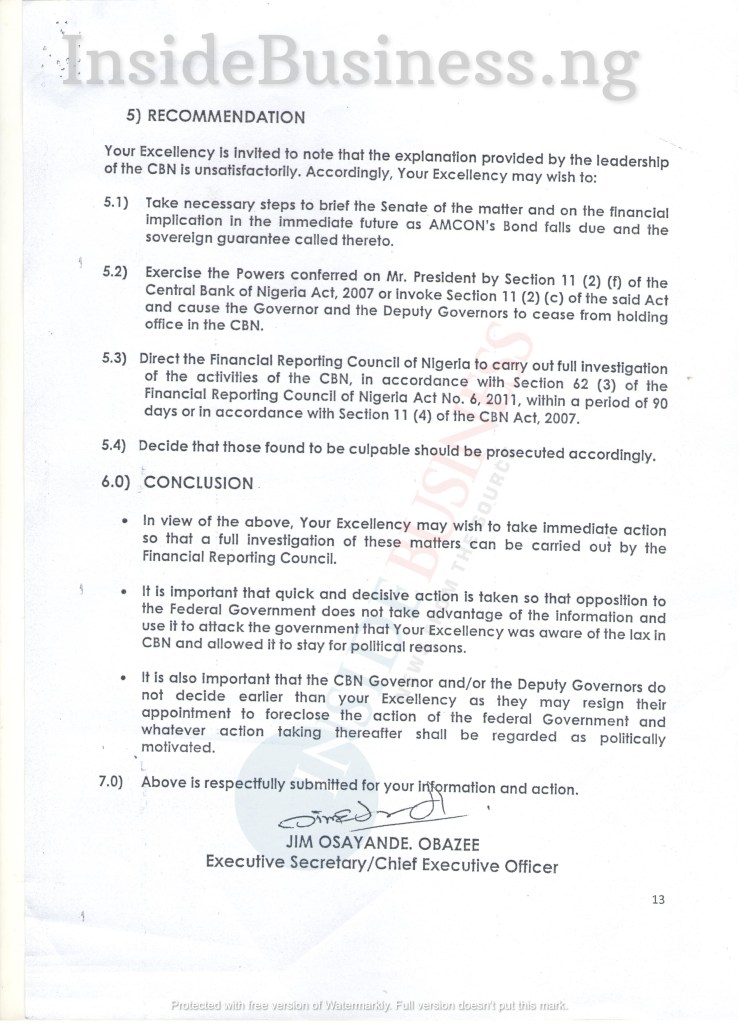


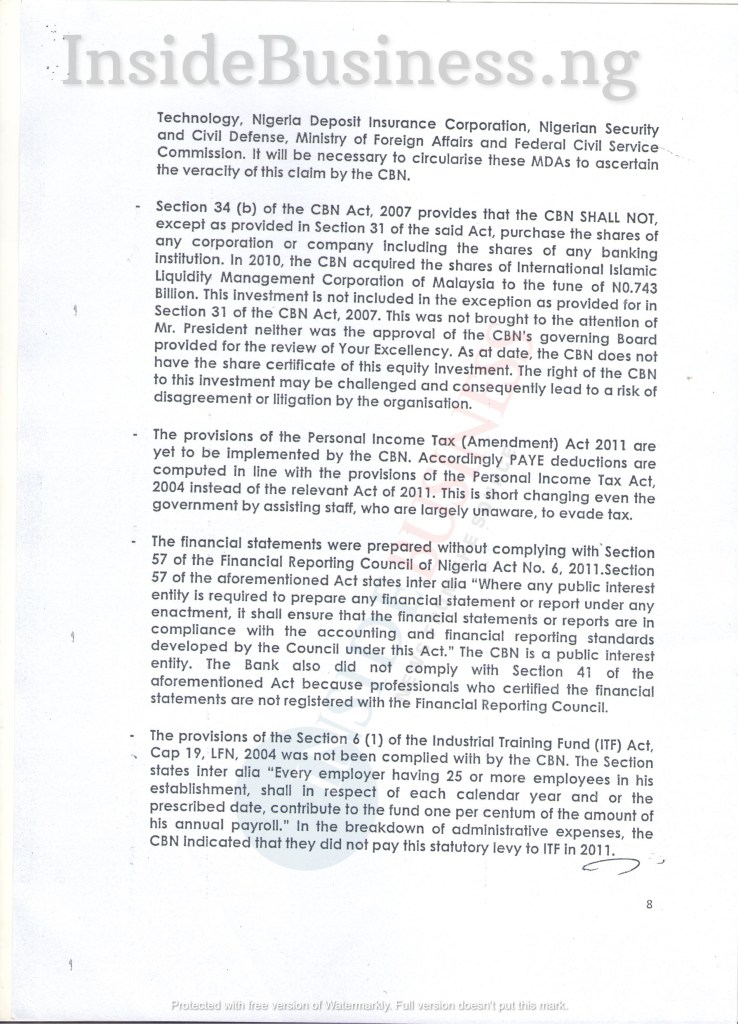
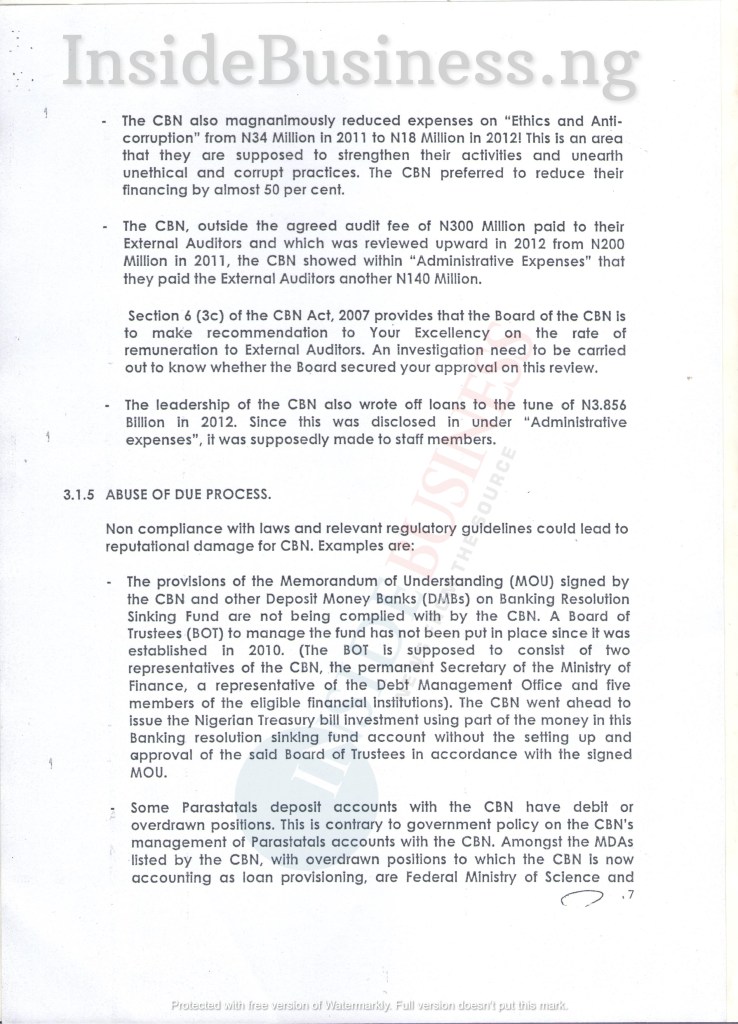
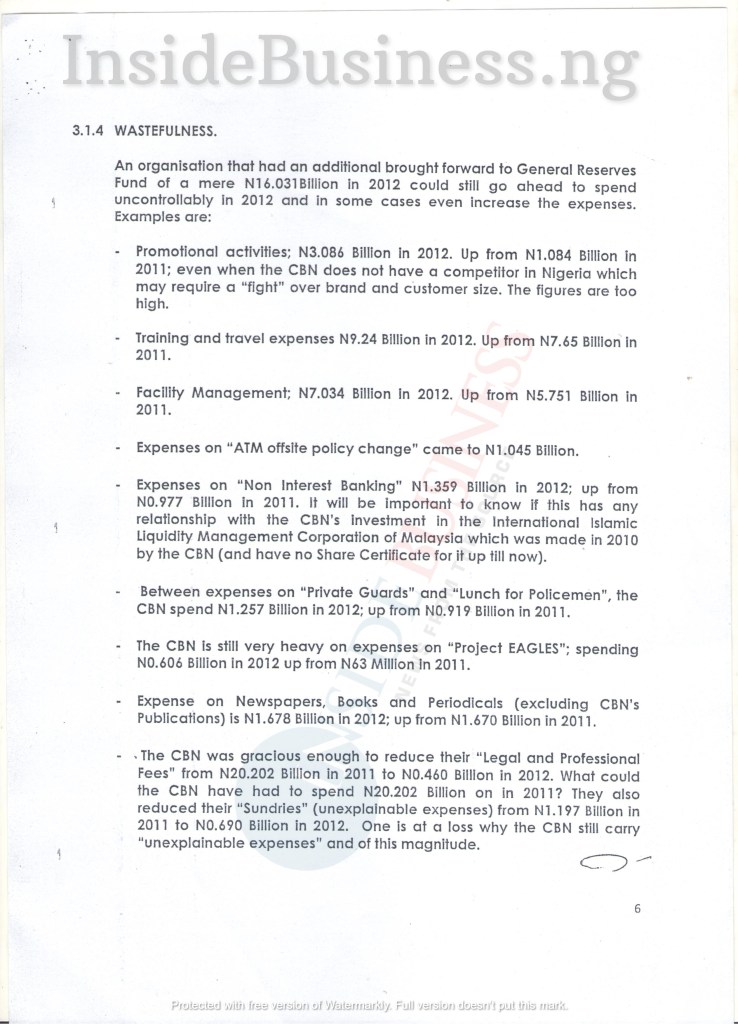




The FRC again bared its fangs on the private sector and Stanbic IBTC Bank was caught with several financial reporting infractions which led the FRC to direct the Bank to withdraw and restate its financial statements for two consecutive years in addition to a fine of N1 billion. StanbicIBTC Bank took FRC to court for redress but the judgment was given in favour of the Council. The External Auditor that signed the offensive financial statements of StanbicIBTC Bank, on behalf of KPMG, Ayo Othihiwa, was not spared by FRC which also suspended him from practice and withdrew his ability to sign any financial statements in Nigeria. KPMG also did not take this sanction lying low. The giant audit firm, like StanbicIBTC Bank, also took FRC to court. It also lost.

This led some observers to acknowledge that the fear of FRC is likened to the biblical injunction of searching for wisdom. The air of financial reporting sanity in Nigeria was evident to all. It was at this time that Nigeria was christened as the Number one investment destination in Africa. The FRC was not done yet. It then moved to reform the corporate governance codes in Nigeria which were largely persuasive and numerous. The FRC Act, 2011 domiciled the unification of these codes on the doorstep of the FRC as seen in sections 50 and 51 of the Act.
It is the issuance of this unified code of corporate governance by the FRC in 2016 that led to a series of events that opened the ground for the sinking of the FRC. Some persons and entities used the civilised path by taking the FRC to court. They, like StanbicIBTC Bank and KMPG, also lost to the FRC as the judges were satisfied that the FRC was following its enabling Act.
The so-called “prominent” Nigerians then decided to find a political solution by seeking the removal of the then Chief Executive Officer of the FRC, Jim Obazee, who they could not compromise under any guise.
On the faithful morning of January 9, 2017, the newspapers were awash with the news that Jim Obazee, the FRC czar, had been sacked by the President of Nigeria without reason other than that the General Overseer of a major Pentecostal Church in Nigeria whose followers included the Vice President, Yemi Osinbajo and the then Minister of Industry, Trade, and Investment (the supervisory ministry of the FRC) Okechukwu Enelamah, feels offended by some provisions of the Code of Corporate Governance for Not-for-Profit Organisations.
The announcement of the sack of the fearless Jim Obazee also came with the appointment of the current Executive Secretary of the FRC, Daniel Asakpokhai, and Adedotun Sulaiman as the chairman of the FRC governing board.
It is, however, interesting that the gentleman, that succeeded Jim Obazee at the regulatory body of financial statement reporting does not have a degree in Accounting other than the professional examination of the Institute of Chartered Accountants of Nigeria (ICAN). One needs not to consult the oracle to know that the grave of the FRC had just been dug by this misnomer because findings show that Asakpohia was at PricewaterhouseCoopers where he came from, a Risk Management Partner with no background in financial statement reporting.

Okechukwu_Enelamah
The fraudulent minds celebrated the removal of the fearless Jim Obazee while Nigerians, who are the losers in this battle, watch helplessly.
Analysts criticised the appointment of the two individuals which they noted was wrong especially when the two were attached to companies that are under the regulation of the FRC. The entity from which the Executive Secretary was appointed from had a client that was in court with FRC (Eko Hotels wherein the auditors were also to be questioned because they were the signatory to the accounts) while Dotun Sulaiman that was appointed as chairman was a director in a company that was undergoing probe at the FRC over financial statement infractions and corporate governance abuses; at the time of the appointment.
Immediately after their appointments, the FRC began a steep decline from its lofty heights having lost its voice, and now, the foot-mat that is trampled on at will in the Nigerian economic space.

Some observers hold the view that the shameful drift of the FRC and the seeming recklessness of business owners and operators occasioned by the suspension of the National Code of Corporate Governance of 2016 and the nonchalant attitude of the FRC towards the promotion of credible financial reporting prompted Pastor Sunday Adelaja, a Nigerian-born clergyman in Kyiv, Ukraine to, on July 8, asked the Federal Government, in a global broadcast, to return Jim Obazee to clean up the country.
Adelaja caused a stir in the country, especially at Aso Villa, the Nigerian seat of power, with his sermon titled, “Buhari, Bring Back Jim Obazee to Clean religious circles in Nigeria”. Adelaja, the founder of the Embassy of Blessed Kingdom of God Church, who has huge followers in Europe, said the leadership and structure of the church in Nigeria are as guilty as the political class.
“We must bring back the former FRC boss to help us sanitise the public service and clean up religious circles in Nigeria”, Adelaja said in the sermon that ran on YouTube and drew huge followers and listeners.
The Nigerian born pastor said, “There are so many concepts that churches in Nigeria are promoting and some of the practices might be worse than what the politicians do”.
Adelaja’s request might have been informed by the inactiveness at the FRC under Daniel Asakpokhai, the current Executive Secretary whom, findings by InsideBusiness show that he has not been in the office since February this year.
A visit to the new office of the FRC on the Fourth and Fifth floors at Alexander House at Alausa Ikeja, Lagos, revealed that a Deputy Director, Iheanyi Anyahara, who also has no first degree in Accounting but has passed ICAN professional examinations, was in charge in an acting capacity for only three months between April to June. Currently, Anyahara’s tenure as Acting Executive Secretary has elapsed since the end of June and the FRC is now rudderless as the Executive Secretary is still out of the country and the governing Board is struggling to find a way out to manage the situation.
The staff of FRC, who volunteered information about the current situation of the organisation confirmed Pastor Adelaja’s fears. Since the exit of Jim Obazee, things have degenerated so fast that the FRC, will need to be cleansed before it can clean up the public space.
Efforts to get Anyahara to comment on the dwindling fortune of the FRC was not fruitful. Anyahara also, as a management staff, has helped in turning the Council to a boxing ring, bringing to the fore, the in-fighting among the staff. Iheanyi Anyahara and one Vincent Okhiria had exchanged blows in the presence of their juniors in the office. This was after the show of shame between Okediran Folashade and Nelson Anumaka.
Letter sent to Anyahara’s official email is yet to be answered but a hard copy of the letter was acknowledged by his office.
However, Anyahara in a WhatsApp message to InsideBusiness on June 22 said the Public service rules forbid him to comment without clearance from Asakpokhai, who unfortunately was not around.
“There is a substantive CEO. I am just holding the fort for him for a short period,” Anyahara said.
This current scenario at the FRC has now made it more compelling for President Muhammadu Buhari-led-Administration to quickly intervene in the Council and restructure its Board and management to enable the agency to deliver on its mandate.




From event planning and management, event photography and cinematography to branding and visual identity, digital marketing and content production, live event production, web development, weddings, corporate events, product launches and brand activations, COLOURS MEDIA is positioning itself as a multi-service creative media and events company with an expanding vision across entertainment, business and social development.
Based in Lagos, Nigeria, COLOURS MEDIA is emerging with an ambitious vision to provide integrated creative, media, branding, digital and event solutions to individuals, businesses, corporate organisations, entertainment stakeholders and institutions. With a service portfolio designed to accommodate different professional and creative needs, the company aims to create a platform where innovative ideas, professional services and memorable experiences come together.
Beyond its core commercial offerings, COLOURS MEDIA is also exploring opportunities across education, symposiums, sports, tourism, charity and community development, reflecting its ambition to build an organisation with relevance across multiple sectors.
A COMPREHENSIVE APPROACH TO EVENT PLANNING AND MANAGEMENT
At the centre of COLOURS MEDIA’s operations is event planning and management, with a commitment to delivering professionally coordinated experiences across different categories of events.
The company’s event services will cover corporate functions, conferences, seminars, weddings, birthdays, anniversaries, private celebrations, product launches, brand activations, entertainment events and other special occasions.
Its approach encompasses event conceptualisation, planning, coordination, logistics, production and execution, with the objective of delivering memorable experiences while meeting the expectations and requirements of clients.
Complementing its event management services is event photography and cinematography, which will provide professional visual coverage, creative storytelling and documentation of important occasions.
BRANDING, DIGITAL MARKETING AND CREATIVE COMMUNICATION
Recognising the importance of strong brand positioning and effective communication in today’s competitive business environment, COLOURS MEDIA is also extending its services into branding and visual identity.
The company will provide creative solutions covering logo design, graphic design, corporate identity, promotional materials and other visual communication requirements for businesses, entrepreneurs, organisations and individuals.
Its digital marketing and content production division will focus on social media management, digital campaigns, online publicity, promotional content and strategic brand communication.
Through these services, COLOURS MEDIA seeks to help businesses and personalities strengthen their visibility, communicate their values and connect more effectively with their target audiences.
LIVE EVENT PRODUCTION AND CORPORATE EXPERIENCES
COLOURS MEDIA also recognises the growing demand for quality technical production and professionally executed live experiences.
Its live event production and management services will explore stage production, sound, lighting, technical coordination, entertainment programming and other essential event production requirements.
The company will also cater to the corporate sector through conferences, business meetings, networking events, award ceremonies, seminars, workshops, retreats and other professional engagements.
For brands seeking to introduce products, strengthen consumer relationships or increase market visibility, its product launch and brand activation services will provide opportunities for promotional campaigns, product unveilings and engaging brand experiences.
DIGITAL PLATFORMS AND WEB DEVELOPMENT
As businesses increasingly embrace technology and digital transformation, COLOURS MEDIA is also extending its creative interests into digital platforms and web development.
Its proposed services will include website design, online platforms and technology-driven communication solutions, providing businesses and organisations with opportunities to establish and strengthen their digital presence.
This area of operation further demonstrates the company’s intention to combine traditional creative services with modern digital solutions.
EXPANDING INTO EDUCATION, SPORTS AND KNOWLEDGE DEVELOPMENT
Beyond its core business services, COLOURS MEDIA is exploring opportunities within education and professional development through symposiums, workshops, seminars, educational activities and knowledge-sharing initiatives.
These platforms will seek to encourage meaningful conversations, promote learning, support professional development and create opportunities for individuals, entrepreneurs, industry professionals and organisations to exchange ideas.
The company also intends to explore sports-related activities, including sporting events, recreational programmes, competitions and initiatives that encourage participation, talent discovery and community engagement.
TOURISM, CHARITY AND SOCIAL DEVELOPMENT
COLOURS MEDIA’s broader vision also includes tourism and community-focused initiatives.
Through tours, cultural excursions, destination experiences and tourism-related activities, the company hopes to explore opportunities to promote local attractions, cultural heritage and recreational experiences.
In the area of social responsibility, COLOURS MEDIA is looking towards charity programmes, fundraising activities, community outreach and other initiatives capable of contributing positively to society.
These proposed engagements reflect an ambition to establish a company that goes beyond commercial service delivery to participate in activities that encourage social impact and community development.
BUILDING STRATEGIC PARTNERSHIPS AND INDUSTRY RELATIONSHIPS
As it develops its operational presence, COLOURS MEDIA is open to strategic collaborations with corporate organisations, government institutions, private businesses, media organisations, entertainment stakeholders, educational institutions, tourism operators, sports organisations and other relevant partners.
The company recognises the importance of collaboration in developing sustainable projects, creating opportunities and delivering quality experiences across different industries.
With Lagos serving as its operational base, COLOURS MEDIA aims to leverage the city’s vibrant business, entertainment and creative environment while exploring opportunities for wider engagement across Nigeria and beyond.
A VISION BUILT AROUND CREATIVITY AND POSSIBILITIES
COLOURS MEDIA’s ambition is to develop a recognisable brand associated with creativity, professionalism, innovation, quality service delivery and impactful experiences.
By bringing event management, media production, branding, digital solutions and other professional services together, the organisation seeks to create a versatile platform capable of responding to the evolving needs of individuals, businesses and institutions.
As it takes its next steps, COLOURS MEDIA is positioning itself for partnerships, new projects and opportunities that will allow it to contribute meaningfully to the creative economy, business development, entertainment and social advancement.
COLOURS MEDIA – Creativity, Experiences, Connections and Impact.
News
Zenith Bank Wraps Up TechFair 2026, Reaffirms Commitment to AI development and Innovation in Africa

The virtual event featured global AI experts, government officials, technology executives and emerging innovators, with discussions centred on artificial intelligence, digital payments and Africa’s digital transformation.
LAGOS, NIGERIA – November 5, 2026: Zenith Bank Plc has successfully concluded the sixth edition of its flagship Zenith Bank Tech Fair, tagged Future Forward 6.0, bringing together global technology experts, policymakers, business leaders, entrepreneurs and innovators to examine the growing influence of artificial intelligence on businesses, financial services and the global economy.
Held on Thursday, November 5, 2026, the event adopted the theme “AI: Embrace or Extinct,” highlighting the growing importance of artificial intelligence and the need for individuals, businesses and institutions to adapt to the rapidly changing technological landscape.
The 2026 edition marked a significant milestone for the annual technology gathering as it moved to a virtual format for the first time, expanding opportunities for participation beyond the traditional physical event.
Global Technology Leaders Take Centre Stage
The event featured prominent international technology personalities, including Zack Kass, former Head of Go-to-Market at OpenAI, who delivered a keynote presentation titled The Next RenAIssance, examining the opportunities emerging from advancements in artificial intelligence.
Also featured was Megan Caywood Cooper, Founder and Chief Executive Officer of Caywood, whose presentation, Agentic AI in Finance – Closing the Capability Overhang, explored the potential of autonomous AI systems to transform financial services and business operations.
Other notable personalities featured in the programme included Kashifu Inuwa Abdullahi, Director-General of the National Information Technology Development Agency (NITDA), and Eleni Giokos, CNN anchor and correspondent, who hosted the panel discussions.
The opening session featured a welcome address by Dame Dr Adaora Umeoji, OON, Group Managing Director and Chief Executive Officer of Zenith Bank, followed by a founder’s message from Jim Ovia, CFR, Founder and Chairman of the financial institution.
The event also featured goodwill messages from Vice President Kashim Shettima and Lagos State Governor Babajide Sanwo-Olu.
Discussions Focus on Agentic AI and Africa’s Digital Future
A major highlight of the fair was the panel session titled Agentic AI Evolution – Intelligent, Disruptive and Inclusive, which examined how increasingly autonomous artificial intelligence systems could reshape industries, financial services and business operations.
The session featured Kashifu Inuwa Abdullahi; Chinwe Uzoho, Regional Managing Director, West Africa, Network International; Ehia Erhaboh, Co-Founder and President of AI in Nigeria; Tolu Flosbach, Head of Artificial Intelligence at PwC; and Dr Ikpenmosa Uhumuavbi, Research Centre Lead and Reader in Law at the University of Greater Manchester.
Another major discussion, Scale, Secure, Sustain – Engineering Africa’s Digital Future, brought together industry professionals to examine the infrastructure, cybersecurity and policy requirements necessary to support Africa’s growing digital economy.
Among the participants were Jane Nkechi Egerton-Idehen, Managing Director and Chief Executive Officer of NIGCOMSAT; Dr Rita I. Sike, Director of the Financial Policy and Regulation Department; Fashola Shamsideen, Founder of Xdigital Services Limited; Abiola Laseinde, Convener of CIO & C-Suite Awards Africa; and Habibah Waziri, Managing Director of BGR Consulting.
Digital Payments and Financial Innovation in Focus
Beyond artificial intelligence, the 2026 Tech Fair placed considerable attention on the future of digital payments and financial infrastructure across Africa.
Mike Ogbalu III, Managing Director and Chief Executive Officer of the Pan-African Payment and Settlement System (PAPSS), delivered a presentation on Pan-African Payment Infrastructure & Trade Acceleration.
Deniz Oran, Head of Payment Partnerships at Google for Europe, the Middle East and Africa, was also featured in a session examining next-generation agentic and digital payment partnerships.
Another major programme highlight was the unveiling of Finopay, Zenith Bank’s flagship digital payment innovation platform, scheduled to feature a live interactive demonstration.
The discussions highlighted the importance of developing secure, efficient and accessible payment infrastructure to support cross-border trade, financial inclusion and the growth of businesses across the continent.
Zecathon and Young Innovators Highlight Startup Opportunities
The event also provided opportunities for emerging technology entrepreneurs through Zecathon, Zenith Bank’s innovation and startup competition.
The programme featured a business pitch competition for early-stage startups, a hackathon challenge showcasing technology prototypes, and a Junior Innovators Challenge designed to spotlight young technology talents and student innovators.
The initiative builds on Zenith Bank’s continued support for innovation and entrepreneurship through funding, mentorship and opportunities for promising startups to develop scalable solutions.
The event also featured specialised masterclasses covering AI governance, model risk, ethics and accountability, cybersecurity in the AI age, AI infrastructure, future payment technologies, fintech and traditional banking, as well as cloud infrastructure and data residency.
Zenith Bank Reaffirms Commitment to Technology and Innovation
Conceived by the bank’s Founder and Chairman, Jim Ovia, the Zenith Bank Tech Fair has evolved into an annual platform connecting technology professionals, entrepreneurs, investors and industry stakeholders to discuss emerging technologies and their impact on society.
Through Future Forward 6.0, Zenith Bank reinforced the importance of embracing technological innovation, developing local talent and creating opportunities for African businesses to compete in an increasingly technology-driven global economy.
Following the conclusion of the event, Zenith Bank expressed appreciation to attendees for participating in the 2026 edition and contributing to conversations shaping the future of technology.
The bank also looked ahead to the next edition, announcing its anticipation of welcoming participants again in 2027.
As artificial intelligence continues to redefine industries, the conversations and innovations showcased at Future Forward 6.0 underscore the growing importance of preparing Africa’s workforce, businesses and institutions for the next phase of digital transformation.

Building Opportunities. Inspiring Impact. Creating a Legacy.
Introduction
Jane Michael Ekanem is known for her work in fashion, styling, and creative direction. But beyond the creative industry, there is another part of her story: a growing commitment to girls’ education.
In 2016, Jane supported a student’s education at her alma mater. What began as an individual act of support became the starting point of a larger vision, one that would eventually take shape as the JaneMichael Ekanem Foundation.
In this conversation, we explore the woman behind that decision, the importance of girls’ education, and what it means to turn a personal conviction into work that can make a lasting difference.
Jane, thank you for sharing the story and vision behind the JaneMichael Foundation.
The work ahead is about turning a belief in girls’ education into meaningful, sustained opportunities. And as this conversation reminds us, making a difference doesn’t always begin with something grand. Sometimes, it begins with the decision to show up.
To learn more about the Foundation, visit thejanemichael.com/foundation.
1. You’ve built a career in an industry that demands creativity, resilience, and constant reinvention. As you look back at your journey so far, what experiences have shaped the person you are today, beyond your professional achievements?
My journey has taught me that success is not just about what you build; it is also about who you become in the process. I have experienced seasons that required resilience, self-reflection, and the courage to begin again.
Growing up, I also understood how financial circumstances could affect access to opportunities. That experience has stayed with me.
Today, I think beyond personal achievement. I ask myself what I can do with what I have learned and how my experiences can become useful to someone else. For me, that is an important part of growth.
2. People often see the finished work — the brand, the projects, the public moments. What is something about your personal journey that you think people might not immediately understand, but that has influenced the way you see responsibility and giving back?
People do not always see the circumstances behind a person’s journey. I understand that having potential does not always mean having the resources or support to fulfil it.
That understanding has influenced how I see giving back. I do not believe support should make anyone feel inferior or indebted. It should help people move forward with their dignity intact.
Sometimes, what someone needs is not for another person to solve every problem, but for someone to help remove a barrier standing between them and an opportunity.
I am also a firm believer of winning as a community irrespective of the tribe, race or religion.
3. In 2016, you made the decision to support a student’s education at your alma mater. What did that support actually make possible, beyond the immediate financial help? And what did the experience teach you about the difference one opportunity can make?
In 2016, I returned to Girls Senior Academy, my alma mater, to support one deserving student. The initiative was guided by good character, academic commitment, and financial need.
Years later, the beneficiary went on to purchase JAMB forms for other students. That stayed with me because it showed how an opportunity can travel beyond the person who first receives it.
The church helped me, then I helped one student, and then she went on to help others. It reminded me that we may never fully know the impact of our actions. Sometimes, the most meaningful part of giving is what happens long after we have moved on.
4. Was there a particular moment when you realised that this was something you wanted to pursue beyond that first act of support? Or did the idea of building something larger develop gradually?
The vision developed gradually. In 2016, I was responding to an immediate need, without clarity on understanding how to establish a foundation.
But the experience stayed with me, particularly when I saw how the beneficiary extended the opportunity to others. I began thinking about what it would mean to make this kind of support more sustainable.
Life brought its own challenges, and I could not continue the initiative as consistently as I wanted. Eventually, I realised that if the vision was going to endure, it needed more than good intentions. It needed structure. That understanding helped lead to the establishment of the JaneMichael Ekanem Foundation.
5. Looking back at the woman you were when you made that first decision, if you could design an outfit for her today, what would she be wearing — and what would you want that version of yourself to know?
I would give her something beautifully tailored, timeless, and quietly confident, a little more modest and audacious with one unexpected detail. Something that says you can be intentional without having everything figured out.
I would tell her not to underestimate a small beginning simply because she cannot yet see where it will lead.
I would also remind her that building something meaningful takes time. The vision may come first, but the capacity to sustain it must be developed along the way.
Most importantly, I would tell her to keep going, keep learning, and trust that not every meaningful beginning will reveal its full purpose immediately.
6. Why is girls’ education a cause you have chosen to stand behind? What do you believe becomes possible when a girl has the opportunity to learn, develop her abilities, and make choices about her future?
Education expands choices. It gives a girl the opportunity to develop her abilities, discover her potential, and make informed decisions about her future.
My interest is also personal. I understand how financial circumstances can interfere with a young person’s education, regardless of their ability or determination.
Through the Foundation, our current focus is supporting deserving girls as they transition from secondary school into higher education. Our broader mission includes young girls and boys from financially challenged backgrounds.
I believe every young person deserves the opportunity to pursue their potential, and financial difficulty should not automatically determine how far that person can go.
7. Education is often discussed in terms of school fees and access to classrooms. Beyond getting a girl into school, what do you think she needs to have a genuine chance to learn, grow, and continue her education?
Every girl needs support that considers the realities of her educational journey. Beyond school fees, there may be examination expenses, registration fees, admission costs, learning materials, and other requirements that can become barriers. But most importantly, every girl and boy needs exposure and solid foundation in education is a drive way to that path.
The transition from secondary school to higher education is particularly important. A student may complete one stage successfully but struggle to move forward because of the cost of taking the next step.
She also deserves dignity, encouragement, and access to useful guidance. At the Foundation, we consider good character, academic commitment, and genuine financial need. As we grow, I want us to keep asking not only how we can help a student gain access, but how we can help create opportunities for her to continue.
8. Your late father used to say, “A good name is better than silver or gold.” Now that you’re building something intended to serve others, do you find yourself understanding those words differently? What does living up to them look like for you today?
There is a part of my story where I completely lost it all… the fame, the money, my house and business but what journeyed me back to building again were the good relationships I had built while climbing at the time. So yes, I understand those words differently now because I now see a good name as something that must also be demonstrated through action.
Building the Foundation means taking responsibility for more than my personal intentions. It means being honest about what we can do, managing resources responsibly, and ensuring that our decisions remain connected to our purpose.
It also means respecting the dignity of the students we support. I do not want the Foundation’s name to represent generosity alone; I want it to represent integrity and trust.
For me, my father’s words are a reminder that legacy is not just about what you leave behind, but the values your work continues to demonstrate.
9. Turning a personal act of giving into a foundation comes with a different level of responsibility. What has that transition made you think about in terms of consistency, accountability, and the kind of impact you want the Foundation to have?
It has taught me that good intentions are only the beginning. If you want an initiative to continue, you need structure, consistency, and responsible management.
The Foundation must be clear about its priorities, the resources available, and what it can realistically deliver. I also believe growth should be measured by more than the number of students supported. We must consider the quality of the support and our ability to sustain it.
I want to build an organisation that can continue creating educational opportunities beyond individual acts of generosity. That requires patience, planning, and the willingness to learn as we grow.
10. In a highly visible industry like yours, people can sometimes question whether an act of giving is genuine or performative. Have you ever had to think about that perception, and how do you make sure the work speaks for itself?
I think the most important thing is to stay true to the reason you started. When you are in a visible industry, people will always have their interpretations, and I have come to understand that you cannot build your life around trying to manage everyone’s perception of you.
For me, giving back is personal. It comes from my own experiences and an understanding of what access to an opportunity can mean to someone. I don’t believe every act of kindness needs an audience to be meaningful.
With the Foundation, my focus is on building something that can stand on its own values: integrity, accountability, and a genuine commitment to education. I want the work to speak through the opportunities we create, the way we treat the people we serve, and our consistency over time.
Ultimately, I believe intention may start the work, but integrity and consistency are what give it credibility.
11. For people who want to support the Foundation, what should they understand about its focus and the kind of contribution that would be most meaningful? How can someone help without assuming that impact always has to be financial?
The Foundation supports young girls and boys from financially challenged backgrounds, with a current focus on helping deserving girls transition from secondary school into higher education.
Financial contributions can help us provide educational assistance, but support can also come through relevant expertise, educational resources, professional guidance, and partnerships with organisations that share our mission.
I believe meaningful collaboration begins with understanding the need and being clear about what each party can contribute. We are building the Foundation thoughtfully, with the intention of developing its capacity over time.
This also an open call to anyone who believes in educational opportunity to learn about our work and explore how they might contribute meaningfully.
12. When you imagine the Foundation several years from now, what would make you feel that it is doing meaningful work? What would you want to be able to point to beyond the existence of the organisation itself?
I would want to see a Foundation that has grown in its ability to support students consistently and responsibly.
Beyond the number of beneficiaries, I would look at whether we are helping students navigate important educational transitions, building trusted relationships with schools, managing resources responsibly, and developing the capacity to sustain our work.
I also want us to think beyond individual scholarships. How can educational support become more consistent? What initiatives could help students and their wider school communities over time?
For me, success is not simply establishing an organisation. It is building one that can remain faithful to its purpose and continue creating opportunities as it grows.
13. Sometimes, people wait until they have more money, more influence, or more time before they help someone else. What would you say to someone who has the ability to make a difference today but keeps waiting for the “perfect” time?
I would say, start with what you can responsibly do today.
We sometimes imagine that making a difference requires significant money or influence, but contribution can take many forms. It could be sharing knowledge, making an introduction, providing a resource, teaching a skill or helping someone access an opportunity.
Of course, we must be realistic about our own responsibilities. But we should not assume that meaningful action must wait until we have everything we want.
My own journey with the Foundation began with one student, long before it became an established organisation. The vision grew over time.
You do not need to see the entire journey before taking the first step. Sometimes, you discover what is possible by beginning.
14. Your work in fashion involves imagining what something could become before others can see it. Do you approach the Foundation in a similar way — by holding on to a vision of what is possible, even when the steps to get there are still taking shape?
Yes. In creative work, you learn to imagine what something could become before it exists. But you also learn that a vision requires planning, execution, and the capacity to bring it to life.
I approach the JME Foundation with that understanding. I believe in what it can become, but I also recognise that good intentions must be supported by structure, resources, and meaningful partnerships.
I want to build something that can grow without losing sight of why it exists. For me, the challenge is not simply to imagine a future for the Foundation, but to develop the capacity to make that future sustainable.
Vision gives you direction. The work is in building what is required to get there.
15. If someone encounters the JaneMichael Ekanem Foundation for the first time through this conversation, what is the one thing you hope they understand about why it exists — and what would you like them to do with that understanding?
I want people to understand that the Foundation began with one person’s educational need, but its vision extends beyond one student or one moment.
We exist to create educational opportunities for young people who need support, and to build an initiative that can continue doing so responsibly over time.
The experience that began in 2016 reminded me that opportunity can travel. We are a system that believes in the power of positive ripple effects. We also believe in the power of community. We have to come together and create a lasting solution.
For those who believe in this vision, I invite you to read about the Foundation and explore how you can support through relevant expertise, resources, or partnerships.
The vision started with one person, but I do not want the story to end with me.
The JaneMichael Ekanem Foundation is committed to creating educational opportunities, inspiring impact, and building a lasting legacy.
Because sometimes, one opportunity is where a much bigger story begins.
Visit thejanemichael.com/foundation to learn more.
-
 Audio10 years ago
Page – Day Break Everywhere Burst
-
 Audio5 years ago
Shadykarz – Forever
-
 Audio10 years ago
Juniorboy ft. 9ice – IRAPADA
-
 Entertainment Gists6 years ago
Ex-Beauty Queen, Sandra Benede Shares Sexy Photo
-
 Audio5 years ago
Simi – Happy Birthday ft. Adekunle Gold, DeJa
-
 Audio5 years ago
Ruger – Bounce
-
 Mixtapes4 years ago
Mixtape: DJ DimpleNipple – The Best Of Amapiano Thrills
-
 Editorials4 years ago
Sa’eedah Imam On Creating Her Imprint In The Nigerian Music Industry As An Emerging Creative Writer