
Foreign
Climate Crisis: The World Has A Long, Hard Climb To ‘Net Zero’


The findings in three major documents will guide the decisions of world leaders at COP26 in Glasgow in tackling runaway climate change.
World’s leaders are gathering in Glasgow to try and tighten their emission-curbing commitments with a view to reaching net zero emissions by 2050. The essential science that will guide their discussions comes from three major documents.
The first – the 6th assessment of the United Nations’ Intergovernmental Panel on Climate Change (IPCC) published on August 9 – expresses greater scientific certainty than previous reports that human activity is responsible for global warming. “It is unequivocal that human influence has warmed the atmosphere, ocean and land,” it states.
centrations of methane (CH4) higher than at any time in the past 800,000 years.
These concentrations “far exceed … the natural multi-millennial changes between glacial and interglacial periods over at least the past 800,000 years”, the report says.
The observed increases in these greenhouse gas concentrations are specially marked after 1750, which marks the start of the Industrial Revolution in Europe. Atmospheric CO2 has increased by 47 percent since then, to reach 410 parts per million. Methane concentrations (1,866 parts per billion) have risen by 156 percent over the same period. The IPCC believes this establishes beyond doubt that greenhouse gas concentrations are unequivocally caused by human activities.
More recent weather data also back up the claim that humanity is responsible for global warming. Each of the last four decades has been successively warmer than any decade that preceded it since 1850, the IPCC says. The global surface temperature was on average 1.09 degrees Celsius (1.96 degrees Fahrenheit) higher in the last decade if compared with the second half of the 19th century.
 Governments are underfinancing the clean energy revolution, providing one-third of the money they should be spending to meet a net zero scenario
Rising sea levels are also an indicator of warming. The global average sea level increased by 20cm (7.9 inches) between 1901 and 2018, says the IPCC’s report. It is “virtually certain” that human-caused CO2 emissions are the main driver of the current global acidification of the surface open ocean.
What will happen if leaders fail to make commitments and implement them? The IPCC modelled five emissions scenarios.
- If the world emulates the European Union’s commitment to halving emissions by 2030 and eliminating them altogether by 2050, possibly extracting some CO2 from the atmosphere thereafter, global average temperatures by 2100 will be roughly 1.4C (2.5F) higher than in 1850 – only slightly higher than today’s.
- If emissions remain at today’s levels, the global mean temperature by 2100 will be closer to 2C (3.6F) higher than in 1850.
- An intermediate model suggests a continued but not precipitous change in emissions, resulting in the global mean temperature increase of 2.7C (4.86F) by 2100.
- In the highest two models, if emissions roughly double relative to today’s, global mean temperatures by 2100 rise by between 3.6C (6.48F) and 5.7C (10.26F).
So how likely is the world to follow a policy of achieving net zero emissions by 2050?
 ‘Low emissions revolution’
In its latest World Energy Outlook 2021, the second crucial document, the International Energy Agency (IEA) does not see a path to net zero emissions by 2050 under the world’s announced policies, and even less so under current actions undertaken to meet those policy objectives.
Instead, it forecasts an increase in emissions from 31.5 gigatonnes of CO2 in 2020 to 36Gt by 2030. This is because although coal use is set to decline globally, oil and gas increase their share.
In its assessment of the oil industry this year, for example, the IEA forecast that oil consumption will rebound from the COVID-19 slump within two years and reach 104.1 million barrels a day by 2026, an increase of 4.4mb/d relative to 2019.
This rebound scenario is already being realised. The world’s emissions have risen so much this year, two-thirds of the emissions cuts achieved during the 2020 COVID-19 pandemic have been eliminated.
“A low emissions revolution is long overdue,” the IEA says.
That revolution is not yet here. Governments are underfinancing the clean energy revolution, providing one-third of the money they should be spending to meet a net zero scenario, the IEA says.
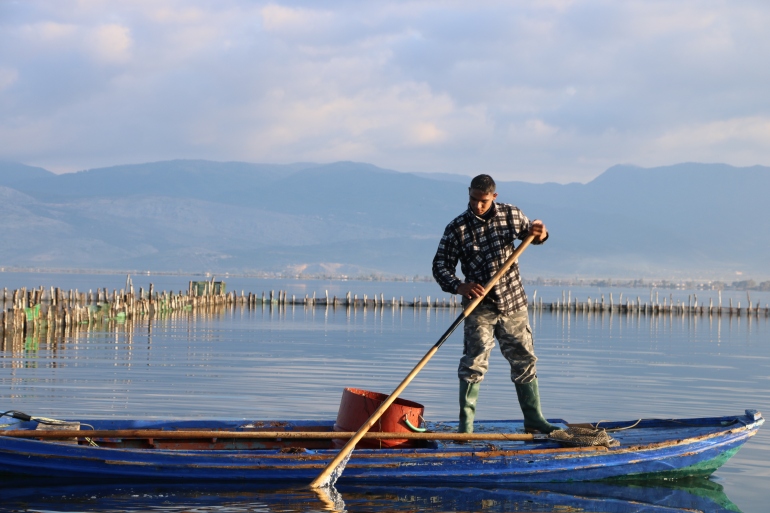
 The coal-burning power plant of Ptolemaida, in northern Greece, once billed as one of Europe’s 30 dirtiest, is due to be shut down by 2023
Under current or planned infrastructure changes, called the Stated Policies Scenario, almost all the growth in energy demand by 2050 is met by low emissions sources, “but that leaves annual emissions at around current levels”, the report says, because not enough progress is being made in other sectors such as construction and transport.
“As a result, global average temperatures are still rising when they hit 2.6°C above pre-industrial levels in 2100.”
tor need to double clean energy investment and financing over the next decade to meet their pledges, which form the more virtuous Announced Policies Scenario.
“The successful pursuit of all announced pledges means that global energy-related CO2 emissions fall by 40% over the period to 2050 … The global average temperature rise in 2100 is held to around 2.1°C above pre-industrial levels in 2100,” says the report.
Even this is not enough, though. In May this year, the IEA published the first comprehensive study of what the world would have to do to reach net-zero emissions by 2050, a goal the IPCC finds absolutely necessary to maintain global warming below 1.5˚C.
Record level of renewables
The third document is Net Zero by 2050: A Roadmap for the Global Energy Sector. The requisite scenario outlined includes stopping all investment in fossil fuel energy projects immediately, stopping all sales of internal combustion engine cars by 2035, and achieving zero emissions in the electricity sector by 2040.
The electricity sector accounts for almost three-quarters of greenhouse gas emissions globally, so this last is a key pledge. In order to achieve it, however, the world would have to install four times last year’s record level of renewable energy generating capacity each year. This, the IEA says, is “equivalent to installing the world’s current largest solar park roughly every day”.
Overall energy investment would have to rise to $5 trillion a year by 2030.
Even after all this, the IEA says current technologies are only adequate to meet rising energy needs and emissions reduction targets to 2030. New technologies must be developed to cover roughly half the emissions reductions after 2030.
Clearly, the world is not yet on track to meet net-zero criteria by 2050, but the scientific and economic research available to policymakers at the COP26 in Glasgow is now greater than ever before – and so is the political pressure.
 The Mesohora hydroelectric dam in the Acheloos Valley in central Greece is a controversial power project because of its potential environmental impacts





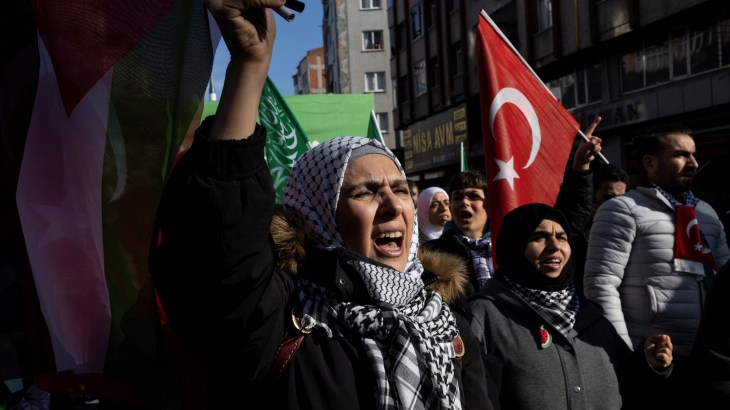
Dozens of Palestinians killed in overnight Israeli strikes in central and south Gaza as Red Sea tensions rise.
Here’s how things stand on Monday, January 15, 2024:
Latest updates and human impact
- Israeli attacks continue unabated overnight killing and wounding dozens of civilians in central and southern Gaza. At least 22 people were killed and a large number injured as a result of Israeli forces targeting al-Thalatheni Street in the central Gaza Strip.
- Yemen’s Houthi rebels fired an antiship cruise missile toward an American destroyer in the Red Sea, which was shot down by a US fighter jet, announced US Central Command (CENTCOM) on X.
- This was the first US-acknowledged Houthi attack since the US strikes on Yemen on Friday.
- Hamas released a 37-second video showing three Israeli captives held in Gaza on Sunday, saying they would reveal the fate of the captives on Monday and urging the Israeli government to stop the offensive.
- The Israeli military says it has shifted to a new phase of the war focused on the southern end of Gaza, where almost 2 million internally displaced Palestinians are running out of safe spaces to shelter.
- The Gaza Ministry of Health has said almost 24,000 people have been killed in the Israeli offensive. More than 60,000 people have been wounded in 100 days of war.
Diplomacy
- Israeli Prime Minister Benjamin Netanyahu said on Sunday that his country will pursue its war against Hamas until victory and will not be stopped by anyone, including the International Court of Justice (ICJ).
- The White House said on Sunday that “it’s the right time” for Israel to scale back its military offensive in the Gaza Strip.
- Egypt’s State Information Service (SIS) said in a statement on Sunday that one of the biggest obstacles to the timely delivery of sufficient aid to Gaza was Israeli inspection of the aid. The statement came after Israel blamed Cairo for the delay in aid delivery to Gaza during its defence at the ICJ.
- US Secretary of State Antony Blinken posted on X on Monday, calling for the release of the remaining captives held in Gaza on the 100th day since they were taken by Hamas. He did not mention the Palestinian casualties.
- Australia’s Foreign Minister Penny Wong, who described herself as a “friend of Israel” to the press, will travel to Jordan, Israel, the occupied Palestinian Territories and the United Arab Emirates this week, her office said on Monday.
West Bank raids and violence
- Israeli forces arrested 25 students staging a sit-in in protest against high tuition fees at An-Najah University in Nablus. Al Jazeera’s Hamdah Salhut reported that the protesting students received a text message from Israeli forces telling them to “surrender now”.
- Israeli forces have reportedly raided the family home of Nael al-Barghouti, the longest-serving Palestinian prisoner, in the village of Kobar, in Ramallah, in the occupied West Bank.
- The Israeli army said on Friday that it killed three Palestinian men who infiltrated a West Bank settlement and fired upon soldiers.
- The Israeli military killed two Palestinians after accusing them of ramming their car through a checkpoint near Hebron.
- Local sources reported that Israeli forces bulldozed two Palestinian-owned houses during a Sunday midnight raid in the city of Qalqilya, Palestinian news agency Wafa reported.
- Armed Israeli settlers broke into the village of Burin, south of Nablus, and attacked Palestinian residents’ houses and properties after midnight on Sunday, Wafa reported.
- “Violent raids and arrests have become part of the fabric of daily life in the occupied West Bank,” Al Jazeera’s Mohammed Jamjoom, reporting from Ramallah in the occupied West Bank, said. At least 347 Palestinians have been killed and thousands have been arrested since October 7.

Flames and smoke billow during Israeli attacks against Gaza on October 9, 2023
Human Rights Watch terms Israeli Defence Minister Yoav Gallant’s call for a ‘complete siege’ on Gaza a ‘war crime’.
The Hamas movement has threatened to kill an Israeli hostage every time Israel bombs a Palestinian home without warning as Israel mobilised some 300,000 reservists and imposed a total blockade of the Gaza Strip, denying the enclave’s millions of residents access to food, water and fuel.
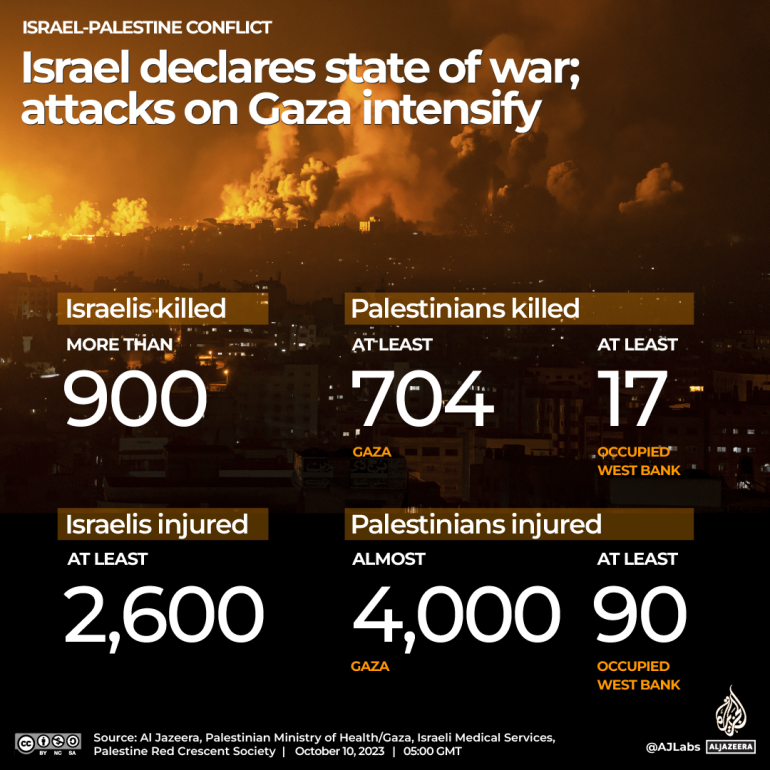
The warning from Hamas came on Monday as the death toll from the armed group’s surprise weekend attack climbed to 900 in Israel and revenge attacks by Israeli forces on the besieged Gaza Strip killed more than 700 people and left some 3,700 others wounded.
Residential apartment blocks, hospitals, schools and a mosque have been among the sites attacked by Israeli fighter jets, artillery and drones, according to media reports and witnesses.
Hamas spokesperson Abu Ubaida issued the threat to kill Israelis from the dozens held captive by the armed group. He said an Israeli hostage would be killed for every Israeli bombing of a civilian house without warning.
Israeli Foreign Minister Eli Cohen said more than 100 people were taken captive by Hamas during the deadly cross-border incursion over the weekend.
As Israeli forces conducted intense retaliatory attacks on Gaza on Monday, Israel’s Defence Minister Yoav Gallant drew international condemnation by announcing a total blockade of the densely populated and besieged enclave, which is home to 2.3 million people.
Gallant said Israel would impose a “complete siege” on Gaza. “No electricity, no food, no water, no gas – it’s all closed.”
United Nations Secretary-General Antonio Guterres said he was “deeply distressed” by the siege announcement and warned that Gaza’s already dire humanitarian situation will now “only deteriorate exponentially”.
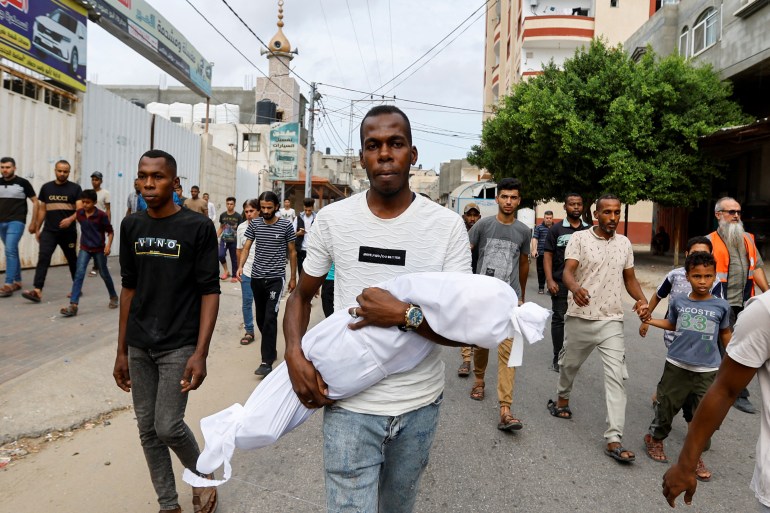
Guterres also said some 137,000 people were taking shelter with the UN Relief and Works Agency for Palestinian Refugees (UNRWA) at schools across Gaza.
UNRWA said on Tuesday that almost 190,000 people have been displaced in Gaza amid the Israeli attacks and the figure is expected to grow further as the violence intensifies.
Nearly half a million people have also not received food rations this week in Gaza as UN food distribution centres have been forced to remain closed amid the Israeli onslaught, UNRWA said.
Human Rights Watch said Israel’s total blockade on the necessities of life for everyday people in Gaza was a war crime.
“Defense Minister Gallant’s statements are abhorrent,” Omar Shakir, Israel and Palestine director at Human Rights Watch, said in a statement.
“Depriving the population in an occupied territory of food and electricity is collective punishment, which is a war crime, as is using starvation as a weapon of war. The International Criminal Court should take note of this call to commit a war crime,” he said.
Abhorrent. This is a call to commit a war crime by @yoavgallant. The @IntlCrimCourt should take note.
Quote by @OmarSShakir ⤵️ https://t.co/kKVo6YtpI1 pic.twitter.com/neHQMwnXVn
— Human Rights Watch (@hrw) October 9, 2023
Shakir also condemned the threat by Hamas to kill hostages, warning that such action was also a war crime.
“All hostages should be safely released to their families,” he said.
Grotesque. These threatened acts would amount to flagrant war crimes by Hamas’ armed wing. The @IntlCrimCourt will be watching.
Quote from @OmarSShakir ⤵️ https://t.co/FuNtvHe0YG pic.twitter.com/6cnHODLWyZ
— Human Rights Watch (@hrw) October 9, 2023
On the diplomatic front, Egyptian President Abdel Fattah el-Sisi and his Turkish counterpart Recep Tayyip Erdogan called on Hamas and Israel to immediately end violence and protect civilians, the Egyptian presidency said.
Erdogan urged Israel against “indiscriminately” attacking civilians and delivered measured criticism of Hamas, urging both sides to respect the “ethics” of war.
The United Kingdom, French, German, Italian and US governments issued a joint statement on Monday recognising the “legitimate aspirations” of the Palestinian people and supporting equal measures of justice and freedom for Israelis and Palestinians alike.
But the prospect that fighting could spread also alarmed the region and the world.
Lebanese armed group Hezbollah fired rockets into northern Israel in response to at least three of its members being killed in Israeli shelling of Lebanon.
Israel said one of its deputy commanders was also killed in an earlier cross-border raid from Lebanon.

US President Joe Biden holds a bilateral meeting with Israeli Prime Minister Benjamin Netanyahu on the sidelines of the 78th United Nations General Assembly in New York City, the US, September 20, 2023
Social media users, including journalists and observers, are calling out what they call a ‘double standard’.
After Saturday’s surprise attack by the Palestinian group Hamas on Israel, Ukrainian President Volodymyr Zelenskyy took to the social media platform X to offer “condolences go out to everyone who lost relatives or close ones in the terrorist attack”.
He also stated, “Israel’s right to self-defence is unquestionable.”
Many world leaders, including US President Joe Biden and UK Prime Minister Rishi Sunak, shared similar sentiments.
The world is seeing appalling images.
Thousands of rockets raining down on Israeli cities. Hamas terrorists killing not only Israeli soldiers, but civilians on the streets and in their homes.
It’s unconscionable. Israel has a right to defend itself – full stop.
— President Biden (@POTUS) October 7, 2023
European Commission President Ursula von der Leyen stated, “Israel has the right to defend itself – today and in the days to come. The European Union stands with Israel.”
Accusations of Western ‘double standards’
Some social media users have criticised these statements, saying they highlight a double standard.
The world is seeing appalling images.
Thousands of rockets raining down on Israeli cities. Hamas terrorists killing not only Israeli soldiers, but civilians on the streets and in their homes.
It’s unconscionable. Israel has a right to defend itself – full stop.
— President Biden (@POTUS) October 7, 2023
Ukraine’s right to defend itself is praised by most international leaders while Russia’s invasion is condemned, but commentators said the same cannot be said about Israel’s occupation of the West Bank and Gaza.
Aaron Bastani, a leftist British journalist, said on X that there’s a “clear double standard in endorsing terrorism against civilian targets in Ukraine … and condemning it by Palestinians”.
Many users said Western diplomats and media support the Ukrainians who defend their land, but label the Palestinians fighting against Israel as “terrorists”.
https://twitter.com/KhaledBeydoun/status/1710787817415082349?ref_src=twsrc%5Etfw%7Ctwcamp%5Etweetembed%7Ctwterm%5E1710787817415082349%7Ctwgr%5E6acf829869e993177f32aa38aa48c02f38cb7f61%7Ctwcon%5Es1_&ref_url=https%3A%2F%2Fwww.aljazeera.com%2Fnews%2F2023%2F10%2F9%2Fwestern-leaders-accused-of-hypocrisy-over-response-to-palestine-ukraine
An illustration of a woman’s face, in which one eye is closed beside a Palestinian flag, and one eye open beside a Ukrainian flag, has been regularly shared as a symbol of the West’s alleged double standards in how the two conflicts are viewed.
https://twitter.com/OnlinePalEng/status/1710994682883273172?ref_src=twsrc%5Etfw%7Ctwcamp%5Etweetembed%7Ctwterm%5E1710994682883273172%7Ctwgr%5E6acf829869e993177f32aa38aa48c02f38cb7f61%7Ctwcon%5Es1_&ref_url=https%3A%2F%2Fwww.aljazeera.com%2Fnews%2F2023%2F10%2F9%2Fwestern-leaders-accused-of-hypocrisy-over-response-to-palestine-ukraine
Clips also emerged on social media from a CNN interview with Mustafa Barghouti, the general secretary of the Palestinian National Initiative, in which he posed the rhetorical question, “Why does the United States support Ukraine in fighting occupation – while here they support the occupier, who continues to occupy us?”
The hypocrisy and double standards of western governments and media platforms dealing with situations in Ukraine-Russia and Palestine-Israel blow the mind. Absolute disgrace.
— Said Yacoubi (@AlyacoubiSaid) October 8, 2023
It is not the first time Western nations have been accused of double standards in their stance on the Ukraine war.
Earlier in the year, Amnesty International published a report highlighting the West’s “double standards” on global human rights.
Agnes Callamard, Amnesty’s secretary-general, told Al Jazeera at the time that the occupation of Palestinian territory was a “particularly important one”.
“Without making any comparison between Russia’s aggression and Israel … it is clear the Palestinian people are under a regime of oppression – a regime of occupation and a regime of apartheid,” Callamard told Al Jazeera.
Over the last three days, X users recirculated earlier statements calling out what they called Western hypocrisy, sharing video by the Irish lawmaker Richard Boyd Barrett from March 2022 in which he berated the Irish government’s double standards regarding Ukraine and Palestine:
“You’re happy to use the most strong and robust language to describe the crimes against humanity of [Russian President] Vladimir Putin, but you will not use the same strength of language when it comes to describing Israel’s treatment of the Palestinians.”
Barrett on Sunday again called out what he described as “shocking double standards of Western leaders supporting Ukraine resistance but condemning Palestinian[s].”
Meanwhile, others warned against comparing conflicts.
https://twitter.com/denfordauthor/status/1710993737738768607?ref_src=twsrc%5Etfw%7Ctwcamp%5Etweetembed%7Ctwterm%5E1710993737738768607%7Ctwgr%5E6acf829869e993177f32aa38aa48c02f38cb7f61%7Ctwcon%5Es1_&ref_url=https%3A%2F%2Fwww.aljazeera.com%2Fnews%2F2023%2F10%2F9%2Fwestern-leaders-accused-of-hypocrisy-over-response-to-palestine-ukraine
And some cautioned that Hamas and the Palestinians should not be seen as one and the same.
Just to clarify:
Palestine did not mount an attack on Israel. An Iranian proxy militia did. Palestinians are by and large huddled in their homes praying that an Israeli airstrike won't kill them or theirs. Hamas is the culprit here. This isn't a decentralized grassroots thing.
— Romeo Kokriatski (@VagrantJourno) October 9, 2023
Ukrainian footballer Oleksandr Zinchenko, who plays for Arsenal, posted on Instagram, stating he “stands with Israel”.
Zinchenko has been a vocal supporter of his home country in its ongoing defence against Russia, and he participated in a Game4Ukraine charity match in London earlier this year to raise money for Ukraine.
After online backlash, with some questioning an alleged double standard in his support of Israel, the footballer removed the post and switched his social media account to private.
Several people claimed that Zinchenko’s football club, in not responding to his comments, was guilty of hypocrisy after they had distanced themselves from former player Mesut Ozil’s comments in 2019 over alleged human rights abuses against Uighur Muslims in China.
-
 Audio10 years ago
Page – Day Break Everywhere Burst
-
 Audio5 years ago
Shadykarz – Forever
-
 Audio10 years ago
Juniorboy ft. 9ice – IRAPADA
-
 Entertainment Gists6 years ago
Ex-Beauty Queen, Sandra Benede Shares Sexy Photo
-
 Audio5 years ago
Simi – Happy Birthday ft. Adekunle Gold, DeJa
-
 Audio6 years ago
Ruger – Bounce
-
 Mixtapes4 years ago
Mixtape: DJ DimpleNipple – The Best Of Amapiano Thrills
-
 Editorials4 years ago
Sa’eedah Imam On Creating Her Imprint In The Nigerian Music Industry As An Emerging Creative Writer