

Oby Ezekwesili, a former Minister of Education in Nigeria, has said that China would have to pay damages and liability compensation to Africa for their failure to ”transparently and effectively” manage this global catastrophe termed the Coronavirus pandemic.
In an article she wrote for Washington Post, Ezekwesili said Africa’s economic gains since the last global crisis has been eroded due to this pandemic. She wrote that it is time to make offending rich countries pay the poor ones a global risk burden tax for delaying their rise out of poverty due to their own careless activities. She said China should immediately announce a complete write-off of the more than $140 billion that its government, banks and contractors extended to countries in Africa between 2000 and 2017.
Read her piece below…
The COVID19 pandemic has dealt a severe injury to Africa’s development prospects and worsened the conditions of its poor and vulnerable. Although there are calls for voluntary international aid to support the continent during this difficult time, this is far from the best solution. The continent must be accorded damages and liability compensation from China, the rich and powerful country that failed to transparently and effectively manage this global catastrophe. Africa’s economic gains since the last global crisis have been eroded. It is time to make offending rich countries pay the poor ones a global risk burden tax for delaying their rise out of poverty. Today, Africa is home to more than 70 percent of the world’s poorest people, with more than 400 million living below the poverty line. It is no surprise that it is disproportionately vulnerable to this crisis. It should not suffer even more because yet another powerful country failed to act responsibly.
China should immediately announce a complete write-off of the more than $140 billion that its government, banks and contractors extended to countries in Africa between 2000 and 2017. This would provide partial compensation to African countries for the impact that the coronavirus is already having on their economies and people.
The analysis of the balance of compensation due to Africa can then follow from discussions with the Africa Union and its member countries, alongside global and regional organizations including the United Nations, the World Bank, the International Monetary Fund, the African Development Bank and the European Union.
Our world is long overdue for a change of approach in the way it manages global risks that leave the poor worse off due to failures of the rich and powerful. The current model of development assistance is broken and can never deliver any real change of fortune for the most vulnerable. We need a new model that strengthens people to engage in the design of their pathway out of poverty and builds economic resilience.
The current conditions mirror what happened during the 2008 global financial crisis. In my time as the vice president in charge of the World Bank’s operations in Africa, we had to mobilize internal and partner resources to mitigate the severity of the economic recession suffered by the continent. Exogenous shocks dealt a lethal blow to the countries’ decade-long steady rises of economic growth, which had averaged 5 to 6 percent annually until tumbling to 2.4 percent in 2009.
This sharp fall ended Africa’s upward economic growth trajectory and sent per capita income tumbling. It increased inequality and the number of Africans in absolute poverty. Such fragile and low economic growth rates for a continent with one of the world’s highest concentrations of young people and annual population growth rate of about 2.5 percent is a key reason for widespread multidimensional poverty — a threat that carries seeds of global insecurity and instability.
The economic shock caused by the coronavirus has badly reduced the opportunity Africa would otherwise have had to lift hundreds of millions out of poverty. The African Union Commission estimates that Africa’s gross domestic product will shrink by as much as 4.5 percent, resulting in 20 million job losses.
This has dangerously hampered the possibility that Africa can generate jobs for young people and women, or increase literacy levels by reducing the number of out-of-school children with access to quality learning opportunities. It will result in lessened ability to reduce maternal and child mortality, improve nutrition and food security, make reliable energy available and accessible, improve the availability of quality roads, water, sanitation, and other infrastructure, and such other investments in public goods.
China, a country that only within the past four decades has managed to lift more than 850 million people out of poverty, would understand how critical it is for African countries to accelerate inclusive growth. While economies in Asia, Europe and the Americas have announced hefty emergency stimulus packages for their people and businesses, countries in Africa struggle to meet short-term food needs.
Most of Africa’s countries simply do not have the buffer required for fiscal relief in times of crisis, because they were already severely constrained by budgetary crises caused by poor domestic revenue mobilization, high public debts and low productivity. The parlous public finances of these countries worsened due to volatility in commodity prices as the pandemic worsened.
Africa faces frequent shocks caused by climate, terrorism, health issues, food insecurity, crime and other sources of risk. Most of these perils emanate from the failures of the rich and powerful economies, but end up inflicting a disproportionate share of the poor and vulnerable.
China should demonstrate world leadership by acknowledging its failure to be transparent on covid-19. Beijing’s leadership should then commit to an independent expert panel evaluation of its pandemic response. China and the rest of the Group of 20 countries should engage with the Africa Union and countries to design a reparations mechanism.






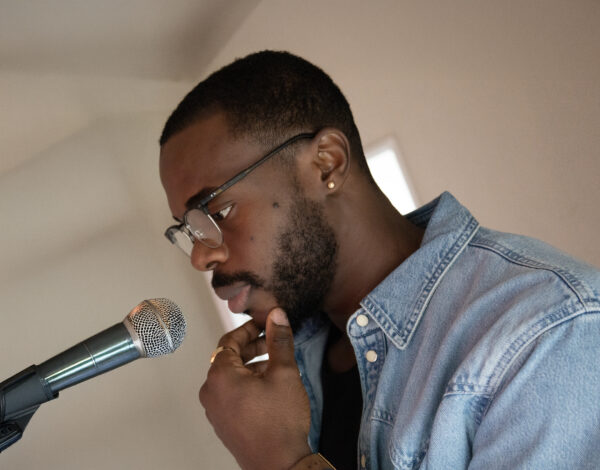
At 31, Lagos-born Espago is redefining what it means to be a late bloomer in the Nigerian music
space. After spending years as a chef, designer, and farmer, Espago turned to music just a year
ago on a journey sparked by deep loss, life experience, and self-discovery.
What makes him different? It’s not just his sound, it’s his story. Espago brings a calm but
confident energy that mirrors his Lagos upbringing: a blend of vibrant Fuji rhythms and soulful
Afrobeat traditions like King Sunny Ade, shaped by global legends like Michael Jackson and
Celine Dion. His voice? Professionally trained. His brand? Stylish, grounded, and intentional.
Espago didn’t wait for the industry to find him; he found his own way in, teaching himself,
searching out producers, and building his identity from scratch. With no major label backing and
no big-name features, he has still built a brand marked by boldness, emotion, and Lagos street
authenticity.
He’s not just making music; he’s building a lifestyle brand. His creative roots are in food,
fashion, and music fused into something richer than just a “sound.” It’s a full experience. While
he hasn’t performed live yet, he’s putting in the work behind the scenes, mentoring new artists,
recording regularly to sharpen his voice and brand for bigger stages ahead.
In a scene dominated by speed, Espago’s journey is about intentional growth, honest
expression, and emotional connection.
As the new class of Afro‑HipHop begins to take shape, Espago stands out not just for what he’s
making, but for who he is becoming.

Rising artist Derriq isn’t just making music for entertainment; he’s building a legacy rooted in culture, resilience, and pride. The Lagos-based Afro-soul and Afrobeats singer has his eyes set on something bigger than streaming numbers: putting his hometown of Benin City on the global creative map is his dream.
A native of Edo State, Derriq’s musical journey began as a child organizing school parties just for the chance to perform. Since then, he’s gone from studio assistant to full-fledged artist, releasing impactful tracks like “Position,” “Vibration,” and “Confidence.” His sound, described as smooth, calm, and party-ready, reflects the duality of his personality: laid-back yet determined, quiet but powerful.
Derriq is more than just a promising name on Nigeria’s growing music roster; he’s a symbol of the next generation of artists who blend regional identity with global appeal using his distinctive voice, a strong sense of direction, and his signature slang “Yehboo! Yezaiii!” making waves among fans, Derriq is proving that cultural authenticity still cuts through the noise.
His next single, “Omo n’ Ogie,” is a tribute to his heritage and a signal that he’s just getting started. Keep your eyes on Derriq, he’s not just singing for the moment, he’s singing for a movement.
Follow @DerriqMusic on all social platforms
For interviews and press: derriqmusic@gmail.com


Good morning! Here is today’s summary from Nigerian Newspapers:
1. President Bola Tinubu will address the nation in a broadcast today, Sunday, August 4, 2024. Mr Ajuri Ngelale, Special Adviser to the President on Media and Publicity, announced this in a statement, on Saturday, saying the broadcast would hold at 7am.
2. The Commissioner of Police in Borno State, Yusuf Lawal, on Saturday confirmed the killing of four persons along Baga Road in Maiduguri, Borno State during the nationwide #EndBadGoverment protest. He said Boko Haram elements infiltrated the protesters and killed four persons on Thursday with explosives at a filling station.
3. Many persons have been feared killed while others sustained injuries as hoodlums clashed with security operatives in Kano. It was gathered that Rijiyar Lemo, Kurna to Bachirawa areas in Fagge Local Government, Kofar Nassarawa in Kano municipal and Unguwa Uku area of Tarauni Local Government are the worst hit areas.
4. The leadership of the organised labour, on Saturday, warned the Nigeria Police Force and other security forces to stop what it described as a “massacre” of protesters carrying out nationwide demonstrations against hunger in the land.
5. Leading Human Rights group, Amnesty International Nigeria, has said over 50 protesters were arrested in Abuja on the third day of the demonstration against hardship in the land.
6. Former Vice-President Atiku Abubakar has urged the police and other security agencies to stop shooting and killing protesters demanding good governance in Nigeria. Atiku in a statement on Saturday, questioned the professionalism of the security agencies in the handling of the ongoing demonstrations.
7. Some of the organisers and supporters of the ongoing protest have set up pages to raise over N4bn through GoFundMe, a popular online crowdfunding platform. A check on Saturday showed that a total of N4.1bn had been benchmarked to be donated through accounts created by three GoFundMe users.
8. Tragedy struck again in Imo State on Saturday evening when some gunmen reportedly shot dead the President-General of Umucheke Okwe autonomous community in Onuimo Local Government Area of Imo State, Hyginus Ohazurike. Six village heads from the autonomous community were also allegedly killed by the gunmen.
9. The Federal Capital Territory Commissioner of Police, Bennett Igweh has said his men were not responsible for the death of a teenager in the Kubwa area of the FCT. In a viral video, a man claimed that police, while dispersing protesters, shot dead a teenager in the Kubwa area.
10. The Minister of Budget and Economic Planning, Atiku Bagudu has said President Bola Tinubu is keeping an eye on the ongoing #EndBadGovernance demonstrations across the country.
-
 Audio10 years ago
Page – Day Break Everywhere Burst
-
 Audio5 years ago
Shadykarz – Forever
-
 Audio10 years ago
Juniorboy ft. 9ice – IRAPADA
-
 Entertainment Gists5 years ago
Ex-Beauty Queen, Sandra Benede Shares Sexy Photo
-
 Audio5 years ago
Simi – Happy Birthday ft. Adekunle Gold, DeJa
-
 Audio5 years ago
Ruger – Bounce
-
 Mixtapes4 years ago
Mixtape: DJ DimpleNipple – The Best Of Amapiano Thrills
-
 Editorials3 years ago
Sa’eedah Imam On Creating Her Imprint In The Nigerian Music Industry As An Emerging Creative Writer