
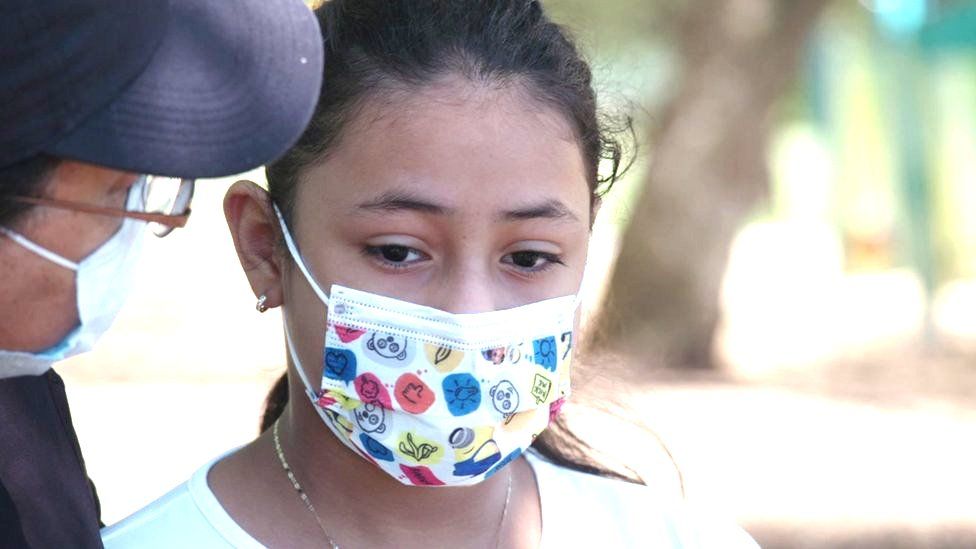
The US has a vast system of detention sites scattered across the country, holding more than 20,000 migrant children. In a special investigation, the BBC has uncovered allegations of cold temperatures, sickness, neglect, lice and filth, through a series of interviews with children and staff.
It was midnight on the Rio Grande – the imposing river that forms the border between Texas and Mexico – and lights began to flash on the Mexican side. Voices could be heard in the darkness. Figures emerged, got into a small raft, and began to cross the river.
As the raft appeared on the US side, the faces of the migrants became visible. More than half of them were children. Over March and April, more than 36,000 children crossed into the US unaccompanied by an adult. This was a record high for recent years.
Many children travelling alone set out on their journey hoping to reunite with a parent already in the US. More than 80% of them already have a family member in the country, the US government says.
The children scrambled up the banks, exhausted. Two young cousins held hands. Another youth, Jordy, 17, said he had fled Guatemala because he was afraid of violent gangs operating there. But tonight he was frightened about what might await him in migrant detention centres in the US. He said he had heard stories about them.
The so-called “iceboxes”, notorious among migrants, are extremely cold rooms or cubicles in US Border Patrol migrant processing facilities.
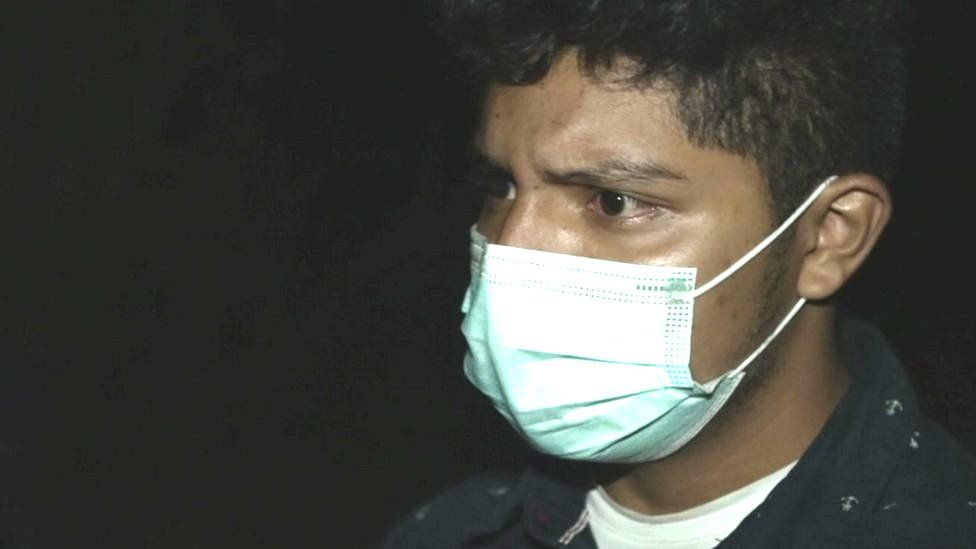
Jordy was told to join a line with other children. US Customs and Border Protection (CBP) guards were taking the children’s shoelaces and belts, a process usually reserved for prisoners to prevent them trying to take their own lives.
Jordy and the other children were then taken away by bus into the night. They were to join more than 20,000 migrant children now in US detention, held in a series of extensive camps around the country, at least 14 of which are new.
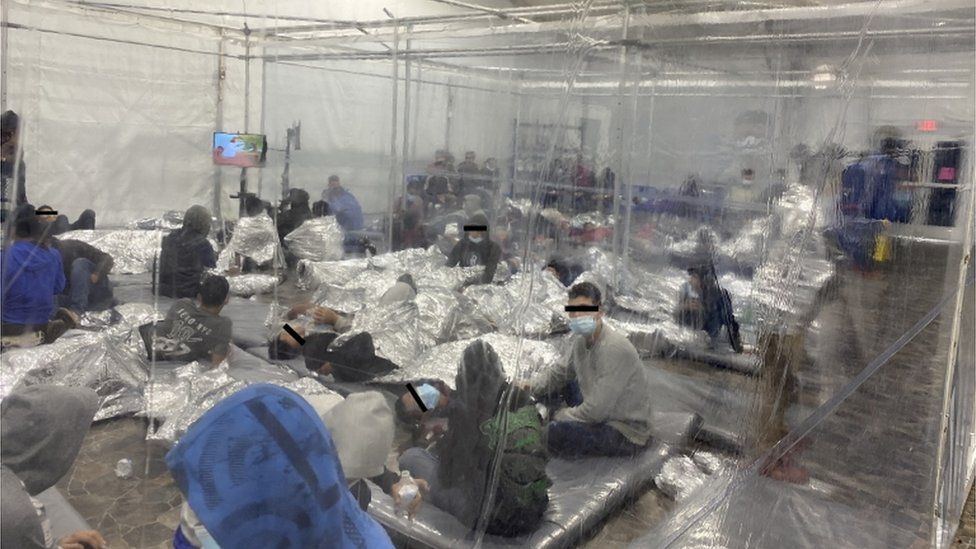
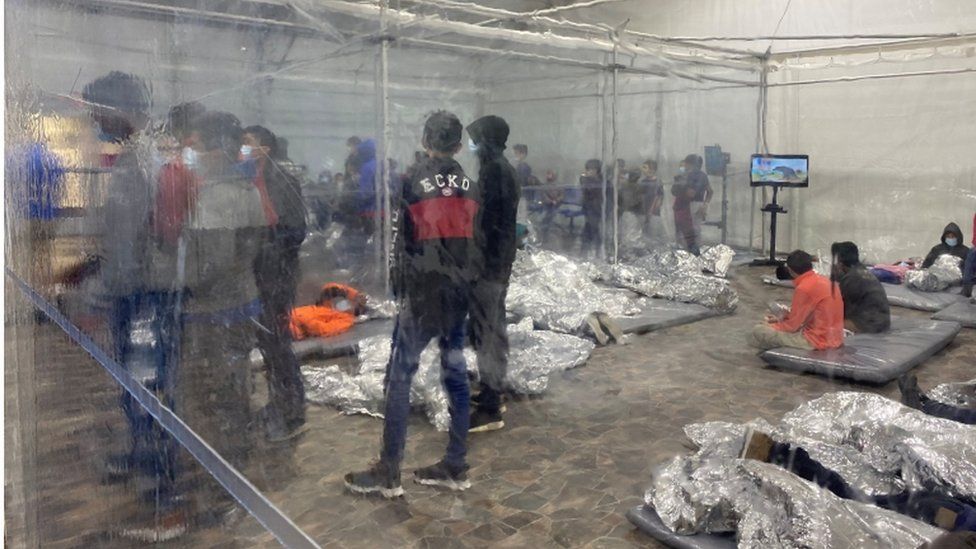
In late March, CBP released disturbing images of cramped conditions within one particular facility it runs in Donna, Texas – a mass of enormous white tents looming above the small town. The facility was designed to hold 250 people but housed more than 4,000 at peak occupancy.
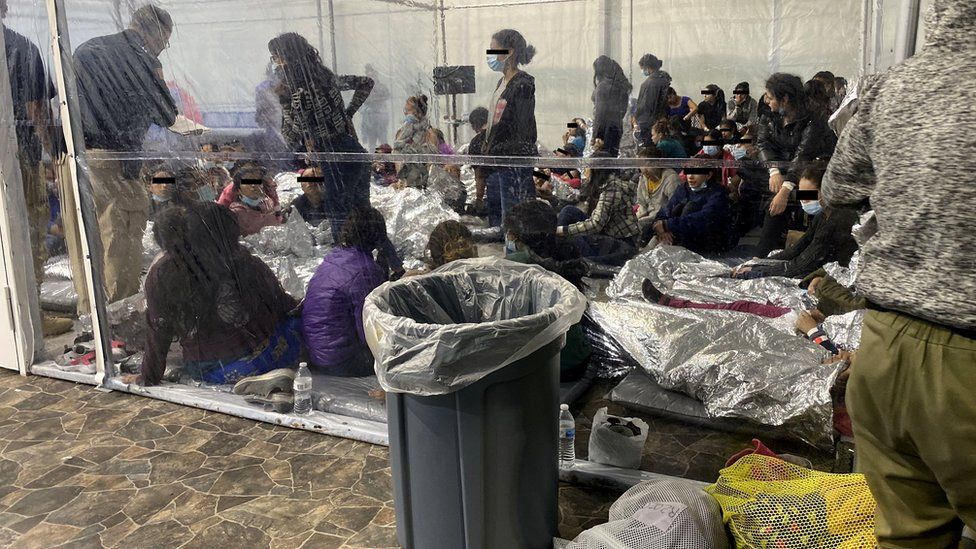
Journalists have not been allowed to talk to the children inside. Instead we have been tracking down the children who have been released, to find out about conditions in US detention sites.
Ten-year-old Ariany, who crossed into the US alone, spent 22 days in detention this spring, most of them in the Donna camp. She was crammed into a plastic cubicle – as were scores of other children, from toddlers to teens – wrapped in a silver emergency blanket.
“We were very cold,” she said. “We had nowhere to sleep so we shared mats. We were five girls on two mats.”
Ariany was finally reunited with her mother, Sonia, in late March.
She had passed her mother’s contact details onto US officials who were able to locate her. Sonia had fled Honduras six years ago with her son due to gang violence, leaving Ariany – who was too young at the time to make the journey – behind with her older sister.
Cindy, 16, also held in Donna this spring, said there were 80 girls in her cubicle and that she and most of the children were wet under their blankets, due to dripping pipes.
“We all woke up wet.” She said. “We slept on our sides, all hugged, so we stayed warm.”
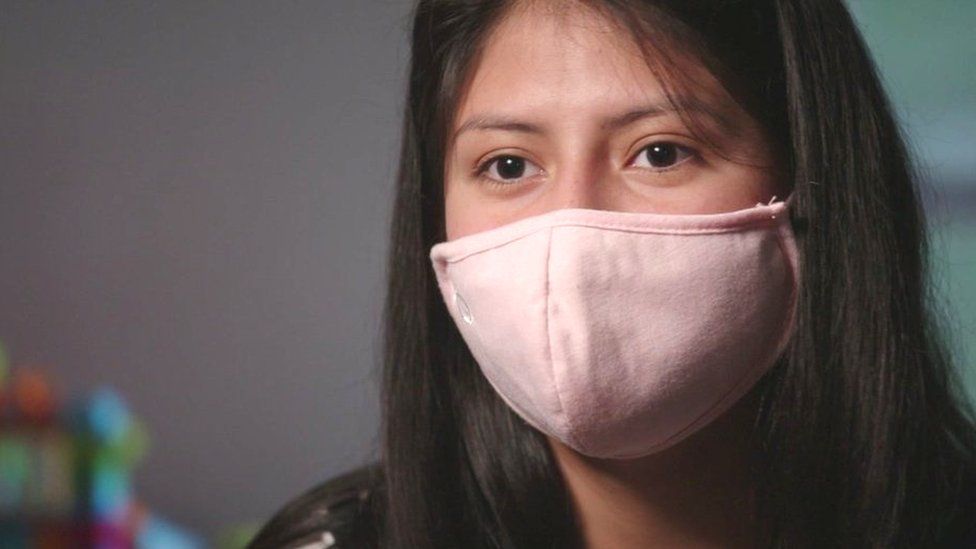
A number of children, including Ariany and Paola, a 16-year-old also released from Donna, told the BBC that they were given food that had expired, or was rotten or not cooked properly.
They told us that many children became sick.
“Some girls fainted,” said Jennifer, who was 17 at the time of her detention.
Some girls in Donna were able to shower once a week, but others said they did not shower for several weeks at a time. Paola struggled with the filth.
“I started to feel my head itching, and I realised that it was not normal. They checked my head and told me that I had lice.”
With children eating and sleeping in close quarters, the cubicles quickly became rancid. Ten-year-old Ariany said the guards threatened the children if they did not keep their cramped quarters clean.
At night, the children said, the tents were filled with the sounds of crying.
“We all cried, from the youngest up. There were two-year-old, or one-and-a-half-year-old babies, crying because they wanted their mother,” said Cindy.
Paola said she tried to help the younger ones, but was also worried that she herself would never be reunited with her mother.
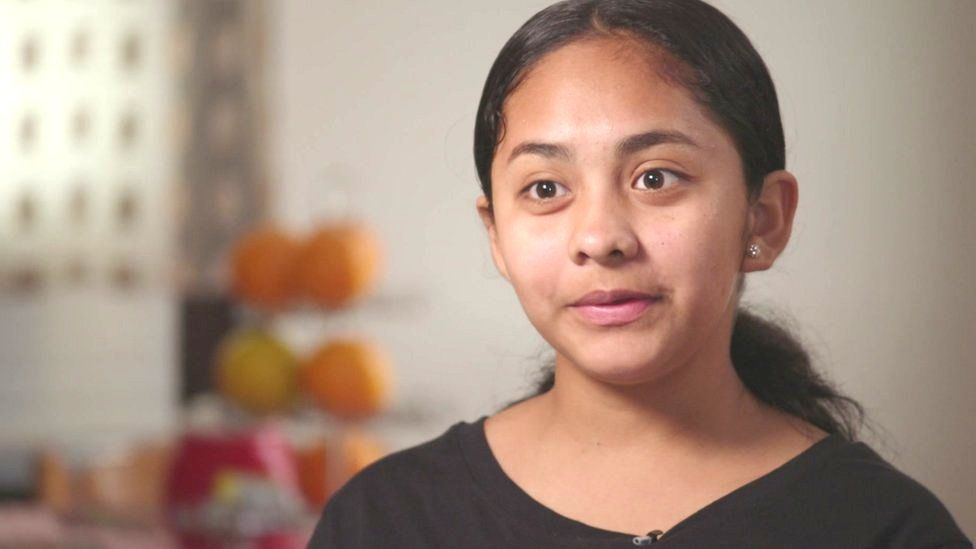
“They cried in front of me, and I just tried to comfort them and tell them that one day we would get out of there – although sometimes inside me I had doubt, because [the staff] would not ask me for my mom’s number, her address, and I felt bad too,” she said.
Flights moving thousands of children
And then one day Cindy began to deteriorate and feel ill. She tested positive for Covid-19, as have a startling number of migrant children in detention. Health and Human Services (HHS) reports more than 3,000 coronavirus cases among migrant children in Texas alone since last year. It is not known what the total number of cases is in the new emergency detention sites around the country.
Eventually Cindy, without being told where she was going, was transferred with 40 other Covid positive children onto bus, then plane, and flown 2,400km (1,500 miles) away to San Diego, California. They were taken to a new detention site – a convention centre with the capacity for almost 1,500 children – with row after row of flimsy camp beds.
She says she was kept away from the healthy children, in a section full of children with Covid. She said conditions were better than at Donna, but it was still days before she was able to shower.

Who are the children?
- Persecution, gang violence and organised crime, losses from natural disasters (including two Central American hurricanes in 2020), and poverty are all causing parents to send their children to seek refuge in the US. Migrants are vulnerable to exploitation and sexual abuse along the way
- Most are teenagers from Guatemala, Honduras or El Salvador, though some are reported to be as young as six or seven
- They are either sent by relatives on their own, or with people smugglers who charge thousands of dollars, though reports suggest some families accompany the children to the border and then send them across alone to improve their chances of US entry
- Most have family members already in the US, about half of whom are a parent
- Only 4.3% of unaccompanied minors seeking asylum have been deported since 2014
Every day, flights leave US border towns loaded with children.
“On some days we estimate that hundreds of children are being transported around the country on these flights,” said Thomas Cartwright, of Witness at the Border, an organisation that logs the flights.
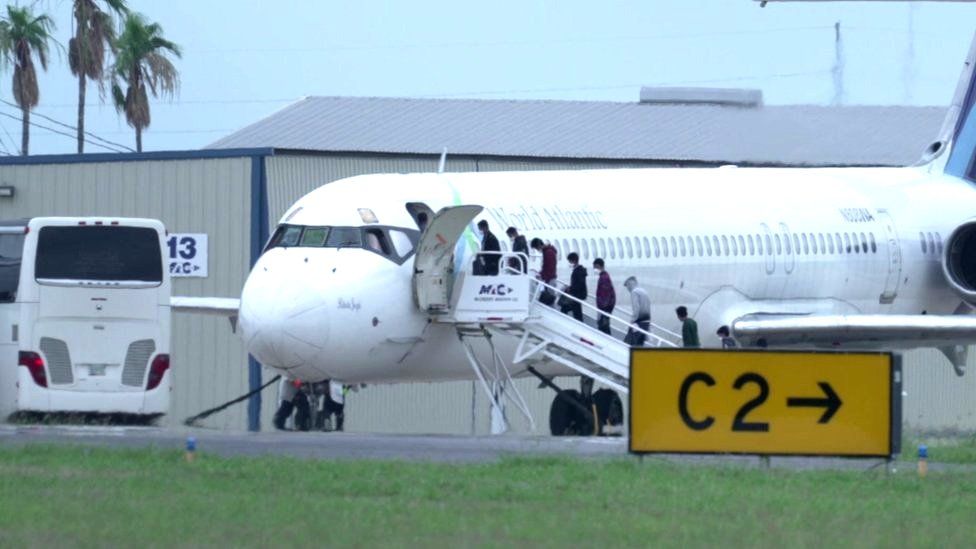
In the past few weeks, the authorities have moved about 3,000 children out of the Border Patrol facility in Donna, transporting many to a new network of child detention centres around the country run by HHS, including the one Cindy was transferred to in San Diego.
There are at least 14 such facilities, known as Emergency Intake Sites, on military bases, convention centres, or arenas in major US cities. These are a new part of a network of 200 detention centres for migrant children spread across 22 states.
This means that Donna is far less crowded now, with the camp holding around 300 children. The facility is being expanded, as the influx of migrants across the border continues.
One of the new Emergency Intake Sites is the Kay Bailey Hutchinson conference centre in central Dallas, which has 2,270 camp beds set up in a grid system in a huge hall, and held hundreds of teenage boys, aged 13-to-17, at its peak.
Staff who work in the Dallas site say they have had to sign non-disclosure agreements specifying they are not to talk about what goes on inside.
Children ‘contemplating suicide’
But some agreed to talk to us on condition of anonymity.
“The children always complain about not having enough, not eating enough,” one staff member said.
He also said the convention hall was cold, the boys had one thin blanket each, and were made to stay by their camp beds almost all day.
“Boys have been in there for 45 days straight with no sunlight, no recreation outside, no fresh air, no nothing,” said the staff member.

He said that the boys were only given 30 minutes of recreation twice a week in an indoor room and many had been in the convention centre for weeks.
“They are all depressed. I heard the other day that several were contemplating suicide because of the conditions here.
“They are being treated like prisoners, like inmates,” he said. “It’s haunting that this centre has not been able to meet the minimal standards of caring for unaccompanied minors.”
In response to the allegations of neglect of migrant children in the new detention sites, the Department of Health and Human Services (HHS) said: “The children are provided a safe and healthy environment with access to nutritious food, clean clothes, comfortable beds, education, recreational activities, and medical services.”
“The Dallas EIS (Emergency Intake Site) is providing required standards of care,” the statement said.
“The entire administration is working together to reduce the length of time children are in federal custody by making unifications our top priority,” it added, pointing out that the number of children in the care of the HHS has more than doubled.
Children are being released regularly, but for many it is a very slow process. The average time in detention in the emergency centres is a month.
The largest Emergency Intake Site is a tented facility at the Fort Bliss military base in El Paso, Texas, holding more than 4,500 children in the searing desert. It has a capacity for more than 10,000.
A source inside has told the BBC that some of the tents contain 500-800 girls and boys who sleep in long rows of bunks. The source said hundreds of children are in Covid isolation, and that there are designated tents at the site now for scabies and lice, of which there are also outbreaks. Sources say the living conditions are unsanitary, and that there has been at least one report of sexual abuse in the girls’ tent. An official document indicates children under six may be sent to Fort Bliss.
The HHS did not respond to a BBC request for comment on these allegations.
Agony at the border
Amy Cohen, a psychiatrist based on the other side of the country in Los Angeles, has more than 30 years of experience working with traumatised children. She said the alleged conditions in the camps could be extremely damaging for those inside.
“Even after weeks in these conditions, many children are at greater risk of developing major psychiatric illnesses later in life, at greater risk of substance abuse and a greater risk of suicide,” she said.
Cohen said these migrant children would be even more vulnerable because many had been separated from a non-parental family member, or someone they came to rely on as a family member, at the border.
“If a child comes over with someone who is not their biological parent, even if they are their psychological parent, they are uniformly taken away from that individual, taken out of their laps, taken out of their arms, and called an unaccompanied minor.”
She also said parents were being forced to make the decision to separate themselves from their children, because families who are turned away often then send their children back across the border alone, rather than risk their welfare in dangerous cities along the Mexican border. There, she says, they are vulnerable to rape, trafficking and assault.
“So these parents, when they find they’re unable to protect their children, end up feeling forced to send their children by themselves across the river, in order to preserve their lives.”
Cohen said that although children were no longer being physically taken from their biological parents by border guards – as had happened for a time under former President Trump’s so-called “zero tolerance policy” – the process of family separation was deeply psychologically damaging.
“I interviewed children who were removed from parents under the Trump administration’s ‘zero tolerance’ policy… and I’ve interviewed many children who’ve been now taken away from aunts, and uncles, and siblings… I am seeing exactly the same trauma in these children now as we saw in those children then.”
The CPB told the BBC that under federal law any child arriving without a parent or legal guardian was considered unaccompanied and must be transferred to the HHS without the adult relative.
- Has suspended the Migrant Protection Protocols programme, also known as the Remain in Mexico policy, which required migrants to wait in Mexico while their cases were being heard by US immigration courts. Has gradually admitted those already enrolled in the programme to wait in the US while their cases are heard, while stressing that the border remains closed for others.
- Has created a taskforce to reunite families who were divided during Trump’s so-called “zero tolerance” policy
- Has paused construction on the Mexican border wall, and has proposed a major new immigration bill which would offer a pathway to citizenship for undocumented migrants already living in the US
A pandemic health order means that large numbers of adults and families are still being turned away at the border, and Mr Biden has urged migrants not to make the dangerous journey.
But the Biden administration has allowed unaccompanied children under the age of 18 and, more recently a small number of families with young children, to enter the US while their claims are processed. In addition, it was announced last week that the US would also process 250 asylum seekers a day who are deemed particularly vulnerable.
Many children are travelling to meet family, spurred on by a widespread rumour that Mr Biden has taken massive strides to welcome immigrants, and reverse the immigration crackdown of his predecessor.
Republican Beth Van Duyne, the congressional representative for Texas, said Mr Biden’s policy of allowing children to cross the border alone was to blame for the crisis.
“[The administration] are absolutely incentivising the separation of families,” she said.
“None of these centres are equipped to take care of children,” added Van Duyne, who has visited at least two of the state’s detention centres.
But Democrat Congresswoman Sylvia R. Garcia, who has visited several sites, says the administration has taken significant strides to improve conditions for children.
“Yes there are [issues], but I’m telling you that based on what I’m seeing and ones I’ve visited the administration is doing much better than it did before when the surge started, because they were not prepared for the sheer numbers and they did not have the facilities in place, and they do now.”
Children are being ‘needlessly traumatised’
“Children arriving to the United States are being needlessly traumatised due to the long-standing failure of the US to build a modern border management system that recognises 21st Century migration trends,” said Warren Binford, of the Willamette University College of Law.
Ariany, the 10-year-old who was held in the Donna tents for weeks, later drew pictures while she was in another shelter, of love hearts and flowers.
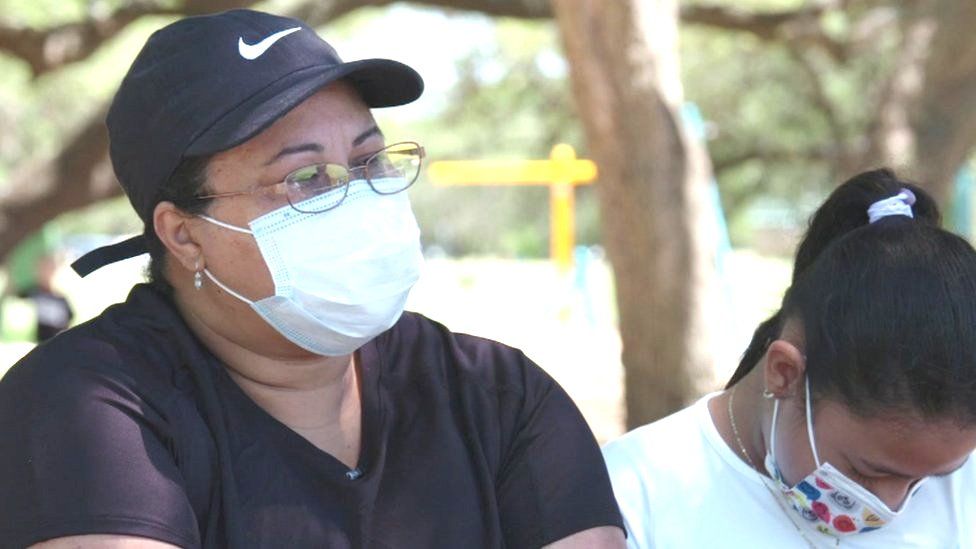
Ariany’s mother says her daughter, once a bubbly, sociable girl, has changed since her time in detention. “She’s very quiet, she hardly speaks. She can’t stand children near her right now.”
“The children we worry about most are the children who go quiet,” said Amy Cohen, child trauma specialist. She says the danger, particularly for the youngest children, is that “the trauma goes underground, it sits like land mines under the surface”.
Now Ariany has nightmares. “She’s very afraid of going to sleep. She wakes up crying, screaming,” said her mother Sonia.
Paola said she cried when she came home at all times of night and day, and she also had difficulties sleeping.
“I don’t think anyone in this country… deserves to be treated like this,” she said.
“Sometimes I pretended to be strong, because in this life you have to be strong. But this kind of thing leaves our hearts marked because even If we overcome it, we always remember.”




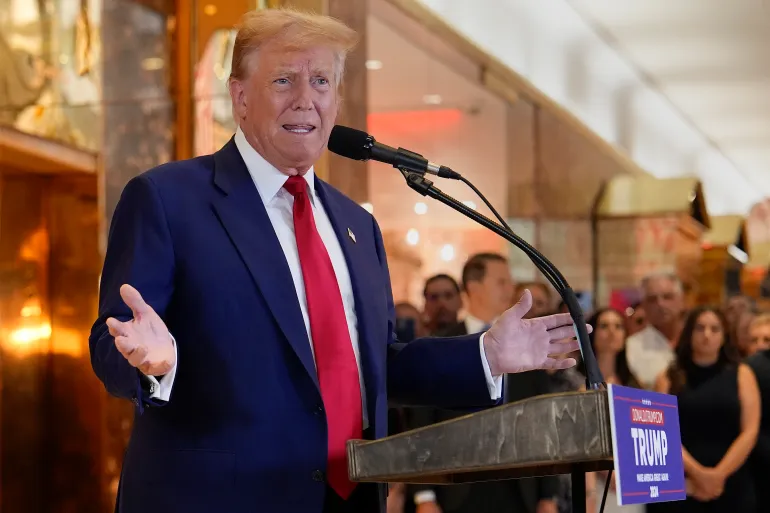



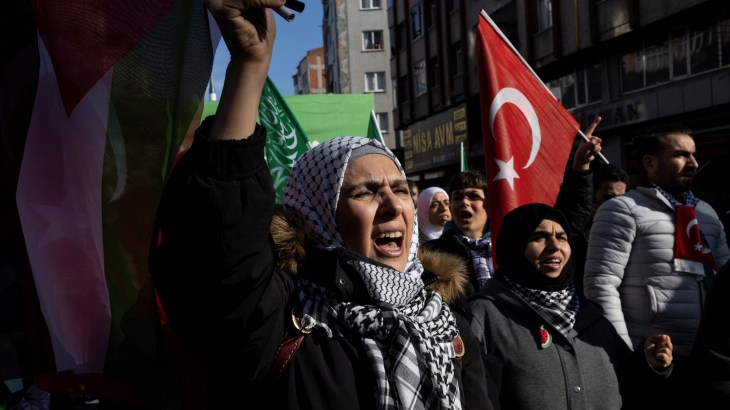
Dozens of Palestinians killed in overnight Israeli strikes in central and south Gaza as Red Sea tensions rise.
Here’s how things stand on Monday, January 15, 2024:
Latest updates and human impact
- Israeli attacks continue unabated overnight killing and wounding dozens of civilians in central and southern Gaza. At least 22 people were killed and a large number injured as a result of Israeli forces targeting al-Thalatheni Street in the central Gaza Strip.
- Yemen’s Houthi rebels fired an antiship cruise missile toward an American destroyer in the Red Sea, which was shot down by a US fighter jet, announced US Central Command (CENTCOM) on X.
- This was the first US-acknowledged Houthi attack since the US strikes on Yemen on Friday.
- Hamas released a 37-second video showing three Israeli captives held in Gaza on Sunday, saying they would reveal the fate of the captives on Monday and urging the Israeli government to stop the offensive.
- The Israeli military says it has shifted to a new phase of the war focused on the southern end of Gaza, where almost 2 million internally displaced Palestinians are running out of safe spaces to shelter.
- The Gaza Ministry of Health has said almost 24,000 people have been killed in the Israeli offensive. More than 60,000 people have been wounded in 100 days of war.
Diplomacy
- Israeli Prime Minister Benjamin Netanyahu said on Sunday that his country will pursue its war against Hamas until victory and will not be stopped by anyone, including the International Court of Justice (ICJ).
- The White House said on Sunday that “it’s the right time” for Israel to scale back its military offensive in the Gaza Strip.
- Egypt’s State Information Service (SIS) said in a statement on Sunday that one of the biggest obstacles to the timely delivery of sufficient aid to Gaza was Israeli inspection of the aid. The statement came after Israel blamed Cairo for the delay in aid delivery to Gaza during its defence at the ICJ.
- US Secretary of State Antony Blinken posted on X on Monday, calling for the release of the remaining captives held in Gaza on the 100th day since they were taken by Hamas. He did not mention the Palestinian casualties.
- Australia’s Foreign Minister Penny Wong, who described herself as a “friend of Israel” to the press, will travel to Jordan, Israel, the occupied Palestinian Territories and the United Arab Emirates this week, her office said on Monday.
West Bank raids and violence
- Israeli forces arrested 25 students staging a sit-in in protest against high tuition fees at An-Najah University in Nablus. Al Jazeera’s Hamdah Salhut reported that the protesting students received a text message from Israeli forces telling them to “surrender now”.
- Israeli forces have reportedly raided the family home of Nael al-Barghouti, the longest-serving Palestinian prisoner, in the village of Kobar, in Ramallah, in the occupied West Bank.
- The Israeli army said on Friday that it killed three Palestinian men who infiltrated a West Bank settlement and fired upon soldiers.
- The Israeli military killed two Palestinians after accusing them of ramming their car through a checkpoint near Hebron.
- Local sources reported that Israeli forces bulldozed two Palestinian-owned houses during a Sunday midnight raid in the city of Qalqilya, Palestinian news agency Wafa reported.
- Armed Israeli settlers broke into the village of Burin, south of Nablus, and attacked Palestinian residents’ houses and properties after midnight on Sunday, Wafa reported.
- “Violent raids and arrests have become part of the fabric of daily life in the occupied West Bank,” Al Jazeera’s Mohammed Jamjoom, reporting from Ramallah in the occupied West Bank, said. At least 347 Palestinians have been killed and thousands have been arrested since October 7.

Flames and smoke billow during Israeli attacks against Gaza on October 9, 2023
Human Rights Watch terms Israeli Defence Minister Yoav Gallant’s call for a ‘complete siege’ on Gaza a ‘war crime’.
The Hamas movement has threatened to kill an Israeli hostage every time Israel bombs a Palestinian home without warning as Israel mobilised some 300,000 reservists and imposed a total blockade of the Gaza Strip, denying the enclave’s millions of residents access to food, water and fuel.
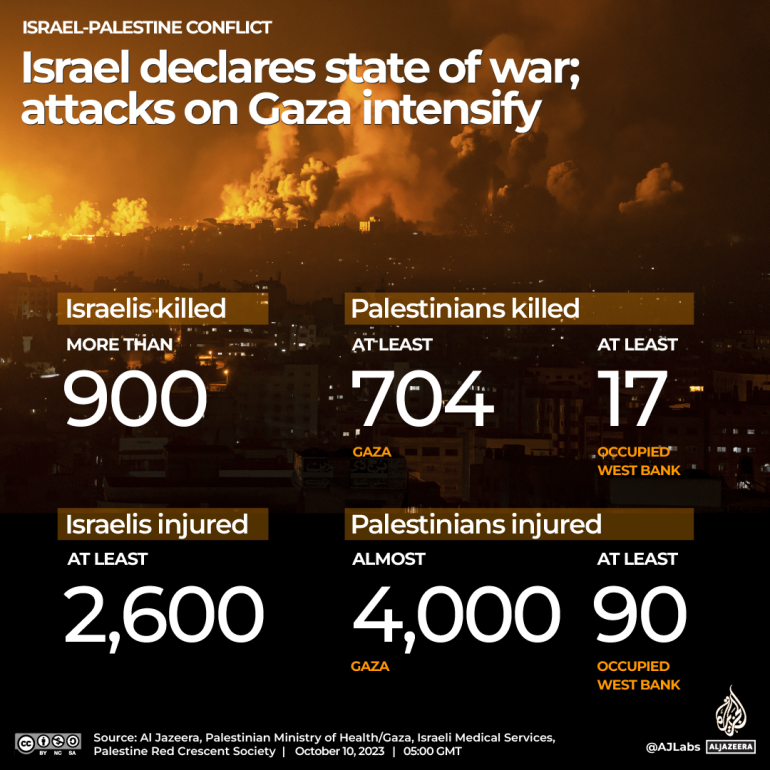
The warning from Hamas came on Monday as the death toll from the armed group’s surprise weekend attack climbed to 900 in Israel and revenge attacks by Israeli forces on the besieged Gaza Strip killed more than 700 people and left some 3,700 others wounded.
Residential apartment blocks, hospitals, schools and a mosque have been among the sites attacked by Israeli fighter jets, artillery and drones, according to media reports and witnesses.
Hamas spokesperson Abu Ubaida issued the threat to kill Israelis from the dozens held captive by the armed group. He said an Israeli hostage would be killed for every Israeli bombing of a civilian house without warning.
Israeli Foreign Minister Eli Cohen said more than 100 people were taken captive by Hamas during the deadly cross-border incursion over the weekend.
As Israeli forces conducted intense retaliatory attacks on Gaza on Monday, Israel’s Defence Minister Yoav Gallant drew international condemnation by announcing a total blockade of the densely populated and besieged enclave, which is home to 2.3 million people.
Gallant said Israel would impose a “complete siege” on Gaza. “No electricity, no food, no water, no gas – it’s all closed.”
United Nations Secretary-General Antonio Guterres said he was “deeply distressed” by the siege announcement and warned that Gaza’s already dire humanitarian situation will now “only deteriorate exponentially”.
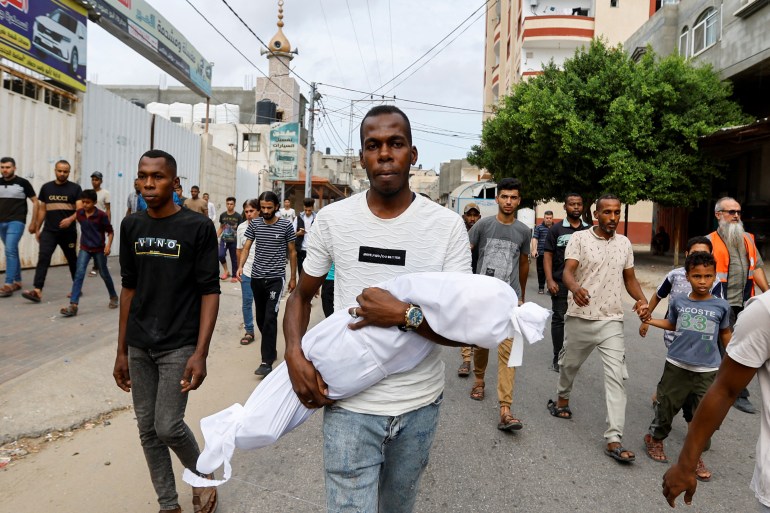
Guterres also said some 137,000 people were taking shelter with the UN Relief and Works Agency for Palestinian Refugees (UNRWA) at schools across Gaza.
UNRWA said on Tuesday that almost 190,000 people have been displaced in Gaza amid the Israeli attacks and the figure is expected to grow further as the violence intensifies.
Nearly half a million people have also not received food rations this week in Gaza as UN food distribution centres have been forced to remain closed amid the Israeli onslaught, UNRWA said.
Human Rights Watch said Israel’s total blockade on the necessities of life for everyday people in Gaza was a war crime.
“Defense Minister Gallant’s statements are abhorrent,” Omar Shakir, Israel and Palestine director at Human Rights Watch, said in a statement.
“Depriving the population in an occupied territory of food and electricity is collective punishment, which is a war crime, as is using starvation as a weapon of war. The International Criminal Court should take note of this call to commit a war crime,” he said.
Abhorrent. This is a call to commit a war crime by @yoavgallant. The @IntlCrimCourt should take note.
Quote by @OmarSShakir ⤵️ https://t.co/kKVo6YtpI1 pic.twitter.com/neHQMwnXVn
— Human Rights Watch (@hrw) October 9, 2023
Shakir also condemned the threat by Hamas to kill hostages, warning that such action was also a war crime.
“All hostages should be safely released to their families,” he said.
Grotesque. These threatened acts would amount to flagrant war crimes by Hamas’ armed wing. The @IntlCrimCourt will be watching.
Quote from @OmarSShakir ⤵️ https://t.co/FuNtvHe0YG pic.twitter.com/6cnHODLWyZ
— Human Rights Watch (@hrw) October 9, 2023
On the diplomatic front, Egyptian President Abdel Fattah el-Sisi and his Turkish counterpart Recep Tayyip Erdogan called on Hamas and Israel to immediately end violence and protect civilians, the Egyptian presidency said.
Erdogan urged Israel against “indiscriminately” attacking civilians and delivered measured criticism of Hamas, urging both sides to respect the “ethics” of war.
The United Kingdom, French, German, Italian and US governments issued a joint statement on Monday recognising the “legitimate aspirations” of the Palestinian people and supporting equal measures of justice and freedom for Israelis and Palestinians alike.
But the prospect that fighting could spread also alarmed the region and the world.
Lebanese armed group Hezbollah fired rockets into northern Israel in response to at least three of its members being killed in Israeli shelling of Lebanon.
Israel said one of its deputy commanders was also killed in an earlier cross-border raid from Lebanon.

US President Joe Biden holds a bilateral meeting with Israeli Prime Minister Benjamin Netanyahu on the sidelines of the 78th United Nations General Assembly in New York City, the US, September 20, 2023
Social media users, including journalists and observers, are calling out what they call a ‘double standard’.
After Saturday’s surprise attack by the Palestinian group Hamas on Israel, Ukrainian President Volodymyr Zelenskyy took to the social media platform X to offer “condolences go out to everyone who lost relatives or close ones in the terrorist attack”.
He also stated, “Israel’s right to self-defence is unquestionable.”
Many world leaders, including US President Joe Biden and UK Prime Minister Rishi Sunak, shared similar sentiments.
The world is seeing appalling images.
Thousands of rockets raining down on Israeli cities. Hamas terrorists killing not only Israeli soldiers, but civilians on the streets and in their homes.
It’s unconscionable. Israel has a right to defend itself – full stop.
— President Biden (@POTUS) October 7, 2023
European Commission President Ursula von der Leyen stated, “Israel has the right to defend itself – today and in the days to come. The European Union stands with Israel.”
Accusations of Western ‘double standards’
Some social media users have criticised these statements, saying they highlight a double standard.
The world is seeing appalling images.
Thousands of rockets raining down on Israeli cities. Hamas terrorists killing not only Israeli soldiers, but civilians on the streets and in their homes.
It’s unconscionable. Israel has a right to defend itself – full stop.
— President Biden (@POTUS) October 7, 2023
Ukraine’s right to defend itself is praised by most international leaders while Russia’s invasion is condemned, but commentators said the same cannot be said about Israel’s occupation of the West Bank and Gaza.
Aaron Bastani, a leftist British journalist, said on X that there’s a “clear double standard in endorsing terrorism against civilian targets in Ukraine … and condemning it by Palestinians”.
Many users said Western diplomats and media support the Ukrainians who defend their land, but label the Palestinians fighting against Israel as “terrorists”.
https://twitter.com/KhaledBeydoun/status/1710787817415082349?ref_src=twsrc%5Etfw%7Ctwcamp%5Etweetembed%7Ctwterm%5E1710787817415082349%7Ctwgr%5E6acf829869e993177f32aa38aa48c02f38cb7f61%7Ctwcon%5Es1_&ref_url=https%3A%2F%2Fwww.aljazeera.com%2Fnews%2F2023%2F10%2F9%2Fwestern-leaders-accused-of-hypocrisy-over-response-to-palestine-ukraine
An illustration of a woman’s face, in which one eye is closed beside a Palestinian flag, and one eye open beside a Ukrainian flag, has been regularly shared as a symbol of the West’s alleged double standards in how the two conflicts are viewed.
https://twitter.com/OnlinePalEng/status/1710994682883273172?ref_src=twsrc%5Etfw%7Ctwcamp%5Etweetembed%7Ctwterm%5E1710994682883273172%7Ctwgr%5E6acf829869e993177f32aa38aa48c02f38cb7f61%7Ctwcon%5Es1_&ref_url=https%3A%2F%2Fwww.aljazeera.com%2Fnews%2F2023%2F10%2F9%2Fwestern-leaders-accused-of-hypocrisy-over-response-to-palestine-ukraine
Clips also emerged on social media from a CNN interview with Mustafa Barghouti, the general secretary of the Palestinian National Initiative, in which he posed the rhetorical question, “Why does the United States support Ukraine in fighting occupation – while here they support the occupier, who continues to occupy us?”
The hypocrisy and double standards of western governments and media platforms dealing with situations in Ukraine-Russia and Palestine-Israel blow the mind. Absolute disgrace.
— Said Yacoubi (@AlyacoubiSaid) October 8, 2023
It is not the first time Western nations have been accused of double standards in their stance on the Ukraine war.
Earlier in the year, Amnesty International published a report highlighting the West’s “double standards” on global human rights.
Agnes Callamard, Amnesty’s secretary-general, told Al Jazeera at the time that the occupation of Palestinian territory was a “particularly important one”.
“Without making any comparison between Russia’s aggression and Israel … it is clear the Palestinian people are under a regime of oppression – a regime of occupation and a regime of apartheid,” Callamard told Al Jazeera.
Over the last three days, X users recirculated earlier statements calling out what they called Western hypocrisy, sharing video by the Irish lawmaker Richard Boyd Barrett from March 2022 in which he berated the Irish government’s double standards regarding Ukraine and Palestine:
“You’re happy to use the most strong and robust language to describe the crimes against humanity of [Russian President] Vladimir Putin, but you will not use the same strength of language when it comes to describing Israel’s treatment of the Palestinians.”
Barrett on Sunday again called out what he described as “shocking double standards of Western leaders supporting Ukraine resistance but condemning Palestinian[s].”
Meanwhile, others warned against comparing conflicts.
https://twitter.com/denfordauthor/status/1710993737738768607?ref_src=twsrc%5Etfw%7Ctwcamp%5Etweetembed%7Ctwterm%5E1710993737738768607%7Ctwgr%5E6acf829869e993177f32aa38aa48c02f38cb7f61%7Ctwcon%5Es1_&ref_url=https%3A%2F%2Fwww.aljazeera.com%2Fnews%2F2023%2F10%2F9%2Fwestern-leaders-accused-of-hypocrisy-over-response-to-palestine-ukraine
And some cautioned that Hamas and the Palestinians should not be seen as one and the same.
Just to clarify:
Palestine did not mount an attack on Israel. An Iranian proxy militia did. Palestinians are by and large huddled in their homes praying that an Israeli airstrike won't kill them or theirs. Hamas is the culprit here. This isn't a decentralized grassroots thing.
— Romeo Kokriatski (@VagrantJourno) October 9, 2023
Ukrainian footballer Oleksandr Zinchenko, who plays for Arsenal, posted on Instagram, stating he “stands with Israel”.
Zinchenko has been a vocal supporter of his home country in its ongoing defence against Russia, and he participated in a Game4Ukraine charity match in London earlier this year to raise money for Ukraine.
After online backlash, with some questioning an alleged double standard in his support of Israel, the footballer removed the post and switched his social media account to private.
Several people claimed that Zinchenko’s football club, in not responding to his comments, was guilty of hypocrisy after they had distanced themselves from former player Mesut Ozil’s comments in 2019 over alleged human rights abuses against Uighur Muslims in China.
-
 Audio10 years ago
Page – Day Break Everywhere Burst
-
 Audio5 years ago
Shadykarz – Forever
-
 Audio10 years ago
Juniorboy ft. 9ice – IRAPADA
-
 Entertainment Gists6 years ago
Ex-Beauty Queen, Sandra Benede Shares Sexy Photo
-
 Audio5 years ago
Simi – Happy Birthday ft. Adekunle Gold, DeJa
-
 Audio5 years ago
Ruger – Bounce
-
 Mixtapes4 years ago
Mixtape: DJ DimpleNipple – The Best Of Amapiano Thrills
-
 Editorials4 years ago
Sa’eedah Imam On Creating Her Imprint In The Nigerian Music Industry As An Emerging Creative Writer