
Features
Why British English Is Full Of Silly-Sounding Words

From ‘gazump’ to ‘gobsmack’, ‘squiffy’ to ‘snog’, British English is full of words that sound like barmy balderdash.
“That wazzock dared to gazump me; I’m gobsmacked by this sticky wicket full of codswallop that’s gone pear-shaped!”
That sentence may not sound serious. But the situation it describes is. Translated into standard English, it would be something like “That idiot dared to offer more money for the house after my offer already had been accepted; I’m shocked by this tricky situation full of nonsense that’s gone awry!”
Shakespeare, this isn’t. The first sentence sounds so peculiar to certain ears not just because of the mangling of parts of speech. It’s also full of words, with origins ranging from the 1700s to the 1980s, that have two qualities in common: they’re all rather silly-sounding, and they’re all British English.
British English is full of whimsical terms like these. They reflect the UK’s cultural appreciation of wit, a long tradition of literary inventiveness – and Britain’s fluctuating global influence over the centuries.
Whimsical words like these are formed in a number of ways. These include blends of other words (eg ‘Oxbridge’, from Oxford and Cambridge); reduplicatives, which repeat sounds or parts of words (‘higgledy-piggledy’); back-formations, which often remove the suffix of their originating word (like ‘kempt’, from ‘unkempt’); and of course sheer nonsense (like Roald Dahl’s invention ‘gobblefunk’).
These types of coinages aren’t unique to English, let alone British English. But the relative simplicity of English words may lend itself to this kind of play, says Anatoly Liberman, professor of languages at the University of Minnesota and an etymology blogger for Oxford University Press. “English is largely a monosyllabic language (‘come’, ‘go’, ‘take’, ‘big’, ‘laugh’, and so forth),” he says. “This makes such games easy.”
Especially characteristic of these formations in British English is the way they reflect a certain kind of humour. Pop anthropologist Kate Fox has written about the English “ban on earnestness” (an aversion to taking things too seriously) and the pervasiveness of humour in social interaction. This humour is of a particular kind: self-deprecating and given to understatement and irony.
It’s unsurprising that this national trait has made its way into the language. Romantic activities (like ‘snog’ and ‘shag’) are spoken of in childish terms.
Classic dishes are made to sound deliberately unappetising (‘dead man’s arm’ and ‘Eton mess’ – respectively, a rolled cake filled with jam and a dessert combining meringue, strawberries and cream. And there’s a healthy appetite for nonsensical ambiguity. To take just one example, ‘ladybird’ is a bugbear of perplexed Americans who wonder – although their version of the word is only slightly more sensible – “Why ladybird? Why not ladybug?”
This hints at a gleeful willingness in British English to dispense with literal meaning. Food, for instance, is a rich vein of words like this. ‘Fairy cake’, ‘toad in the hole’, and ‘jacket potato’ have nothing to do with fairies, toads and jackets.
Child’s play
There’s a long tradition in British English of inventing words just for the fun of it. Eminent linguist David Crystal writes in The Story of English in 100 Words that ‘a gaggle of geese’, ‘an unkindness’ of ravens’, and other collective nouns of this ilk were created in the 15th Century. He speculates that this was done deliberately for comic effect, giving rise to ‘a superfluity of nuns’ (pun intended).
There were more people writing, and there were no dictionaries to act as a stabilising influence – David Crystal
While whimsical British terms have been coined in every era, certain periods have been especially fruitful. According to Crystal, linguistic inventiveness, particularly of a playful kind, seems to have peaked in the Elizabethan era. This is partly due to the enduring influence of wordsmiths like Shakespeare and his fellow dramatists. Meanwhile, Crystal adds, at this time “there were more people writing, with pressure to produce new plays to feed the daily demands of the new theatres. And there were no dictionaries to act as a stabilising influence.” This created a climate of lexical creativity, which we can thank for words like ‘balderdash’ (meaning, appropriately, a nonsense word or idea).
Since Shakespeare, British writers from Charles Dickens (‘whiz-bang’) and Lewis Carroll (‘mimsy’) to JK Rowling (‘muggle’) have continued to enliven English vocabulary. As Liberman points out, it’s not that these authors had a monopoly on childlike wit. Rather, historically, British English’s “influence was mainly exercised by great authors,” he says. “The joys and charm of British English have to be sought in the works of the great wits of various epochs. For comparison, in the US, the only figure of comparable size – in this respect – is Mark Twain.”
Of course, there’s a risk of over-interpreting the relationship between culture and vocabulary. Fanciful terms can be found in all varieties of English: linguists also have written about how terms like ‘face like a dropped pie’ and ‘cultural cringe’ reflect an Australian culture of informality and ‘mateship’.
To make matters more complex, the border between British and American English – the two most influential forms of English – is fairly blurry. In fact, many of the words popularly believed to stem from one country actually originated in the other.
The University of Sussex’s Lynne Murphy, who has a blog and a forthcoming book about differences between US and UK English, notes that many Americans incorrectly think ‘bumbershoot’ and ‘poppycock’ are British words. That’s simply, she says, because “a lot of Americans stereotype the British as having silly words.” So words that fit that expectation are the ones that gain a great deal of currency overseas.
This is also true of terms that mainly sound comical due to their difference from US terms. Murphy explains that Americans love slang with a (non-flattened) short ‘o’ sound, such as ‘cosh’, ‘bollocks’ and ‘dogsbody’, because “that’s a sound that Americans don’t make”.
Even off-colour words can come to seem charming, if they’re sufficiently British and familiar. For instance, there were reports that before James Corden started hosting his late-night chat show in the US, his network instructed him that ‘shag’ and ‘squiffy’ were acceptable, but potentially puzzling words like ‘knackered’ weren’t.
Mixed bag
Today, a great deal of lexical innovation in English is coming from multilingual places, often former British colonies. One habit is transforming the meaning of British or American words (for example, the word ‘deadwood’ means ‘unproductive civil servant’ in Botswanan English). Another is coining words to refer to locally specific situations (like ‘killer litter’ in Singaporean English, referring to the dangerous practice of throwing objects off tall buildings).
Not all of these ‘New Englishes’ are deliberately aiming to be humorous. Take Nigerian English, for example, with its delightful coinages like ‘go-slow’ for ‘traffic jam’. Farooq Kperogi of Kennesaw State University in the US has written extensively about Nigerian English. He says that the humour of terms like ‘go-slow’ (and archaic turns of phrase like ‘men of the underworld’ rather than ‘criminals’) is inadvertent. “One of the abiding features of Nigerian English is excessive lexical formality even in informal contexts, which produces unintended comical effects in native-speaker ears,” he notes. “There is nothing in Nigerian English that is purposely humorous.”
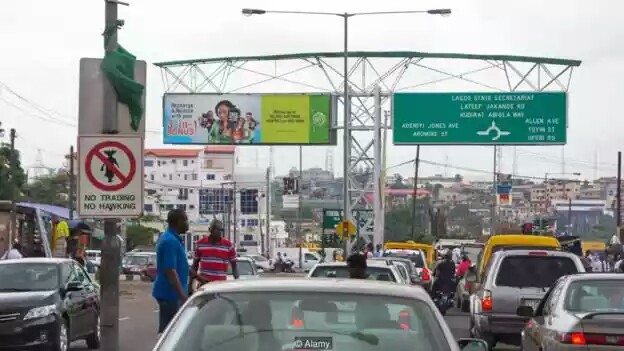
But unfamiliarity and unexpectedness can give this kind of creativity a comic effect. And in Nigeria, Kperogi explains, “unintentional humour almost always occurs when Nigerian English, which is fundamentally rooted in British English, collides with American English”.
However, given the continued primacy of British and American English, amusing words from other forms of English have been slow to reach the global mainstream. This may change, though. With the increasing influence of Nigerian and Indian cinema, for instance, it may only be a matter of time before a word like ‘prepone’ – an antonym of ‘postpone’ in Indian English – enters the vocabulary of British English speakers.



Kosi’s emergence on the Afrobeat scene feels both familiar and fresh. Rooted in a childhood shaped by gospel music and choir rehearsals, his sound carries the discipline and soul of his church background. But, there’s also a raw edge, drawn from the streets of Festac, Lagos, that gives his music a grittier, lived-in texture. The blend is strikingly obvious as you’d hear a voice trained in harmony and a message born of hustle.
The artist’s approach to songwriting is intentional, pulling from personal experiences and everyday realities rather than chasing empty trends. It’s this mix of vulnerability and confidence that has quickly earned him attention within Lagos‘s music circles, even though he has just a few releases. Kosi is already making a case for himself as a voice that can stand out in the crowd, honest, grounded, and undeniably Afrobeat.

A man places a Russian national flag on a balcony of a residential building in Lysychansk, eastern Ukraine, which is now territory under the control of the self-described Luhansk People’s Republic
As the Russia-Ukraine war enters its 132nd day, we take a look at the main developments.
Here are the key events so far on Tuesday, July 5.
Fighting
- Ukraine’s President Volodymyr Zelenskyy said his troops have “no alternative” but to “push back and destroy the offensive potential” of Russian forces, as the battle moves from Luhansk to nearby Donetsk.
- Ukrainian forces that retreated from Lysychansk are now holding the line between Bakhmut and Sloviansk, preparing to fend off a further Russian advance, Luhansk governor Serhiy Haidai said.
- President Vladimir Putin congratulated Russian troops on “liberating” the eastern Ukrainian region of Luhansk.
- At least 345 children have died in Ukraine as a result of Russia’s invasion and 644 have been wounded, the prosecutor general’s office reported.

Diplomacy
- Swedish Prime Minister Magdalena Andersson met Ukraine’s president in Kyiv, with the two parties signing a joint statement on defence and energy cooperation.
- Russian foreign minister Sergey Lavrov will fly to Hanoi on Tuesday for a two-day visit to Vietnam before heading to a G20 meeting later this week in Indonesia, the Vietnamese government said.
- Zelenskyy thanked the International Olympic Committee (IOC) for supporting a ban on Russian teams and athletes competing in most Olympic sports.
- Putin did not congratulate President Joe Biden on the United States’ Independence Day on July 4 due to “unfriendly” relations, the Kremlin said.
Economy
- Ukraine needs $750bn for a recovery plan, Prime Minister Denys Shmyhal told a Ukraine Recovery Conference hosted by Switzerland.
- Ukraine is holding talks with Turkey and the United Nations to secure guarantees for grain exports from Ukrainian ports, Zelenskyy said.
- Britain said it would on Tuesday introduce new economic, trade and transport sanctions on Belarus over its support for Russia’s invasion of Ukraine, and also sanctioned six Russians it said were spreading disinformation.
- Belarus said it was freezing foreign shareholdings in 190 Belarusian companies, including the software engineering company EPAM Systems and Lukoil Belarus, in response to Western sanctions.

Race plays key factor in a society where 10 percent of population owns more than 80 percent of wealth, World Bank says.
South Africa is the most unequal country in the world, with race playing a determining factor in a society where 10 percent of the population owns more than 80 percent of the wealth, a World Bank report has said.
“South Africa… is the most unequal country in the world, ranking first among 164 countries,” the Washington-based institution said Wednesday in a report, Inequality in Southern Africa.
Almost three decades after the end of apartheid, “race remains a key driver of high inequality in South Africa, due to its impact on education and the labor market,” it said.
When race is considered as a factor in income disparities, the report added, “its contribution to income inequality amounts to 41 percent, while contribution of education is reduced to 30 percent.
“The legacy of colonialism and apartheid, rooted in racial and spatial segregation, continues to reinforce inequality.”
The country’s neighbours that make up the rest of the Southern African Customs Union – Botswana, Eswatini, Lesotho and Namibia – established in 1910, all finish higher on the list of the most unequal countries in the world.
In the region, women earn on average 30 percent less than men with the same level of education with the pay gap as wide as 38 percent in Namibia and South Africa.
The uneven distribution of agricultural land is also a factor driving inequality, especially in rural areas.
In Namibia, 70 percent of the 39.7 million hectares (98.1 million acres) of commercial agricultural land “still belong to Namibians of European descent”, the World Bank said.
The report was produced before the COVID-19 pandemic and its authors used the Gini coefficient – an indicator of income inequality – to rank countries.
-
 Audio10 years ago
Page – Day Break Everywhere Burst
-
 Audio5 years ago
Shadykarz – Forever
-
 Audio10 years ago
Juniorboy ft. 9ice – IRAPADA
-
 Entertainment Gists6 years ago
Ex-Beauty Queen, Sandra Benede Shares Sexy Photo
-
 Audio5 years ago
Simi – Happy Birthday ft. Adekunle Gold, DeJa
-
 Audio5 years ago
Ruger – Bounce
-
 Mixtapes4 years ago
Mixtape: DJ DimpleNipple – The Best Of Amapiano Thrills
-
 Editorials3 years ago
Sa’eedah Imam On Creating Her Imprint In The Nigerian Music Industry As An Emerging Creative Writer