
News
Economic Recession in Nigeria: Causes and Solution by Samie’s Foundation (Must Read)


Recession has been in Nigeria for the past 14 months and has left many to their fate.
A number of Nigerians have lost their jobs, properties to debts and life’s due to the hardship recession has caused.
It’s about time to put an end to this, reach out to someone in need, pray for Nigeria, pray for our leaders, pray for yourself and support the movement.
The causes and solution of economic recession in Nigeria has become the major topic of discussion in Nigeria and beyond. South Africa took over from Nigeria as Africa Largest economy.
The International Monetary Fund (IMF), as well as the Central Bank of Nigeria (CBN), have all agreed that Nigeria economy has plunged into recession. They assert that Nigeria’s economy may not regain stability until early 2017 with low growth rate of 1.5%.
In this article, It will be highlighting few causes of Nigeria recession, a lesson to be learned from it, and the possible way out. Let start by quickly understanding what recession is about.
WHAT IS ECONOMIC RECESSION?
The National Bureau of Economic Research (NBER) defined a recession as “a significant decline in economic activity spread across the economy, lasting more than a few months, normally visible in a real gross domestic product (GDP), real income, employment, industrial production and wholesale-retail sales.”
Economics recession can also be define as a negative real GDP growth rate for two consecutive quarters (say first and second quarters). Judging by the above definition Nigeria is experiencing economic recession currently, since her first and second quarters growth in 2016 are -0.36% and -1.5%. Although, the second definition a times might be mis-leading because recession can quietly begin before the quarterly Gross Domestic Product reports are out.
Furthermore, Nigeria fourth quarter for 2016 is 0.8% growth rate. The country cannot say it have conquered recession because of the positive value.
Causes of Economic recession
The major cause of economic recession in any economy (lesson from great depression, 1981, 1991, 2004, 2008-1009 economic recession) may include:
- High inflation, a general rise in price of goods and services – leading to low purchasing power.
- Accumulation of debt servicing especially foreign debts.
- High-interest rate – discouraging investor
- Fall in aggregate demand, fall in wages, income.
- Mass unemployment, and general loss of confidence on the government due to economic indices.
Causes of Economic recession in Nigeria
- Poor economic Planning: Poor economic planning and no concrete implementation of her economic planning is the major cause of Nigeria current recession – budget delay, exchange rate policy. Yes the government has proclaimed the usual generalities that every government indulges itself in about
- Diversifying the economy,
- Improving manufacturing/mining sector,
- Raising agricultural output,
- Encouraging foreign investment, among others, yet no concrete evidenced strategic plan for growth.
No doubt, the government has taken some steps like the elimination of dollar purchase privileges for importers of 40 items such as – rice, cement, toothpicks, private planes, poultry, meats, margarine, wheelbarrows, textiles, and soaps.
The government has, on the other hand, caused serious poverty in the land by herself. Let me explain, the government through her policy widen the gap between the rich and poor – creating more economic hardship.
Possible Economic Policy Measure to End Economic Recession in Nigeria
Given the high level of economic pain, policymakers need to pursue stimulus policies that work. Keynesians school has suggested measure of ending economic recession. The major measure which is to reduce tax rate and increase aggregate demand. Let elaborate on this.
1. Reduction in tax rate: Government should reduce tax rates on individuals, small businesses, and corporations by lowering the tax rate by at least 10 percentage points.
The government instead of reducing tax rate to increase purchasing power, rather increased the tax rate killing so many small scale business who cannot meet up with the cost of doing business. Foreign investor will be encouraged with reduction in tax rate. This will increase inflow of dollar to Nigeria economy, and ultimately increase investment cum standard of living. And this will solve the problem of high exchange rate.
2. Effective Spending: Mere increase in government spending will not solve the problem of recession. Yeah! It is strategic spending in area with high multiplier effect such as agriculture and manufacturing sector that increase aggregate demand.
Nigeria need to expand her export earnings and production base through wise investment. Otherwise might likely end up in a classical Malthusian situation, where the resources cannot support the population.
Injecting more funds into the economy is not bad, but there is need for diversification, allowing free flow of Naira and stabilizing the oil sector, modernizing agricultural sector. Yes, Nigeria can spend her way out of recession wisely.
3. Enhance access to credit.
For instance, total consumer credit in Nigeria stands at less than $10 billion dollars in about $500 billion economy, this corresponds to about 2% of her GDP. Look at some developed economies, consumer credit ranges from about 20% (USA) to 50% of GDP (Brazil).
South Africa, Africa’s largest economy by PPP has a consumer spending to GDP ratio of 66%. Nigeria should aim for a consumer credit to GDP ratio of about 10% over the next 5 years. This would be the equivalent of injecting a stimulus of $50 billion per year into the economy.
Consumer access to credit will speed up the economy. The CBN recently raised the real interest rate of Nigeria. Am of the view that this policy should be evaluated. The max interest rate at 26.93% is too high. The economic policy indices should be re-evaluated.
4. Nigeria government should increase her expenditure on skills: This is one point that most Africa countries had always neglected. It is only skills that lead to production. People are looking for problem solver.
So the government should invest in skills acquisition in IT, telecommunication, agro-allied, sports among others. The training should be 80% practical. There is needs for multiple competences, particularly among youths as a measure to curb increasing global joblessness.
The greatest challenge today in Nigeria is unemployment. The government should partner with private organisation to organise entrepreneurship and skill acquisition programme for the youth.
There should be high level of transparency in the programme to ensure the best candidates are picked. This way Nigeria will soon see herself on top of the fastest growing economy in Africa. You may want read my post On Africa fastest growing economies 2016.
5. Increase agricultural produce and export
In the 1960’s, agriculture is the main base of Nigeria, in terms of GDP, foreign exchange earnings, and employment. Today, Nigeria spends about $10 billion a year on the importation of agricultural products.
Nigeria government led by Buhari should stop talking and start working. Enough of talk, people want to see actions. The youth like I earlier stated should be encouraged to go into farming. They should be trained free on various agricultural sector.
Yes the government major policy is on agriculture development but a better mechanism should be put in place to grow the sector, the government should empower the youth to go into the sector, government should bumper harvest store to store agriculture product excess. Government should also go into farming on the many lands lying fallow.
Agriculture should be all year round, irrigation programme pursued in all the states in Nigeria
6. Increase manufacturing produce and export
SAnu$i Lamido (2016) during the economic submit on “The Search For A New Growth Model,” noted that Nigeria should learn from country like Ethiopia and then Meles Zenawi, the late Prime Minister.
Ethiopia keeps growing year after year at 11-12 percent. And what did Meles do?
“Like Nigeria Ethiopia is facing insecurities; yet took advantage of her recourses. For instance, coffee originated from Ethiopia in the world. But, Ethiopian farmers, before Meles, would get 10 percent of the value of coffee from their crops“.
The Etiopia would just produce the coffee and sell to companies, and the companies will take their coffee into Latin America and have it improved and dried and packaged. And Zenawi just asked: “Why can’t we produce coffee in Ethiopia that would go straight from Ethiopia to the coffee shops in Europe?”
And all sorts of responses came. “Well, you know your weather is good for growing coffee. Your coffee is very good, but your farmers have bad farming practices.”
So he said: “Why don’t you teach them?” So, he got in touch with the IFC (International Finance Corporation), got a loan, organised Ethiopian coffee farmers into cooperatives, taught them how to grow the coffee, how to dry, prepare and package it.
Today, if you go to coffee shops in Europe and take a cup of coffee that came straight from Ethiopian farm. And Ethiopian farmers are now getting 70 percent of the value of the coffee, from the former 10 percent.
So, he tells Aliko Dangote, come and build a cement manufacturing plant here. I am going to give you electricity at three cent per kilowatt hour. For a cement manufacturer, that is all the incentive that you need.
So, Dangote goes, builds the most sophisticated cement plant in Ethiopia, gets electricity almost for nothing and cost of cement drops by 60 percent. Wow!
The construction industries gets boosted. Roads are being built with cement. Jobs are created. And new industry has taken off.
He said to the Chinese, “I don’t like this your idea of coming to buy hides and skin and leather from Ethiopia and sell us shoes. Why not set up the factory here.”
Is Nigeria the only country experiencing economic recession? No! As seen in the image above, but Nigeria is not doing much to resolve its own. government should:
- Invest in the energy sector,
- Engage the Niger-Delta militants in a dialogue,
- Reduce the tax rate or regulate same to avoid double taxation,
- Borrowing from both domestic and foreign should be invested more on infrastructure, funds should be sourced more from the domestic economy than the foreign investor to avoid the incidence of capital flight,
- The government should work with the legislative body to endure speed execution of her project,
- Commodity price and raw material price should be regulated through consumer protection agency to avoid further inflation,
- The government should learn from Ethiopia and other developed countries.
- The government should grow Nigeria economy and should kindly allow the naira to be. Let the forces of market control the value of the naira.
I support the #RecessionMustGo online rally by Samie’s Foundation.
Credits: Educacinfo


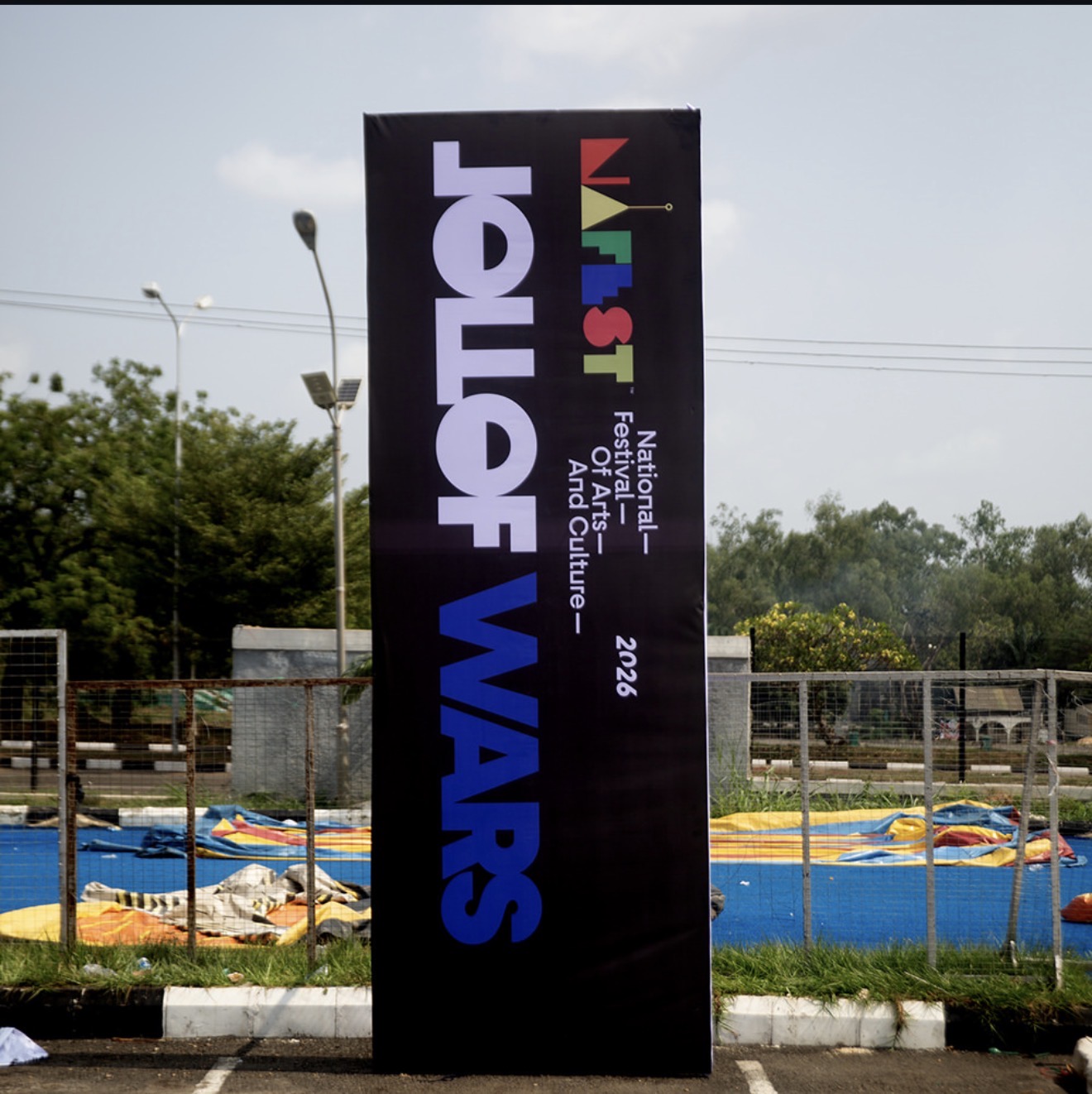
From spectacular cultural displays and traditional performances to food, music, indigenous games and creative showcases, the National Festival of Arts and Culture is bringing Nigeria’s cultural diversity to life.
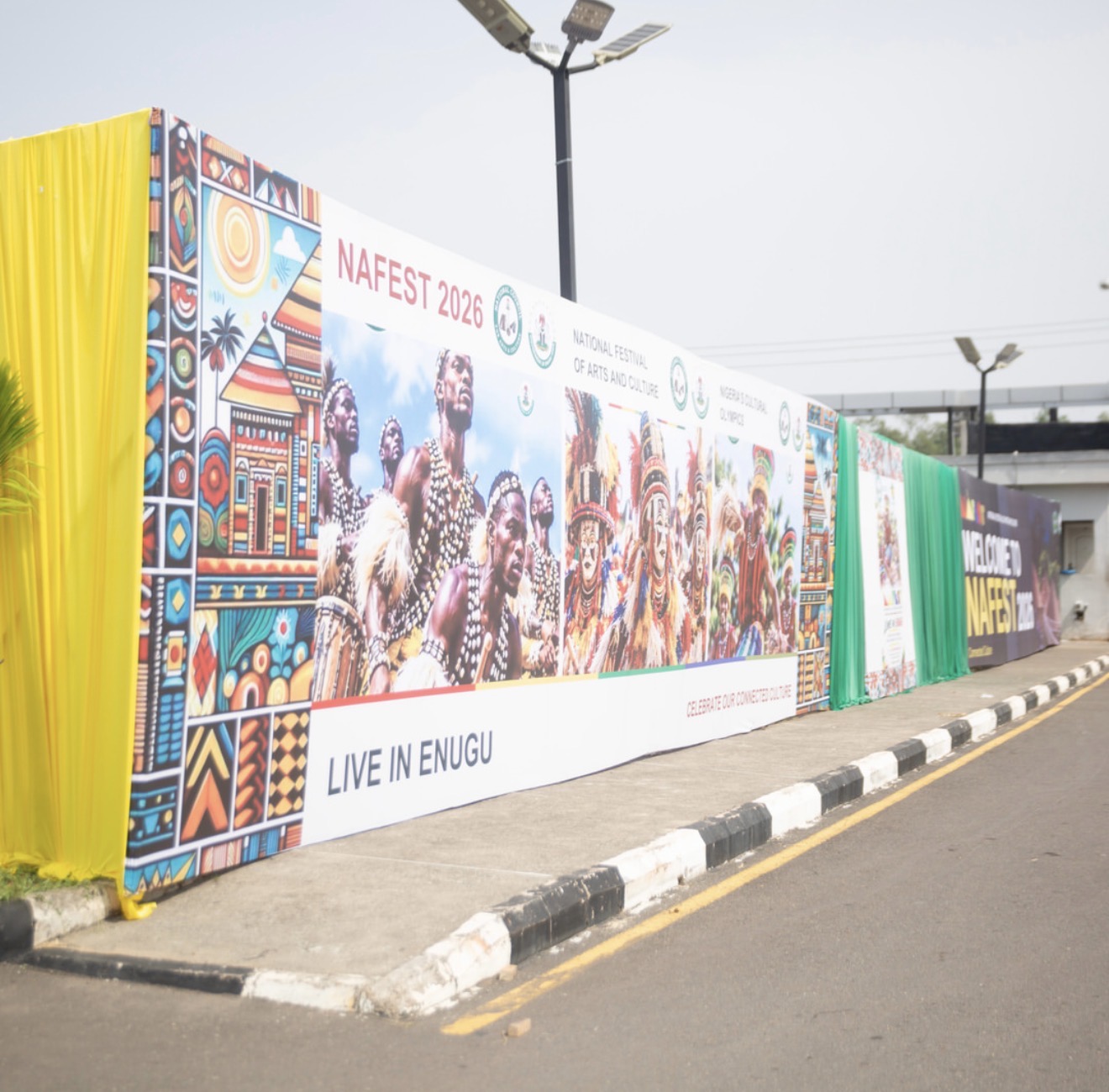
Enugu is fast becoming the centre of Nigeria’s cultural spotlight as the 2026 edition of the National Festival of Arts and Culture (NAFEST) continues to showcase the country’s rich artistic heritage, traditions and creative expressions.
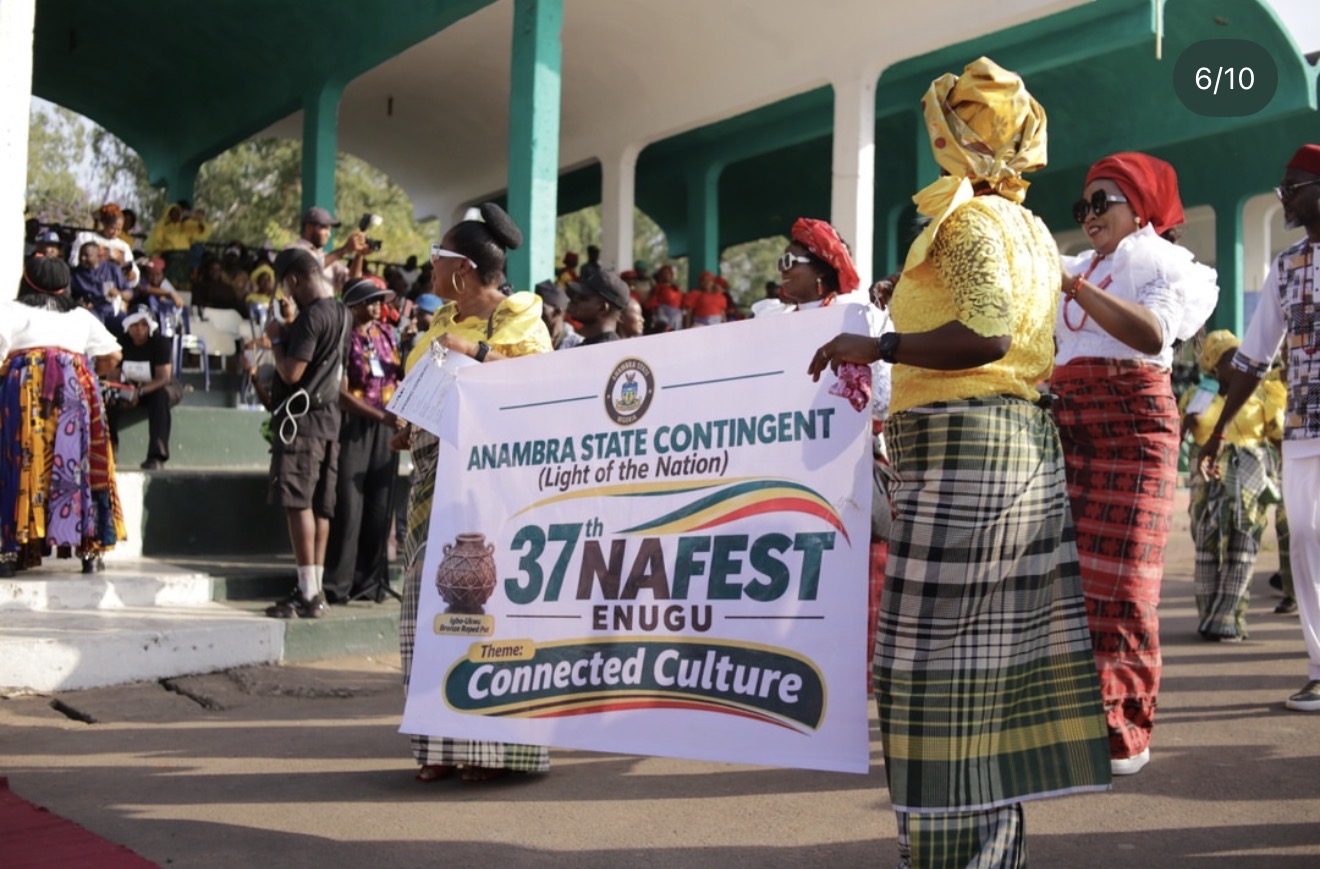
With the theme “CONNECTED CULTURE,” NAFEST 2026 has brought together cultural expressions from Nigeria’s 36 states and the Federal Capital Territory, creating a platform for the celebration of the country’s diversity and shared national identity.
Five days into the festival, the atmosphere has been filled with colour, creativity, entertainment and a renewed appreciation for what makes Nigeria culturally unique.
Five Days of Unforgettable Cultural Experiences
The opening days of NAFEST 2026 have offered a colourful display of Nigeria’s cultural richness, with traditional performances, cultural processions, masquerade displays and artistic presentations taking centre stage.
The festival has provided an opportunity for different communities to showcase their identities through traditional attire, indigenous music, dance, craftsmanship and other forms of cultural expression.
Beyond the performances, the festival has also highlighted the importance of preserving traditions and passing cultural knowledge from one generation to another.
From the energy of the performers to the visual beauty of the traditional displays, the first five days have demonstrated that Nigeria’s cultural heritage remains one of its greatest assets.
Where Culture Meets Entertainment
One of the exciting dimensions of NAFEST 2026 is its blend of cultural preservation and contemporary entertainment.
With activities such as Dance-Off Naija, Sing-Off Naija, Jollof Wars and Swag Show, the festival is creating opportunities for creativity, healthy competition and audience engagement.
These activities demonstrate that culture is not restricted to history and tradition. It is also alive in the music people create, the food they prepare, the fashion they embrace and the artistic expressions through which they tell their stories.
The inclusion of indigenous games also brings attention to traditional recreational activities that form an important part of Nigeria’s cultural heritage.
Celebrating Nigeria Through Food, Fashion and Identity
Food and fashion remain important expressions of cultural identity, and NAFEST 2026 provides a platform to celebrate both.
From the diversity of Nigerian cuisine to the colours, fabrics and craftsmanship associated with traditional attire, the festival offers a reminder of the creativity that exists across the country’s different communities.
Jollof Wars, in particular, brings a fun and competitive dimension to the country’s love for food, while the wider cultural showcases celebrate the different traditions and identities that contribute to Nigeria’s national story.
More Than a Festival: A Celebration of National Unity
At its heart, the theme “Connected Culture” speaks to the importance of bringing people together through shared heritage and mutual appreciation.
Nigeria is home to numerous ethnic groups, languages, traditions and artistic practices. While these differences make each community unique, they also contribute to a broader national identity.
NAFEST provides a platform where these different cultural expressions can be appreciated, celebrated and shared with wider audiences.
It also creates opportunities to encourage younger generations to take an interest in their heritage while exploring new ways to express and preserve it.
The Celebration Continues
As NAFEST 2026 moves beyond its first five days, the excitement surrounding the festival continues.
With the celebration scheduled to run until November 28 in Enugu, there is still more to experience, discover and celebrate.
For Nigerians at home and in the diaspora, the festival presents an opportunity to reconnect with the country’s rich cultural heritage and appreciate the creativity, talent and traditions that define its people.
Five days have passed, but the bigger story remains the same: Nigeria has a cultural identity worth celebrating, preserving and sharing with the world.
NAFEST 2026 is more than a gathering of cultures. It is a celebration of the people, traditions and creative expressions that connect us as one nation.
Follow the ongoing celebration and join the conversation using #NAFEST2026, @nafestonline and #ConnectedCulture.

From event planning and management, event photography and cinematography to branding and visual identity, digital marketing and content production, live event production, web development, weddings, corporate events, product launches and brand activations, COLOURS MEDIA is positioning itself as a multi-service creative media and events company with an expanding vision across entertainment, business and social development.
Based in Lagos, Nigeria, COLOURS MEDIA is emerging with an ambitious vision to provide integrated creative, media, branding, digital and event solutions to individuals, businesses, corporate organisations, entertainment stakeholders and institutions. With a service portfolio designed to accommodate different professional and creative needs, the company aims to create a platform where innovative ideas, professional services and memorable experiences come together.
Beyond its core commercial offerings, COLOURS MEDIA is also exploring opportunities across education, symposiums, sports, tourism, charity and community development, reflecting its ambition to build an organisation with relevance across multiple sectors.
A COMPREHENSIVE APPROACH TO EVENT PLANNING AND MANAGEMENT
At the centre of COLOURS MEDIA’s operations is event planning and management, with a commitment to delivering professionally coordinated experiences across different categories of events.
The company’s event services will cover corporate functions, conferences, seminars, weddings, birthdays, anniversaries, private celebrations, product launches, brand activations, entertainment events and other special occasions.
Its approach encompasses event conceptualisation, planning, coordination, logistics, production and execution, with the objective of delivering memorable experiences while meeting the expectations and requirements of clients.
Complementing its event management services is event photography and cinematography, which will provide professional visual coverage, creative storytelling and documentation of important occasions.
BRANDING, DIGITAL MARKETING AND CREATIVE COMMUNICATION
Recognising the importance of strong brand positioning and effective communication in today’s competitive business environment, COLOURS MEDIA is also extending its services into branding and visual identity.
The company will provide creative solutions covering logo design, graphic design, corporate identity, promotional materials and other visual communication requirements for businesses, entrepreneurs, organisations and individuals.
Its digital marketing and content production division will focus on social media management, digital campaigns, online publicity, promotional content and strategic brand communication.
Through these services, COLOURS MEDIA seeks to help businesses and personalities strengthen their visibility, communicate their values and connect more effectively with their target audiences.
LIVE EVENT PRODUCTION AND CORPORATE EXPERIENCES
COLOURS MEDIA also recognises the growing demand for quality technical production and professionally executed live experiences.
Its live event production and management services will explore stage production, sound, lighting, technical coordination, entertainment programming and other essential event production requirements.
The company will also cater to the corporate sector through conferences, business meetings, networking events, award ceremonies, seminars, workshops, retreats and other professional engagements.
For brands seeking to introduce products, strengthen consumer relationships or increase market visibility, its product launch and brand activation services will provide opportunities for promotional campaigns, product unveilings and engaging brand experiences.
DIGITAL PLATFORMS AND WEB DEVELOPMENT
As businesses increasingly embrace technology and digital transformation, COLOURS MEDIA is also extending its creative interests into digital platforms and web development.
Its proposed services will include website design, online platforms and technology-driven communication solutions, providing businesses and organisations with opportunities to establish and strengthen their digital presence.
This area of operation further demonstrates the company’s intention to combine traditional creative services with modern digital solutions.
EXPANDING INTO EDUCATION, SPORTS AND KNOWLEDGE DEVELOPMENT
Beyond its core business services, COLOURS MEDIA is exploring opportunities within education and professional development through symposiums, workshops, seminars, educational activities and knowledge-sharing initiatives.
These platforms will seek to encourage meaningful conversations, promote learning, support professional development and create opportunities for individuals, entrepreneurs, industry professionals and organisations to exchange ideas.
The company also intends to explore sports-related activities, including sporting events, recreational programmes, competitions and initiatives that encourage participation, talent discovery and community engagement.
TOURISM, CHARITY AND SOCIAL DEVELOPMENT
COLOURS MEDIA’s broader vision also includes tourism and community-focused initiatives.
Through tours, cultural excursions, destination experiences and tourism-related activities, the company hopes to explore opportunities to promote local attractions, cultural heritage and recreational experiences.
In the area of social responsibility, COLOURS MEDIA is looking towards charity programmes, fundraising activities, community outreach and other initiatives capable of contributing positively to society.
These proposed engagements reflect an ambition to establish a company that goes beyond commercial service delivery to participate in activities that encourage social impact and community development.
BUILDING STRATEGIC PARTNERSHIPS AND INDUSTRY RELATIONSHIPS
As it develops its operational presence, COLOURS MEDIA is open to strategic collaborations with corporate organisations, government institutions, private businesses, media organisations, entertainment stakeholders, educational institutions, tourism operators, sports organisations and other relevant partners.
The company recognises the importance of collaboration in developing sustainable projects, creating opportunities and delivering quality experiences across different industries.
With Lagos serving as its operational base, COLOURS MEDIA aims to leverage the city’s vibrant business, entertainment and creative environment while exploring opportunities for wider engagement across Nigeria and beyond.
A VISION BUILT AROUND CREATIVITY AND POSSIBILITIES
COLOURS MEDIA’s ambition is to develop a recognisable brand associated with creativity, professionalism, innovation, quality service delivery and impactful experiences.
By bringing event management, media production, branding, digital solutions and other professional services together, the organisation seeks to create a versatile platform capable of responding to the evolving needs of individuals, businesses and institutions.
As it takes its next steps, COLOURS MEDIA is positioning itself for partnerships, new projects and opportunities that will allow it to contribute meaningfully to the creative economy, business development, entertainment and social advancement.
COLOURS MEDIA – Creativity, Experiences, Connections and Impact.
News
Zenith Bank Wraps Up TechFair 2026, Reaffirms Commitment to AI development and Innovation in Africa
The virtual event featured global AI experts, government officials, technology executives and emerging innovators, with discussions centred on artificial intelligence, digital payments and Africa’s digital transformation.
LAGOS, NIGERIA – November 5, 2026: Zenith Bank Plc has successfully concluded the sixth edition of its flagship Zenith Bank Tech Fair, tagged Future Forward 6.0, bringing together global technology experts, policymakers, business leaders, entrepreneurs and innovators to examine the growing influence of artificial intelligence on businesses, financial services and the global economy.
Held on Thursday, November 5, 2026, the event adopted the theme “AI: Embrace or Extinct,” highlighting the growing importance of artificial intelligence and the need for individuals, businesses and institutions to adapt to the rapidly changing technological landscape.
The 2026 edition marked a significant milestone for the annual technology gathering as it moved to a virtual format for the first time, expanding opportunities for participation beyond the traditional physical event.
Global Technology Leaders Take Centre Stage
The event featured prominent international technology personalities, including Zack Kass, former Head of Go-to-Market at OpenAI, who delivered a keynote presentation titled The Next RenAIssance, examining the opportunities emerging from advancements in artificial intelligence.
Also featured was Megan Caywood Cooper, Founder and Chief Executive Officer of Caywood, whose presentation, Agentic AI in Finance – Closing the Capability Overhang, explored the potential of autonomous AI systems to transform financial services and business operations.
Other notable personalities featured in the programme included Kashifu Inuwa Abdullahi, Director-General of the National Information Technology Development Agency (NITDA), and Eleni Giokos, CNN anchor and correspondent, who hosted the panel discussions.
The opening session featured a welcome address by Dame Dr Adaora Umeoji, OON, Group Managing Director and Chief Executive Officer of Zenith Bank, followed by a founder’s message from Jim Ovia, CFR, Founder and Chairman of the financial institution.
The event also featured goodwill messages from Vice President Kashim Shettima and Lagos State Governor Babajide Sanwo-Olu.
Discussions Focus on Agentic AI and Africa’s Digital Future
A major highlight of the fair was the panel session titled Agentic AI Evolution – Intelligent, Disruptive and Inclusive, which examined how increasingly autonomous artificial intelligence systems could reshape industries, financial services and business operations.
The session featured Kashifu Inuwa Abdullahi; Chinwe Uzoho, Regional Managing Director, West Africa, Network International; Ehia Erhaboh, Co-Founder and President of AI in Nigeria; Tolu Flosbach, Head of Artificial Intelligence at PwC; and Dr Ikpenmosa Uhumuavbi, Research Centre Lead and Reader in Law at the University of Greater Manchester.
Another major discussion, Scale, Secure, Sustain – Engineering Africa’s Digital Future, brought together industry professionals to examine the infrastructure, cybersecurity and policy requirements necessary to support Africa’s growing digital economy.
Among the participants were Jane Nkechi Egerton-Idehen, Managing Director and Chief Executive Officer of NIGCOMSAT; Dr Rita I. Sike, Director of the Financial Policy and Regulation Department; Fashola Shamsideen, Founder of Xdigital Services Limited; Abiola Laseinde, Convener of CIO & C-Suite Awards Africa; and Habibah Waziri, Managing Director of BGR Consulting.
Digital Payments and Financial Innovation in Focus
Beyond artificial intelligence, the 2026 Tech Fair placed considerable attention on the future of digital payments and financial infrastructure across Africa.
Mike Ogbalu III, Managing Director and Chief Executive Officer of the Pan-African Payment and Settlement System (PAPSS), delivered a presentation on Pan-African Payment Infrastructure & Trade Acceleration.
Deniz Oran, Head of Payment Partnerships at Google for Europe, the Middle East and Africa, was also featured in a session examining next-generation agentic and digital payment partnerships.
Another major programme highlight was the unveiling of Finopay, Zenith Bank’s flagship digital payment innovation platform, scheduled to feature a live interactive demonstration.
The discussions highlighted the importance of developing secure, efficient and accessible payment infrastructure to support cross-border trade, financial inclusion and the growth of businesses across the continent.
Zecathon and Young Innovators Highlight Startup Opportunities
The event also provided opportunities for emerging technology entrepreneurs through Zecathon, Zenith Bank’s innovation and startup competition.
The programme featured a business pitch competition for early-stage startups, a hackathon challenge showcasing technology prototypes, and a Junior Innovators Challenge designed to spotlight young technology talents and student innovators.
The initiative builds on Zenith Bank’s continued support for innovation and entrepreneurship through funding, mentorship and opportunities for promising startups to develop scalable solutions.
The event also featured specialised masterclasses covering AI governance, model risk, ethics and accountability, cybersecurity in the AI age, AI infrastructure, future payment technologies, fintech and traditional banking, as well as cloud infrastructure and data residency.
Zenith Bank Reaffirms Commitment to Technology and Innovation
Conceived by the bank’s Founder and Chairman, Jim Ovia, the Zenith Bank Tech Fair has evolved into an annual platform connecting technology professionals, entrepreneurs, investors and industry stakeholders to discuss emerging technologies and their impact on society.
Through Future Forward 6.0, Zenith Bank reinforced the importance of embracing technological innovation, developing local talent and creating opportunities for African businesses to compete in an increasingly technology-driven global economy.
Following the conclusion of the event, Zenith Bank expressed appreciation to attendees for participating in the 2026 edition and contributing to conversations shaping the future of technology.
The bank also looked ahead to the next edition, announcing its anticipation of welcoming participants again in 2027.
As artificial intelligence continues to redefine industries, the conversations and innovations showcased at Future Forward 6.0 underscore the growing importance of preparing Africa’s workforce, businesses and institutions for the next phase of digital transformation.
-
 Audio10 years ago
Page – Day Break Everywhere Burst
-
 Audio5 years ago
Shadykarz – Forever
-
 Audio10 years ago
Juniorboy ft. 9ice – IRAPADA
-
 Entertainment Gists6 years ago
Ex-Beauty Queen, Sandra Benede Shares Sexy Photo
-
 Audio5 years ago
Simi – Happy Birthday ft. Adekunle Gold, DeJa
-
 Audio6 years ago
Ruger – Bounce
-
 Mixtapes4 years ago
Mixtape: DJ DimpleNipple – The Best Of Amapiano Thrills
-
 Editorials4 years ago
Sa’eedah Imam On Creating Her Imprint In The Nigerian Music Industry As An Emerging Creative Writer