
News
What Comes Next For Iran After The Death of President Raisi?


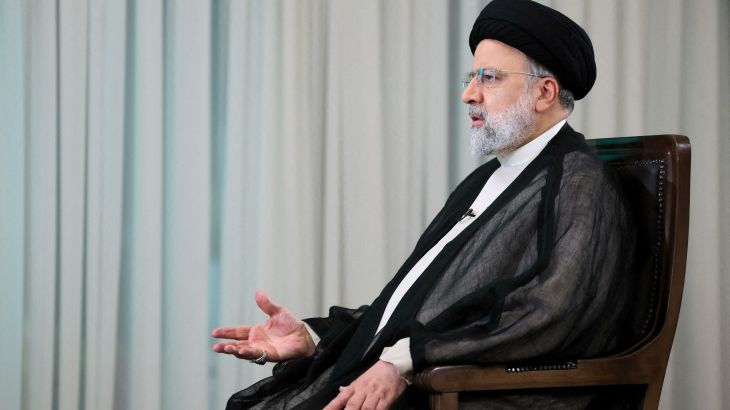
Iranian President Ebrahim Raisi died in a helicopter crash in Iran’s East Azerbaijan province on Sunday
The deaths of the president and other officials in a helicopter crash are not likely to lead to major policy changes.
The deaths of Iran’s President Ebrahim Raisi and Foreign Minister Hossein Amirabdollahian in a helicopter crash on Sunday have now been confirmed by Iranian authorities.
After a desperate overnight search for the aircraft in the rugged terrain it had fallen in, rescuers finally found the accident site and retrieved the bodies of the eight people who had been on board.
When will the funerals be?
The bodies of Raisi, 63, Amirabdollahian, 60, and the other officials and staff were brought to Tabriz, the capital city of Iran’s East Azerbaijan province, and a public procession was held.
Another ceremony will be held on Tuesday morning, when the funeral rites will begin, as the bodies are transferred to Tehran.
In the capital, another procession and other ceremonies will be held, the details of which have yet to be finalised.
Organisers in Mashhad said they are planning a “glorious” burial for Raisi, who was born in the holy Shia city in northeastern Iran and was a custodian of its powerful bonyad, or charitable trust, which operates the shrine.
Supreme Leader Ayatollah Ali Khamenei has announced five days of public mourning.
Who will become Iran’s president and foreign minister?
Mohammad Mokhber and Ali Bagheri Kani are now interim president and foreign minister, respectively, and may be replaced once a new president is elected.
But both are highly likely to remain at the top levels of government, if not in their new positions, after having been mainstays of the Raisi administration, which was often praised by – and is closely aligned with – Khamenei.
What does this mean for Iran?
Iran will now have to hold elections and choose a new president within 50 days, according to the country’s constitution, about a year sooner than planned.
State media has reported that the election will take place on June 28, with candidates to be registered between May 30 and June 3.
Raisi won the presidency by a distance in 2021, amid wide disqualification of reformist and moderate candidates and a record-low turnout.
Considering the fact that all Iranian presidents who have served under Khamenei had been in office for two terms, Raisi was widely expected to win re-election next year.
“The judiciary, the legislative branch, as well as the executive branch are being controlled by the more right-leaning, conservatives in Iran currently,” Reza H Akbari, Middle East and North Africa programme manager at the Institute for War and Peace Reporting, told Al Jazeera.
“So some analysts believe Raisi’s death may open up room for more traditional conservative [candidates] to make an attempt at the office of the presidency.”
How significant was Raisi in Iran?
Khamenei has been supreme leader since 1989, but as he is age 85 and has suffered from health issues in recent years, the question of who will replace him as head of state has become more prominent in Iran. Raisi’s name had been floated as a candidate, alongside Khamenei’s own 55-year-old son, Mojtaba. Yet, some analysts say Raisi was never likely to ascend to the highest position in Iran.
“Raisi was a weak president, but he was a loyalist and the most loyal option…. the Supreme Leader could find,” said Hamidreza Azizi, a visiting fellow at the German Institute for International and Security Affairs (SWP) in Berlin.
At the same time, his conservative background “gave him a level of support from government supporters and within the elites”, Azizi said.
Raisi had not commented on possibly succeeding Khamenei. But the president, who was rarely criticised by conservative politicians, was certain to play a role in shaping the future of Iran.
Mojtaba Khamenei, on the other hand, is a cleric with close ties to the elite Islamic Revolutionary Guard Corps (IRGC) who rarely appears or speaks publicly.
“The political infighting that ensues after the death of the supreme leader will more than likely be too chaotic for us to predict,” Akbari said.
Will this change Iran’s international policies?
Raisi and Amirabdollahian had spent almost three years establishing themselves as the faces of Iran on the global stage, but their passing will likely not signal a major shift for Iran’s foreign policy.
The Iranian political establishment has a roughly unified view of Iran’s international policies.
Interim President Mohammad Mokhber has been mostly focused on local affairs, from navigating politics to managing efforts to stabilise the perennially sanctioned Iranian economy.
But he has also accompanied the president, or led delegations himself, on foreign trips from China and Russia to a tour of Africa.
Interim Foreign Minister Ali Bagheri Kani has been Iran’s chief negotiator in nuclear talks with global powers. It is unclear whether he has the same strong ties with the regional, Iran-aligned “axis of resistance” that Amirabdollahian had.
“The policies will not drastically change,” Akbari said. “The National Security Council in Iran, the supreme leader, and when it comes to certain foreign policy files, the IRGC [Islamic Revolutionary Guard Corps], bureaucratically and institutionally speaking, set Iran’s foreign policy agenda.”
Will there be a difference in Iran’s domestic politics?
The passing of Raisi and Amirabdollahian could entail some changes in Iran’s domestic power politics. But the establishment is now run by conservative and hardline political camps, and any potential power struggles are expected to be within those ranks – with reformists out of the picture.
The IRGC has consistently grown stronger since reformers and moderates were shunned in the aftermath of the fall of the nuclear deal and the reimposition of sanctions on Iran. And the hardline factions have refused to compromise in the wake of the wave of anti-government protests that followed the death of Mahsa Amini in police custody in 2022.
Many appointments since 2021 have involved IRGC personnel, and Mokhber – or the next president – is unlikely to reverse that trend. The latest major appointment came in May 2023, when IRGC commander Ali Akbar Ahmadian was selected by Khamenei as Iran’s new security chief.
What about Iran’s regional networks?
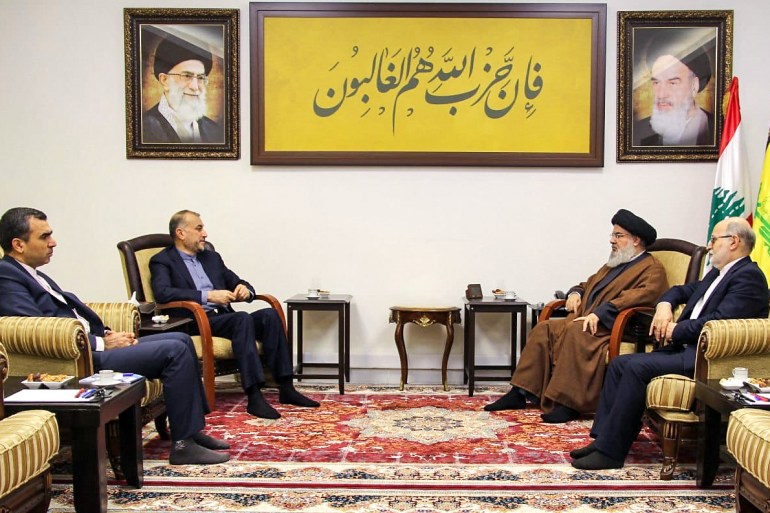
Iran’s growing support for the “axis of resistance” of political and military groups, such as Hezbollah in Lebanon, the Islamic Resistance in Iraq and the Houthis in Yemen, has encompassed a decades-long strategic policy that will not change with the deaths of Raisi or Amirabdollahian.
Their successors will be responsible for developing an effective public image of collaboration with, and support for, the members of the axis while maintaining lines of communication with the US and European powers.
This is especially important amid Israel’s war on Gaza, which threatens the region and has pitted Iran and the axis against Israel and its allies.







East Ham, East London — 8 August 2026: The vibrant Igbo community in the UK came together for an unforgettable evening of entertainment, culture and social connection at Igbotic Game Night, one of the biggest social gatherings celebrating the Igbo community in the United Kingdom.
Among the night’s standout moments was an electrifying performance by Afrobeats artist Obeena, who took the stage and immediately captured the attention of the crowd.
Obeena delivered performances of two of his hit songs, “Wara Wara” and “Banging,” bringing his energetic sound and distinctive stage presence to the event. From the opening moments of his set, fans responded with excitement, singing along, dancing and enthusiastically supporting the artist.

His performance of “Wara Wara” created an instant connection with the audience, while “Banging” took the energy to another level. Obeena’s ability to engage the crowd transformed his set into one of the most memorable entertainment moments of the evening.
Held in East Ham, East London, on 8 August 2026, Igbotic Game Night provided a unique platform for members of the Igbo community to celebrate their heritage while enjoying music, games and social interaction. Events such as this continue to play an important role in bringing together Nigerians and the wider African diaspora in the UK.
For Obeena, the performance was another opportunity to showcase his growing artistry and connect directly with fans. His energetic delivery, stage confidence and ability to command the audience demonstrated why his live performances continue to attract attention.
By the end of his set, Obeena had left the crowd amazed and added another memorable chapter to his journey as an Afrobeats artist. His appearance at Igbotic Game Night was not simply a performance—it was a celebration of Nigerian music, culture and community.
With performances like this, Obeena continues to demonstrate his ambition to take his sound beyond the studio and onto major stages, connecting with audiences through music, energy and an unmistakable African identity.
Igbotic Game Night brought the Igbo community together. Obeena gave them a performance to remember.

Audio
KenryWhite Releases “Kilometers” & “The King” A Powerful Double Release Celebrating Faith, Purpose, and the Journey to Greatness


Nigerian Afrofusion artist KenryWhite unveils his compelling two-track release, “Kilometers & The King,” a project that explores the realities of life’s journey while affirming identity, faith, and purpose.
Leading the release is “Kilometers,” an uplifting anthem that reflects on the distance between dreams and fulfillment. Through heartfelt lyrics, captivating melodies, and vibrant Afrobeats production, KenryWhite encourages listeners to embrace the process, remain resilient, and keep moving forward despite life’s challenges.
Complementing the project is “The King,” featuring Wonder J. The record is a bold declaration of confidence, royalty, and divine purpose, blending infectious Afrobeats rhythms with inspiring lyricism. Together, the duo delivers a record that celebrates self-belief, leadership, and the mindset required to overcome every obstacle.
With rich storytelling, memorable melodies, and contemporary African sounds, “Kilometers & The King” showcases KenryWhite’s artistic growth while delivering music that inspires, motivates, and connects with audiences across the globe.
Now available on all major streaming platforms, “Kilometers & The King” invites listeners to embrace the journey, recognize their worth, and walk confidently into their purpose.
-
 Audio10 years ago
Page – Day Break Everywhere Burst
-
 Audio5 years ago
Shadykarz – Forever
-
 Audio10 years ago
Juniorboy ft. 9ice – IRAPADA
-
 Entertainment Gists5 years ago
Ex-Beauty Queen, Sandra Benede Shares Sexy Photo
-
 Audio5 years ago
Simi – Happy Birthday ft. Adekunle Gold, DeJa
-
 Audio5 years ago
Ruger – Bounce
-
 Mixtapes4 years ago
Mixtape: DJ DimpleNipple – The Best Of Amapiano Thrills
-
 Editorials3 years ago
Sa’eedah Imam On Creating Her Imprint In The Nigerian Music Industry As An Emerging Creative Writer