

The recovery of the ozone layer over Antarctica cannot be taken for granted and requires constant vigilance.
That’s the message from Dr Jonathan Shanklin, one of the scientists who first documented the annual thinning of the protective gas in the 1980s.
This year’s “hole” in the stratosphere high above the White Continent is the smallest in three decades.
It’s welcome, says Dr Shanklin, but we should really only view it as an anomaly.
The better than expected levels of ozone have been attributed to a sudden warming at high altitudes, which can occasionally happen.
This has worked to stymie the chemical reactions that usually destroy ozone 15-30km above the planet.
“To see whether international treaties are working or not, you need to look at the long term,” Dr Shanklin told BBC News.
“A quick glance this year might lead you to think we’ve fixed the ozone hole. We haven’t. And although things are improving, there are still some countries out there who are manufacturing chlorofluorocarbons (CFCs), the chemicals that have been responsible for the problem. We cannot be complacent.”
 The ozone hole (dark blue) will close completely in the coming weeks
Dr Shanklin, along with Joe Farman and Brian Gardiner, first alerted the world in 1985 that a deep thinning was occurring in the ozone layer above Antarctica each spring.
Ozone filters out harmful ultraviolet radiation from the Sun.
The team’s discovery, confirming the theoretical predictions of others, led to the Montreal Protocol.
This international treaty phased out most of the chlorine- and bromine-containing chemicals involved in ozone depletion.
At the time, these substances were being used widely as refrigerants, cleaning agents, and as the propellants in aerosol cans.
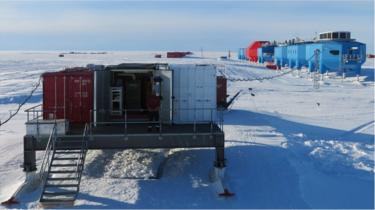 Halley’s experiments are powered by a micro-turbine through the winter
Dr Shanklin and his colleagues at the British Antarctic Survey made their seminal observations at the Halley research station on the Brunt Ice Shelf.
They used a Dobson photospectrometer – an instrument that is traditionally operated manually.
This became a major issue three years ago when BAS was forced to pull all winter staff out of Halley because of the uncertainty over the stability of nearby ice. It meant ozone measurements couldn’t take place in those critical weeks when the hole begins to open.
With summer-only staffing set to continue for the foreseeable future, the situation has forced BAS to introduce an automated solution.
The survey is now running a mini-jet engine non-stop at Halley, which is providing the electricity for a host of computer-controlled experiments, including the Dobson photospectrometer.
It’s delivering ozone measurements direct to Dr Shanklin’s computer back in the UK via satellite.
“It’s very clear that the ozone data coming back from Halley is different to previous years; we haven’t seen that rapid decline. As time progresses, probably later in October, we’ll see the final demise of this year’s ozone hole as warm air sweeps across the continent.”
Dr Thomas Barningham, who’s implemented the novel Halley set-up, added: “Resuming springtime stratospheric ozone observations with the automated Dobson, for the first time since the winter closure of the station, is what the project is all about – maintaining long-term monitoring datasets that are of global significance.
“We’re very pleased to have reached this milestone. The next will be in 40 days’ time, when the first personnel arrive back on station to begin our summer season.”
Dr Shanklin is now an emeritus fellow at BAS. He goes into its Cambridge HQ twice a week to advise and help interpret the Dobson data. And, of course, he’s still very plugged in to the politics of ozone and other atmospheric issues.
One topic that’s caught his eye recently is sulphur hexafluoride, or SF6.
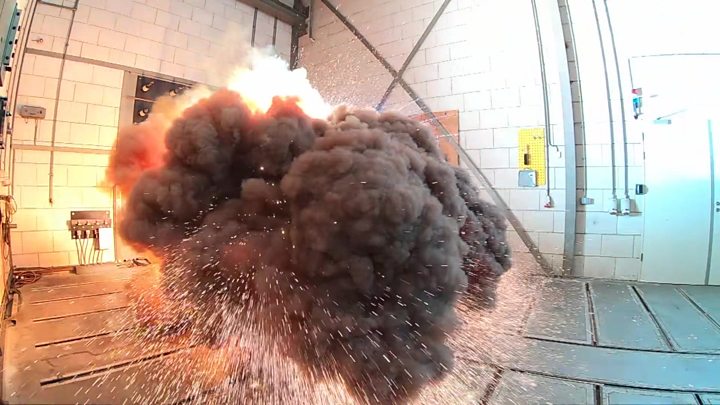
This substance is used in the electrical industry to prevent short circuits and accidents. It’s an extremely potent greenhouse gas, and although emissions to the atmosphere are relatively small at the moment, they are increasing.
Dr Shanklin worries that SF6 is being treated in the same way that CFCs were treated when they were first introduced in the 1930s. There was an assumption they would do no harm.
He told BBC News: “I think we’re treating SF6 in the same way. We think it possibly won’t have a problem, although we know it’s a greenhouse gas. And therefore we’re using it perhaps not as wisely as we might do. And that’s why we need the various monitoring sensors around the globe so we can… say to the scientific community that something’s increasing, so they can do the modelling and find out what the likely consequences are.”






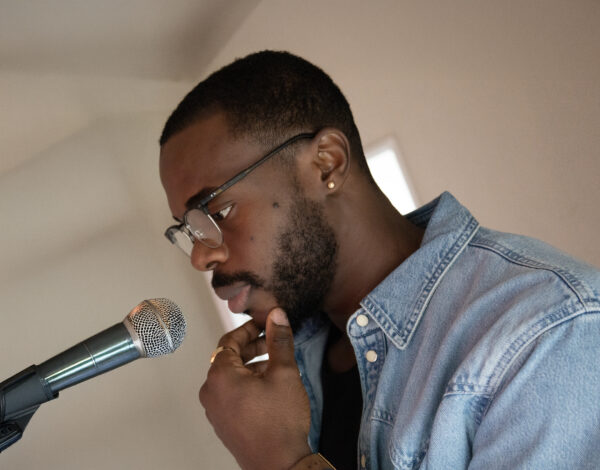
At 31, Lagos-born Espago is redefining what it means to be a late bloomer in the Nigerian music
space. After spending years as a chef, designer, and farmer, Espago turned to music just a year
ago on a journey sparked by deep loss, life experience, and self-discovery.
What makes him different? It’s not just his sound, it’s his story. Espago brings a calm but
confident energy that mirrors his Lagos upbringing: a blend of vibrant Fuji rhythms and soulful
Afrobeat traditions like King Sunny Ade, shaped by global legends like Michael Jackson and
Celine Dion. His voice? Professionally trained. His brand? Stylish, grounded, and intentional.
Espago didn’t wait for the industry to find him; he found his own way in, teaching himself,
searching out producers, and building his identity from scratch. With no major label backing and
no big-name features, he has still built a brand marked by boldness, emotion, and Lagos street
authenticity.
He’s not just making music; he’s building a lifestyle brand. His creative roots are in food,
fashion, and music fused into something richer than just a “sound.” It’s a full experience. While
he hasn’t performed live yet, he’s putting in the work behind the scenes, mentoring new artists,
recording regularly to sharpen his voice and brand for bigger stages ahead.
In a scene dominated by speed, Espago’s journey is about intentional growth, honest
expression, and emotional connection.
As the new class of Afro‑HipHop begins to take shape, Espago stands out not just for what he’s
making, but for who he is becoming.

Rising artist Derriq isn’t just making music for entertainment; he’s building a legacy rooted in culture, resilience, and pride. The Lagos-based Afro-soul and Afrobeats singer has his eyes set on something bigger than streaming numbers: putting his hometown of Benin City on the global creative map is his dream.
A native of Edo State, Derriq’s musical journey began as a child organizing school parties just for the chance to perform. Since then, he’s gone from studio assistant to full-fledged artist, releasing impactful tracks like “Position,” “Vibration,” and “Confidence.” His sound, described as smooth, calm, and party-ready, reflects the duality of his personality: laid-back yet determined, quiet but powerful.
Derriq is more than just a promising name on Nigeria’s growing music roster; he’s a symbol of the next generation of artists who blend regional identity with global appeal using his distinctive voice, a strong sense of direction, and his signature slang “Yehboo! Yezaiii!” making waves among fans, Derriq is proving that cultural authenticity still cuts through the noise.
His next single, “Omo n’ Ogie,” is a tribute to his heritage and a signal that he’s just getting started. Keep your eyes on Derriq, he’s not just singing for the moment, he’s singing for a movement.
Follow @DerriqMusic on all social platforms
For interviews and press: derriqmusic@gmail.com

Good morning! Here is today’s summary from Nigerian Newspapers:
1. President Bola Tinubu will address the nation in a broadcast today, Sunday, August 4, 2024. Mr Ajuri Ngelale, Special Adviser to the President on Media and Publicity, announced this in a statement, on Saturday, saying the broadcast would hold at 7am.
2. The Commissioner of Police in Borno State, Yusuf Lawal, on Saturday confirmed the killing of four persons along Baga Road in Maiduguri, Borno State during the nationwide #EndBadGoverment protest. He said Boko Haram elements infiltrated the protesters and killed four persons on Thursday with explosives at a filling station.
3. Many persons have been feared killed while others sustained injuries as hoodlums clashed with security operatives in Kano. It was gathered that Rijiyar Lemo, Kurna to Bachirawa areas in Fagge Local Government, Kofar Nassarawa in Kano municipal and Unguwa Uku area of Tarauni Local Government are the worst hit areas.
4. The leadership of the organised labour, on Saturday, warned the Nigeria Police Force and other security forces to stop what it described as a “massacre” of protesters carrying out nationwide demonstrations against hunger in the land.
5. Leading Human Rights group, Amnesty International Nigeria, has said over 50 protesters were arrested in Abuja on the third day of the demonstration against hardship in the land.
6. Former Vice-President Atiku Abubakar has urged the police and other security agencies to stop shooting and killing protesters demanding good governance in Nigeria. Atiku in a statement on Saturday, questioned the professionalism of the security agencies in the handling of the ongoing demonstrations.
7. Some of the organisers and supporters of the ongoing protest have set up pages to raise over N4bn through GoFundMe, a popular online crowdfunding platform. A check on Saturday showed that a total of N4.1bn had been benchmarked to be donated through accounts created by three GoFundMe users.
8. Tragedy struck again in Imo State on Saturday evening when some gunmen reportedly shot dead the President-General of Umucheke Okwe autonomous community in Onuimo Local Government Area of Imo State, Hyginus Ohazurike. Six village heads from the autonomous community were also allegedly killed by the gunmen.
9. The Federal Capital Territory Commissioner of Police, Bennett Igweh has said his men were not responsible for the death of a teenager in the Kubwa area of the FCT. In a viral video, a man claimed that police, while dispersing protesters, shot dead a teenager in the Kubwa area.
10. The Minister of Budget and Economic Planning, Atiku Bagudu has said President Bola Tinubu is keeping an eye on the ongoing #EndBadGovernance demonstrations across the country.
-
 Audio10 years ago
Page – Day Break Everywhere Burst
-
 Audio5 years ago
Shadykarz – Forever
-
 Audio10 years ago
Juniorboy ft. 9ice – IRAPADA
-
 Entertainment Gists6 years ago
Ex-Beauty Queen, Sandra Benede Shares Sexy Photo
-
 Audio5 years ago
Simi – Happy Birthday ft. Adekunle Gold, DeJa
-
 Audio5 years ago
Ruger – Bounce
-
 Mixtapes4 years ago
Mixtape: DJ DimpleNipple – The Best Of Amapiano Thrills
-
 Editorials3 years ago
Sa’eedah Imam On Creating Her Imprint In The Nigerian Music Industry As An Emerging Creative Writer